Ingredients
Equipment
Method
- Pat the lamb shanks dry with paper towels, then generously season them with salt and pepper.
- Heat the olive oil in a heavy Dutch oven over medium-high heat until shimmering and just starting to smoke.
- Place the lamb shanks in the pan and sear for about 4-5 minutes per side, until they develop a deep golden-brown crust. Use tongs to turn them gently, listening for a satisfying sizzle.
- Once browned, remove the shanks and set aside. In the same pan, add chopped onions, carrots, and celery, stirring well to coat with the flavorful drippings.
- Cook the vegetables, stirring frequently, until they’re golden and fragrant, about 8 minutes. They should soften slightly and release a warm aroma.
- Add the minced garlic and cook for another minute until fragrant, stirring constantly to prevent burning.
- Pour in the red wine, scraping up any browned bits from the bottom of the pan with a wooden spoon. Bring the mixture to a gentle simmer and cook until the wine has reduced by half, about 15 minutes. You’ll notice it thickening slightly and bubbling gently.
- Return the browned lamb shanks to the pan, nestling them into the vegetables and wine mixture. Add the sprigs of thyme, rosemary, and bay leaf on top.
- Pour in the beef or veal stock until the shanks are nearly covered, then cover the pan tightly with a lid or foil.
- Transfer the pan to the preheated oven and braise for about 2.5 to 3 hours, or until the meat is fork-tender and falling apart. Check occasionally; if the sauce reduces too much, add a splash more stock to keep the meat moist.
- Carefully remove the shanks from the pan and set aside on a warm plate. Skim excess fat from the sauce and simmer on the stove for about 10 minutes until slightly thickened and glossy.
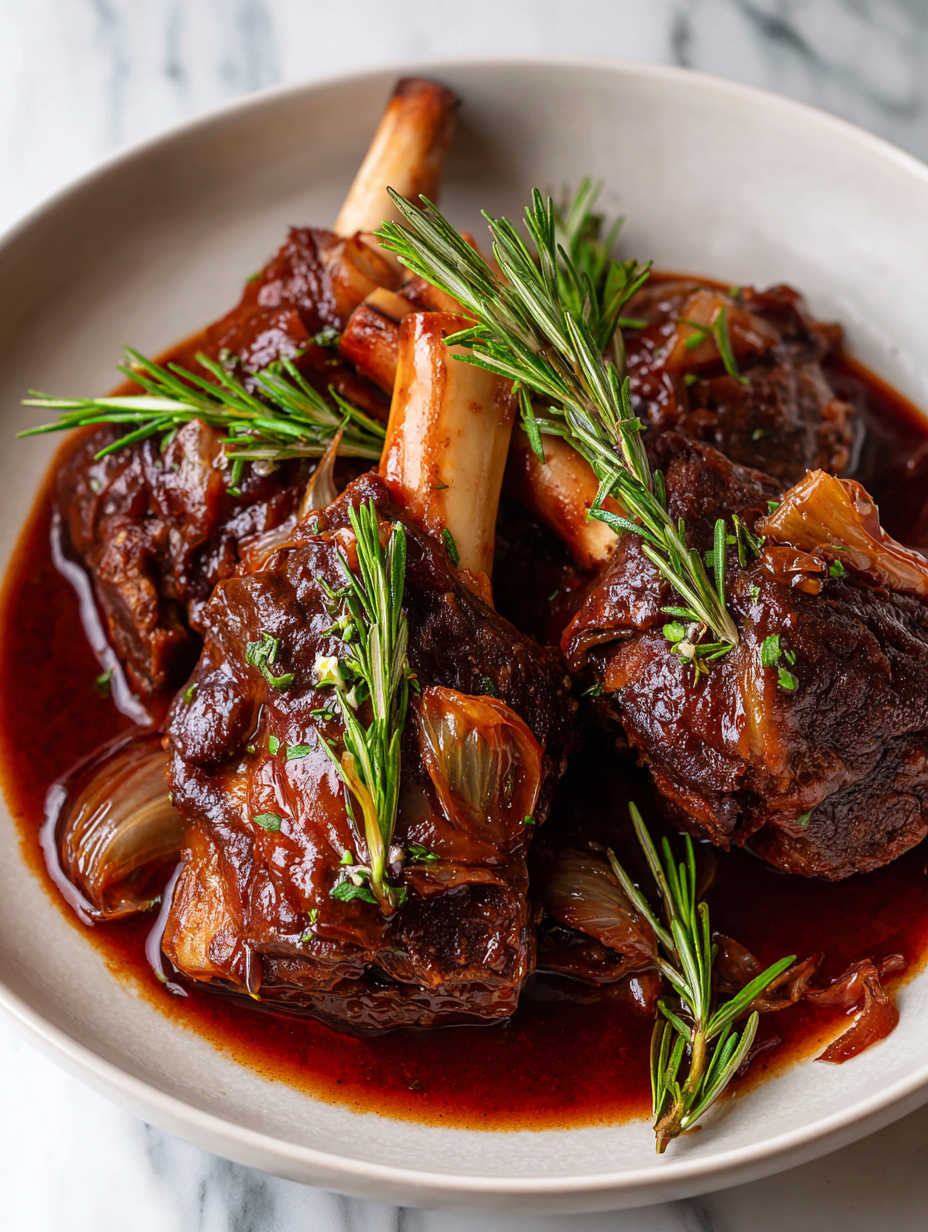
- Taste the sauce, adjust seasoning with salt and pepper as needed, then spoon generously over the lamb shanks. Serve hot with crusty bread or your favorite sides and enjoy the rich, tender goodness.
Notes
For extra flavor, let the dish rest for 10 minutes before serving. This allows the juices to redistribute and the sauce to thicken further. Leftovers reheat beautifully on low heat, and the flavors deepen overnight.