
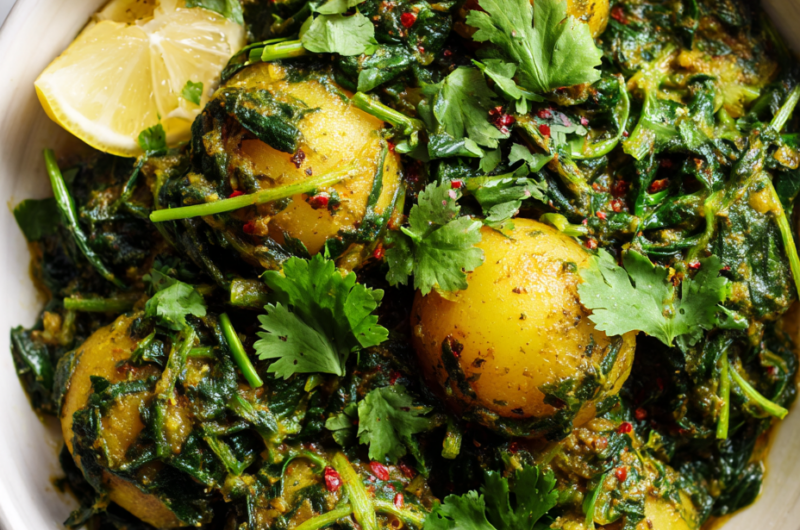
This spinach potato curry is my go-to for busy weeknights when I need something nourishing and quick. It’s a dish that transforms humble ingredients—think wilted spinach and soft potatoes—into something full of flavor without much fuss. Honestly, I love how it fills the kitchen with a warm, savory smell in under thirty minutes, making dinner feel like a small victory after a long day.
What makes this curry stand out is its simplicity. No long ingredient list, no fancy spices, yet it’s deeply satisfying. I’ve made it so many times that I’ve started to see it as a blank canvas—you can toss in a squeeze of lemon, a dash of chili, or whatever greens you have leftover. It’s honestly a lifesaver when I want comfort food that’s easy to throw together, but still feels like a treat.
Focusing on how this spinach potato curry can be a quick, nourishing weeknight fix that transforms humble ingredients into a comforting, flavorful dish without fuss.
The story behind this recipe
This dish grew out of a frantic, late-night fridge raid. I wanted something nourishing, fast, and with a bit of green—something to shake off the day’s fatigue. I’ve always loved how potatoes and spinach come together, each bringing their own kind of comfort and freshness. Over the years, I’ve tweaked this recipe to make it more forgiving and adaptable, turning it into a little ritual whenever I need a quick, wholesome meal. It’s become a kind of culinary souvenir of those hectic, cozy evenings, where a simple bowl can bring a moment of calm.
Key ingredients at a glance
- Spinach: I love using fresh spinach, its tender leaves wilt quickly and add a vibrant, earthy burst. If yours is wilting, give it a quick rinse and drain well before adding—it cooks fast and loses any bitter edge.
- Potatoes: Russets are my go-to for their fluffy interior, but sweet potatoes work beautifully too—just adjust cooking time. For extra creaminess, peel and cut evenly; the aroma of earthy starch will fill your kitchen.
- Onion & Garlic: These form the flavor foundation. Sauté until golden and fragrant—if they start to burn, turn down the heat immediately, the smoky smell is a sure sign to reduce the flame.
- Curry Spices: I prefer a mix of cumin, turmeric, and coriander—it’s a warm, aromatic combo. Toast them briefly in oil to unlock their full flavor; if you prefer milder, cut back on the cumin or skip the chili.
- Tomatoes: Fresh or canned, they add acidity and richness. I like to cook them down until thick and ruby-red, releasing a sweet, smoky aroma—if too tangy, a pinch of sugar balances it out.
- Oil & Seasonings: I use a neutral oil like canola or sunflower for frying, but ghee adds a nutty depth. Adjust salt at the end—your taste buds will thank you for that bright, savory punch.
- Lemon & Greens: A squeeze of lemon brightens everything just before serving. If you don’t have lemon, a splash of vinegar works—just don’t skip the fresh greens for that final, fresh note.
Spotlight on key ingredients
Spinach and Potatoes:
- Spinach: I love using fresh spinach, its tender leaves wilt quickly and add a vibrant, earthy burst. If yours is wilting, give it a quick rinse and drain well before adding—it cooks fast and loses any bitter edge.
- Potatoes: Russets are my go-to for their fluffy interior, but sweet potatoes work beautifully too—just adjust cooking time. For extra creaminess, peel and cut evenly; the aroma of earthy starch will fill your kitchen.
Notes for ingredient swaps
- Fresh Spinach: I prefer fresh for its tender leaves and vibrant flavor. If using frozen, thaw and squeeze out excess moisture—cooked frozen spinach can be slightly mushy but still good.
- Potatoes: Russets give a fluffy interior, but sweet potatoes add sweetness and color—adjust cooking time accordingly. If you’re short on time, parboil them first.
- Onion & Garlic: Yellow onion adds sweetness, but shallots or red onion work in a pinch for a milder, sweeter note. Use garlic powder if fresh isn’t available, but fresh is best for aroma.
- Curry Spices: Ground cumin, turmeric, and coriander are classic, but try garam masala for a richer, more complex flavor. Toast spices in oil to release their aroma—skip if pressed for time.
- Tomatoes: Fresh tomatoes are bright and juicy, but canned diced or crushed work well, especially in off-season. For a smoky flavor, add a dash of smoked paprika.
- Oil & Seasonings: Neutral oils like canola or sunflower won’t compete with spices, but ghee adds a nutty richness. Adjust salt at the end—taste and fine-tune for your preference.
- Lemon & Greens: Lemon juice brightens the dish, but vinegar (like apple cider) can work as a substitute. If you prefer milder acidity, start with half and taste as you go.
Equipment & Tools
- Large skillet or wok: Main vessel for cooking the curry
- Wooden spoon: Stirring and preventing sticking
- Knife: Prepping potatoes, onion, garlic
- Cutting board: Surface for chopping ingredients
- Measuring cup: Measuring liquids and spices
Step-by-step guide to spinach potato curry
- Gather your equipment: a large skillet or wok, a wooden spoon, a knife, a cutting board, and a measuring cup. The skillet is for the curry, the spoon for stirring, the knife and board for prepping ingredients, and the cup for liquids.
- Peel and dice two medium potatoes into 1.5cm (half-inch) cubes. Set aside. These will cook quickly, so uniform size helps even cooking.
- Rinse 200g (7 oz) fresh spinach thoroughly until water runs clear. Drain well and roughly chop if leaves are large. Spinach wilts fast, so prep just before cooking.
- Finely chop one small onion (about 70g). Mince 2 cloves of garlic. These will form the flavor base. Use a sharp knife to avoid crushing and losing aroma.
- In your skillet, heat 2 tbsp neutral oil over medium heat (~160°C / 320°F). Once shimmering, add the onion and sauté for 3-4 minutes until translucent and fragrant. The smell of caramelized onion should fill the air, and the color should deepen slightly.
- Add 1 tsp cumin, ½ tsp turmeric, and ½ tsp coriander to the oil. Toast spices for 30 seconds, stirring. You want a fragrant, warm aroma without burning. If spices start to smoke, lower the heat.
- Toss in the diced potatoes. Stir to coat them evenly with spices. Cook for about 8-10 minutes, stirring occasionally, until they begin to soften and turn golden on the edges. They should be tender when pierced with a fork.
- Pour in 200g (¾ cup) chopped tomatoes or 3 tbsp tomato paste diluted with 2 tbsp water. Stir well. Cook for another 5 minutes until the mixture thickens and releases a rich, slightly smoky aroma. If it sticks or burns, add a splash of water and scrape the bottom.
- Add the chopped spinach to the skillet. Stir quickly; it will wilt within 1-2 minutes. The leaves should turn vibrant green and reduce significantly in volume. If the curry looks dry, splash a little water or broth.
- Check seasoning and adjust salt, a pinch at a time. Squeeze in half a lemon or a splash of vinegar for brightness. Stir in any greens you like for extra freshness. Cook for another minute to meld flavors.
- Turn off heat. Let the curry rest for 2 minutes. This allows flavors to settle and makes serving easier. Plate with a sprinkle of fresh herbs if desired, and serve hot.
- Serve with warm rice or crusty bread. The curry should be fragrant, with tender potatoes and wilted, bright spinach. The sauce should cling lightly, with a balance of acidity and spice.
Let the curry sit off heat for 2 minutes. Serve hot with rice or bread. Garnish with herbs if available. The flavors will deepen slightly during resting, enhancing every bite.
How to Know It’s Done
- Potatoes are tender when pierced with a fork, not mushy.
- Spinach is wilted and vibrant green, not slimy.
- Tomato mixture is thick and fragrant, not watery.
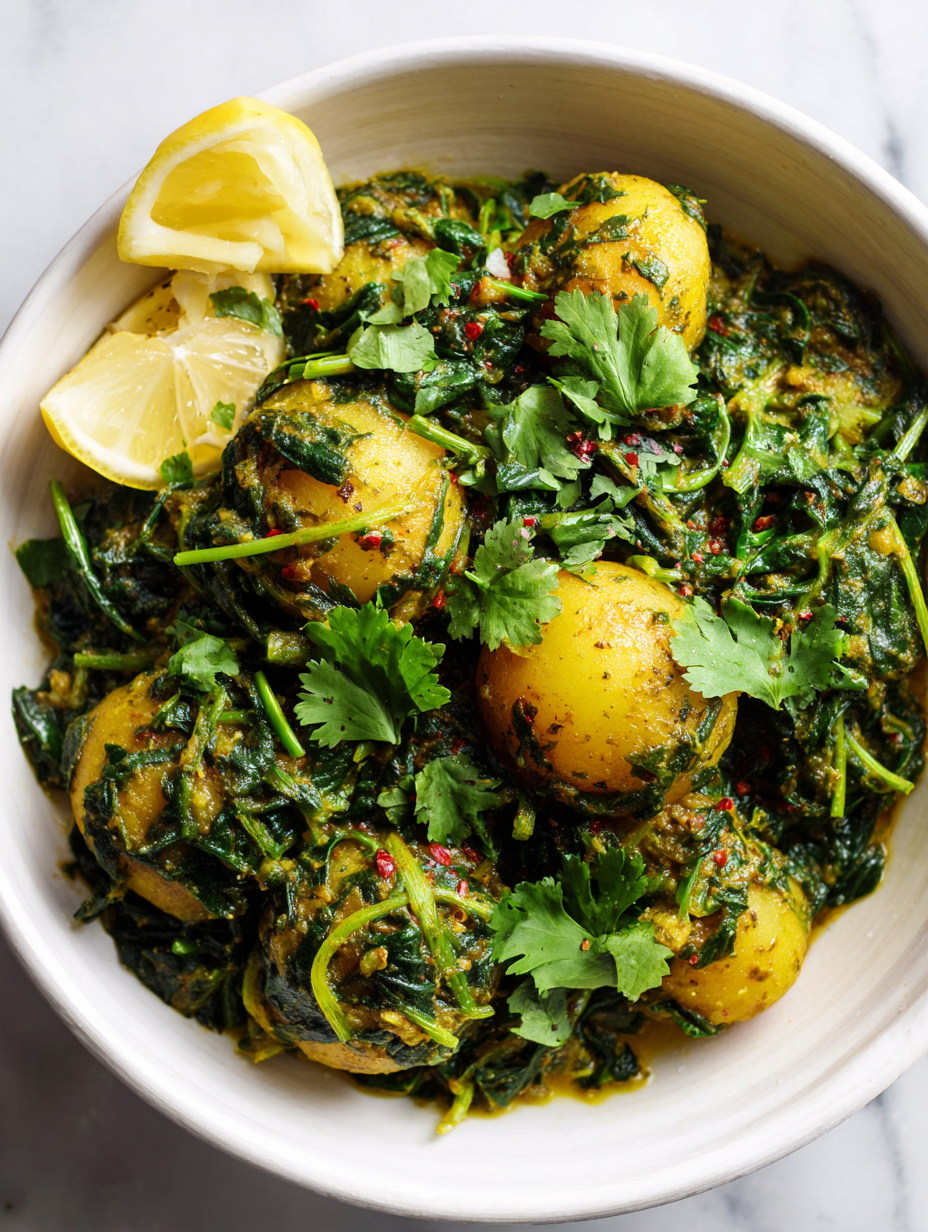
Spinach Potato Curry
Ingredients
Equipment
Method
- Peel and dice the potatoes into 1.5cm cubes, then rinse the spinach thoroughly and chop if large leaves.
- Finely chop the onion and mince the garlic cloves.
- Heat the oil in a large skillet over medium heat until shimmering, then add the chopped onion. Sauté for 3-4 minutes until translucent and fragrant, with a slight golden hue.
- Add the ground cumin, turmeric, and coriander to the skillet. Toast the spices for about 30 seconds, stirring constantly until fragrant, being careful not to burn them.
- Stir in the diced potatoes, coating them evenly with the spice mixture. Cook for 8-10 minutes, stirring occasionally, until the potatoes are golden and beginning to soften.
- Pour in the chopped tomatoes and stir well. Cook uncovered for about 5 minutes until the mixture thickens and releases a rich aroma.
- Add the chopped spinach to the skillet. Stir vigorously so it wilts quickly, turning bright green and reducing in volume within 2 minutes.
- Season with salt to taste and squeeze in the lemon juice for brightness. Give everything a good stir, then cook for another minute to meld flavors.
- Turn off the heat and let the curry rest for 2 minutes, allowing flavors to deepen and sauce to slightly thicken.
- Serve the warm spinach potato curry hot, ideally with rice or crusty bread. Enjoy the vibrant colors and comforting aroma with each spoonful.
Notes
Pro Tips for Best Results
- Use a sharp knife to finely chop garlic and onion; it releases more aroma and cooks quickly.
- Toast your spices in oil just until fragrant—this wakes up their flavors and prevents bitterness.
- Stir potatoes often during cooking; they should turn golden and start to mash slightly when tender.
- Add spinach in batches; it wilts rapidly, and overloading can make the curry watery instead of vibrant green.
- Sauté tomatoes until thickened and fragrant—this forms a rich base, avoiding a watery curry.
- Squeeze lemon or add vinegar at the end; it brightens flavors and balances earthiness with a tangy pop.
- Let the curry rest 2 minutes off heat—this melds flavors and makes serving easier, avoiding runny sauce.
Common mistakes and how to fix them
- FORGOT to check spice levels → taste and adjust before serving.
- DUMPED too much water → simmer longer to thicken sauce.
- OVER-TORCHED spices → lower heat immediately to avoid bitterness.
- MISSED resting time → let curry sit 2 minutes for flavor to deepen.
Quick fixes and pantry swaps
- When spinach looks wilted, splash with lemon juice to revive its bright green hue.
- If sauce gets too thick, stir in a splash of warm water or broth to loosen it up.
- Splash a little vinegar or lemon when curry feels flat—brightens flavors instantly.
- Patch over burnt spices by adding fresh ones and cooking briefly again to restore aroma.
- Shield your curry from over-torching by lowering heat if you smell smoky or see dark specks.
Prep, store, and reheat tips
- Prep the potatoes and spinach a day ahead; store separately in airtight containers to keep freshness and vibrant color.
- Refrigerate the diced potatoes for up to 24 hours; they might absorb some moisture, so pat dry before cooking.
- Cook the curry and let it cool to room temperature before storing in an airtight container for up to 2 days in the fridge.
- Reheat gently over low heat, stirring often until steaming and fragrant—look for a bubbling, hot sauce with a rich aroma.
- For longer storage, freeze in portions for up to 3 months. Thaw overnight in the fridge and reheat as above, expecting a slightly softer texture.
Top questions about spinach potato curry
1. Can I use frozen spinach instead of fresh?
Yes, you can use frozen spinach; just thaw and squeeze out excess moisture before adding to the curry. It wilts quickly and still adds a vibrant green flavor.
2. Is this recipe vegan-friendly?
To make this dish vegan, skip the ghee and use a neutral oil like vegetable or canola oil. The flavor remains rich and comforting.
3. How do I know when potatoes are cooked?
If your potatoes aren’t tender after the suggested cooking time, cover the pan and cook a few more minutes on low heat. Alternatively, parboil potatoes beforehand for quicker cooking.
4. Can I make it less spicy?
Use mild spices or reduce the amount of chili if you prefer less heat. You can also add a dash of cream or coconut milk at the end for richness and a cooling effect.
5. Should I rest the curry before serving?
The flavor is best when the curry has rested for a couple of minutes off the heat. This allows the spices to meld and the sauce to thicken slightly.
6. Can I make this ahead of time?
Yes, this curry can be prepared in advance and refrigerated for up to 2 days. Reheat gently, adding a splash of water if it thickens too much.
7. What can I substitute for fresh tomatoes?
You can swap fresh tomatoes for canned diced tomatoes or passata. The flavor remains bright and slightly tangy, perfect for quick cooking.
8. How do I add greens without overcooking?
Stir the curry vigorously when adding greens to prevent them from clumping and to ensure even wilting. Adding greens in batches helps maintain vibrant color and texture.
9. What if my curry is too watery?
If the curry becomes too watery, simmer uncovered for a few more minutes until it thickens. If too thick, stir in a little warm water or broth.
10. How do I prepare garlic properly?
Use a sharp knife and a steady hand to chop garlic finely, releasing more aroma and preventing bitter burnt spots during sautéing.
This spinach potato curry is one of those dishes that sneaks into your weekly rotation. Its quick prep and hearty flavors make it a reliable go-to when time’s tight but you still want something satisfying. Plus, it’s a simple way to get greens into your day without fuss or drama.
Whenever I make this, I’m reminded how humble ingredients can become something warm and memorable. It’s not just about nourishing the body, but also about those small moments of comfort—an easy, honest meal that feels like a quiet achievement after a busy day.

Hello, I’m Oliver James, the person behind Melting Into Flavors. Cooking is my greatest passion, and it’s been the driving force in my life for as long as I can remember.
It’s not just about food for me; it’s about creating experiences, connecting with others, and sharing the love I have for what’s on the plate. Through this blog and my café, I’m able to share my journey with all of you and hopefully inspire some of your own culinary adventures along the way.