
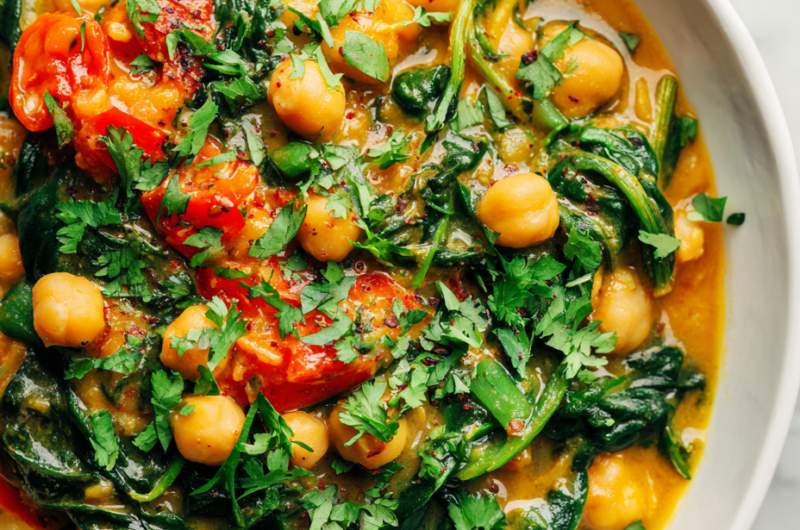
This spinach and chickpea curry started as a way to make something warm and filling from what I had left in the pantry. No fresh herbs, no fancy spices, just the basics that come together in a cozy, honest dish. It’s one of those recipes that feels like a small victory—turning simple ingredients into a meal that sticks with you.
I love how this dish can be thrown together quickly, especially after a long day. The earthy chickpeas, the vibrant green spinach, and that fragrant tomato base—each bite carries a sense of familiar comfort. It’s not about perfect presentation; it’s about the honest, hearty flavors that remind me of home, no matter where I am.
This recipe is inspired by the idea of turning a humble pantry staple into a comforting, nourishing meal that feels like a warm hug after a busy day, especially when fresh ingredients are scarce.
The story behind this recipe
- This dish was born out of a rainy afternoon when I realized I had nothing fresh left but some frozen spinach and a can of chickpeas. I wanted something warm, satisfying, but also quick enough to throw together without a trip to the store. The smell of cumin and garlic simmering always takes me back to my grandma’s kitchen, where simple ingredients made magic.
- I started adding spices freely, tasting as I went, and suddenly it felt like a little celebration in my bowl. Every time I make this, I get reminded that comfort food doesn’t have to be complicated or fancy—sometimes, it’s just about making do with what’s at hand and finding joy in the process.
- heading:
Ingredient breakdown: key components
- Fresh spinach: I love the bright, slightly bitter aroma it releases when wilted. You can also try frozen spinach—just thaw and drain well to avoid excess water.
- Chickpeas: Canned chickpeas are my go-to for convenience, but if you cook dried ones, they develop a nuttier flavor. Remember to soak and cook them until tender for the best texture.
- Tomato paste: It adds depth and a hint of sweetness. If you don’t have it, a splash of ketchup can mimic that umami richness, though it’s a bit sweeter.
- Garlic and onion: The base of so many curries. I prefer to sauté until golden—this brings out their natural sweetness and reduces harshness. Skip if you’re sensitive to raw onion or garlic.
- Spices (cumin, turmeric, coriander): I toast them briefly in oil to unlock full flavor. If you’re in a hurry, add pre-ground spices directly—just be mindful not to burn them, or they’ll taste bitter.
- Coconut milk (optional): I add a splash for creaminess and a subtle sweetness. If dairy isn’t your thing, almond milk works but won’t be as rich; just watch for separation during simmering.
- Lemon or lime juice: A squeeze brightens everything up right at the end. It’s a small step but transforms the flavors from earthily dull to vibrant and fresh.
Spotlight on key ingredients
Spinach:
- Fresh spinach: I love the bright, slightly bitter aroma it releases when wilted. You can also try frozen spinach—just thaw and drain well to avoid excess water.
- Chickpeas: Canned chickpeas are my go-to for convenience, but if you cook dried ones, they develop a nuttier flavor. Remember to soak and cook them until tender for the best texture.
Tomato paste & Coconut milk:
- Tomato paste: It adds depth and a hint of sweetness. If you don’t have it, a splash of ketchup can mimic that umami richness, though it’s a bit sweeter.
- Coconut milk: I add a splash for creaminess and a subtle sweetness. If dairy isn’t your thing, almond milk works but won’t be as rich; just watch for separation during simmering.
Notes for ingredient swaps
- Fresh spinach: I love the bright, slightly bitter aroma it releases when wilted. You can also try frozen spinach—just thaw and drain well to avoid excess water.
- Chickpeas: Canned chickpeas are my go-to for convenience, but if you cook dried ones, they develop a nuttier flavor. Remember to soak and cook them until tender for the best texture.
- Tomato paste: It adds depth and a hint of sweetness. If you don’t have it, a splash of ketchup can mimic that umami richness, though it’s a bit sweeter.
- Garlic and onion: The base of so many curries. I prefer to sauté until golden—this brings out their natural sweetness and reduces harshness. Skip if you’re sensitive to raw onion or garlic.
- Spices (cumin, turmeric, coriander): I toast them briefly in oil to unlock full flavor. If you’re in a hurry, add pre-ground spices directly—just be mindful not to burn them, or they’ll taste bitter.
- Coconut milk (optional): I add a splash for creaminess and a subtle sweetness. If dairy isn’t your thing, almond milk works but won’t be as rich; just watch for separation during simmering.
- Lemon or lime juice: A squeeze brightens everything up right at the end. It’s a small step but transforms the flavors from earthily dull to vibrant and fresh.
Equipment & Tools
- Deep skillet or heavy-bottomed pan: For even heat distribution and browning of ingredients.
- Wooden spoon: To stir and scrape the bottom without scratching.
- Measuring spoons and cups: For accurate spice and ingredient measurements.
Step-by-step guide to making the curry
- Gather your equipment: a deep skillet or heavy-bottomed pan for even heat, a wooden spoon for stirring, and a measuring spoon for spices.
- Heat the pan over medium heat (around 160°C/320°F). Add 2 tbsp of oil—wait until it shimmers, then toss in 1 diced onion. Cook until soft and golden, about 5 minutes.
- Add 3 minced garlic cloves and 1 tsp of grated ginger, stir until fragrant—about 30 seconds. Be careful not to burn the garlic; if it browns too quickly, lower the heat.
- Stir in 1 tsp cumin, 1 tsp turmeric, and 1 tsp coriander. Toast the spices for 1-2 minutes until they release a warm aroma. If they start to burn or turn bitter, remove from heat immediately.
- Pour in 1 can (400g) of chopped tomatoes or 3 tbsp tomato paste. Cook, stirring, for about 8 minutes, until the mixture darkens slightly and thickens. It should smell rich and savory.
- Add 1 can (400g) of chickpeas, drained and rinsed. Mix well, then pour in 200ml coconut milk or water for a thinner sauce. Bring to a gentle simmer, about 10 minutes, stirring occasionally.
- Toss in 200g frozen spinach (thawed and drained). Stir until wilted, about 3-4 minutes. Look for bright green leaves that have reduced in volume and softened.
- Taste and adjust salt or add a squeeze of lemon for brightness. If too thick, loosen with a splash of water or broth. Simmer another 2 minutes to meld flavors.
- Remove from heat. Let sit for 2-3 minutes to settle. Serve hot, garnished with a little fresh herbs or a drizzle of yogurt if desired.
- Plate with rice, naan, or crusty bread for a hearty, comforting meal that’s quick and honest.
Once off the heat, let the curry sit for 2-3 minutes to allow flavors to meld. Serve directly from the pan or transfer to a warm dish, garnished as desired.
How to Know It’s Done
- The tomato base should be rich, slightly thickened, with a fragrant aroma.
- The spinach is bright green and wilted, not mushy or overcooked.
- The chickpeas are tender and heated through, with a slight jiggle when stirred.
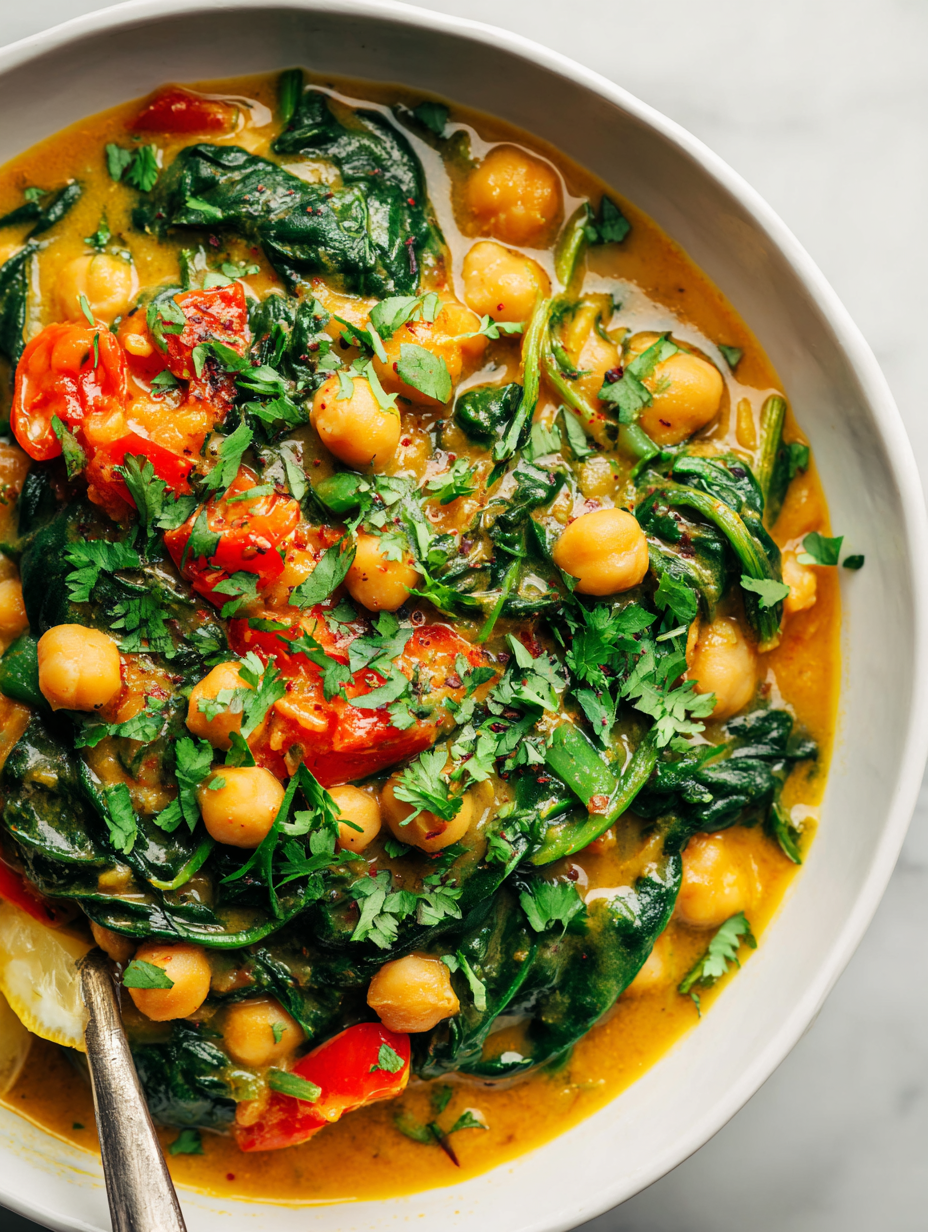
Simple Spinach and Chickpea Curry
Ingredients
Equipment
Method
- Heat oil in a deep skillet over medium heat until shimmering. Add the diced onion and cook, stirring occasionally, until soft and golden, about 5 minutes.
- Add the minced garlic and cook for about 30 seconds until fragrant, being careful not to burn it.
- Sprinkle in the toasted cumin, turmeric, and coriander, stirring constantly for 1-2 minutes until the spices release a warm aroma and coat the onion mixture evenly.
- Add the tomato paste and cook, stirring frequently, for about 8 minutes until the mixture darkens slightly and becomes fragrant.
- Stir in the drained chickpeas and pour in the coconut milk, stirring to combine. Bring the mixture to a gentle simmer and cook uncovered for 10 minutes, allowing the flavors to meld and the sauce to thicken slightly.
- Add the thawed and drained spinach, stirring until wilted and evenly distributed, about 3-4 minutes. The spinach should turn bright green and soften.
- Season with salt and pepper to taste. Squeeze in fresh lemon or lime juice to brighten the flavors. Adjust seasoning as needed.
- Remove from heat and let sit for a couple of minutes to allow flavors to settle. Serve hot over rice or with crusty bread, garnished with extra lemon if desired.
Tips and tricks for best results
- Bolded mini-head: Toast spices briefly in oil to unlock their full aroma and flavor.
- Bolded mini-head: Use the back of your spoon to gently press down on the chickpeas—this helps them absorb the sauce.
- Bolded mini-head: Add spinach in stages if you’re short on time; it wilts faster and retains vibrant color.
- Bolded mini-head: When sautéing onions, keep the heat moderate—too high, and they brown too quickly, risking bitterness.
- Bolded mini-head: Use a splash of lemon juice at the end; it brightens the dish and balances the earthiness.
- Bolded mini-head: If sauce gets too thick, stir in a little warm water or broth to loosen it without diluting flavor.
- Bolded mini-head: Keep an eye on the spices when toasting—they burn fast and turn bitter if left unattended.
Common mistakes and how to fix them
- FORGOT to stir the spices? Toast them longer to release full flavor.
- DUMPED too much water? Simmer uncovered to concentrate the sauce.
- OVER-TORCHED spices? Lower heat immediately and add a splash of water.
- MISSED the spinach timing? Add at the end and cook just until wilted.
Quick fixes and pantry swaps
- When sauce looks too thin, splash in a little more tomato paste and simmer for 5 more minutes.
- If spinach turns bitter, add a pinch of sugar or a squeeze of lemon to balance flavors.
- Splash some water if curry is too thick; simmer gently until it loosens and the aroma brightens.
- Patch over-salted curry with a squeeze of fresh lemon or a small potato, then cook for 5 minutes.
- Shield burnt spices by removing from heat immediately and stirring in a teaspoon of fresh oil.
Prep, store, and reheat tips
- Prep the curry components ahead: sauté onions and garlic, and prepare spice mixture the day before to save time. The flavors deepen overnight and smell even better the next day.
- Store leftovers in an airtight container in the fridge for up to 3 days. The curry develops a richer, more integrated flavor as it sits, with the spinach mellowing slightly.
- Reheat gently on the stovetop over low heat, stirring occasionally. The sauce may thicken; add a splash of water or broth to loosen it, and look for a warm, fragrant aroma to confirm it’s ready.
- Freeze in portions for up to 2 months. The texture might change slightly—spinach can become softer, but the flavor stays hearty and comforting. Thaw overnight in the fridge before reheating.
- When reheating, the curry might smell more concentrated and slightly earthy. Adjust seasoning with a squeeze of lemon or a pinch of salt to freshen up flavors before serving.
Top questions about spinach and chickpea curry
1. Can I use frozen spinach instead of fresh?
Yes, frozen spinach works well. Thaw and drain it thoroughly to avoid excess water in your curry.
2. Are canned chickpeas okay or do I need dried ones?
Absolutely. Canned chickpeas are convenient and tender, but dried ones need soaking and longer cooking for better flavor.
3. My curry is too runny, what can I do?
If your curry is too watery, simmer it uncovered for a few more minutes until the sauce thickens and intensifies in aroma.
4. How do I make the flavor pop at the end?
Add a splash of lemon or lime juice at the end to brighten flavors and balance earthiness with fresh citrus notes.
5. How do I toast spices without burning them?
Cook the spices until fragrant—about 1-2 minutes—to unlock full flavor and avoid bitter, raw spice taste.
6. How can I avoid burning garlic?
To prevent burning garlic, add it after the onions are golden and cook just until fragrant—about 30 seconds.
7. What’s the best pan for this curry?
Use a heavy-bottomed pan for even heat distribution and to prevent scorching, especially when simmering the sauce.
8. How long can I store leftovers and how should I reheat?
Leftovers can be refrigerated for up to 3 days; reheat gently on the stove until steaming and fragrant again.
9. Do I need to adjust seasoning after storing?
Adjust seasonings after reheating, adding more salt or lemon to refresh the flavor and aroma.
10. How can I make this curry spicier?
Consider adding a dash of chili or cayenne if you want a little heat—start small and taste as you go.
Cooking this curry is a quiet act of kindness, especially on days when I need something warm and honest. It’s simple, satisfying, and sticks to your ribs in the best way, no fuss required.
In a world full of complicated recipes, this one reminds me that sometimes, the best meals come from just a few humble ingredients simmered with care and a little bit of patience. It’s a dish that feels like a small, grounding victory every time I make it.

Hello, I’m Oliver James, the person behind Melting Into Flavors. Cooking is my greatest passion, and it’s been the driving force in my life for as long as I can remember.
It’s not just about food for me; it’s about creating experiences, connecting with others, and sharing the love I have for what’s on the plate. Through this blog and my café, I’m able to share my journey with all of you and hopefully inspire some of your own culinary adventures along the way.