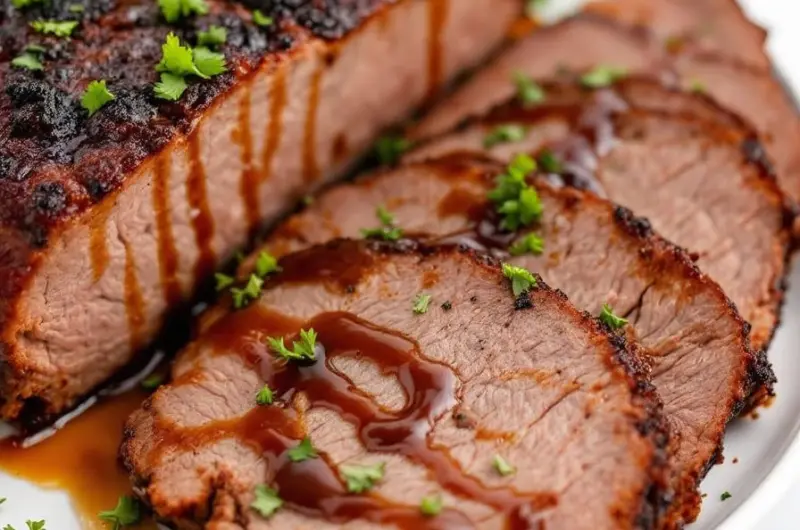
Carving into a hot smoked brisket, you hear that first satisfying crack of the bark, then the slow release of smoky steam. The knife sinks through a crust that’s firm but yields, revealing a moist, deep-red interior. It’s hands-on, sticky work, with juices dripping onto the cutting board.
Getting the prep right means a mess of spices and a long wait for the smoker to reach temp. You’ll be wiping your hands on a towel, checking the smoke, and adjusting the vents as the meat slowly takes on color and flavor. No shortcuts—just patience and a lot of tending.
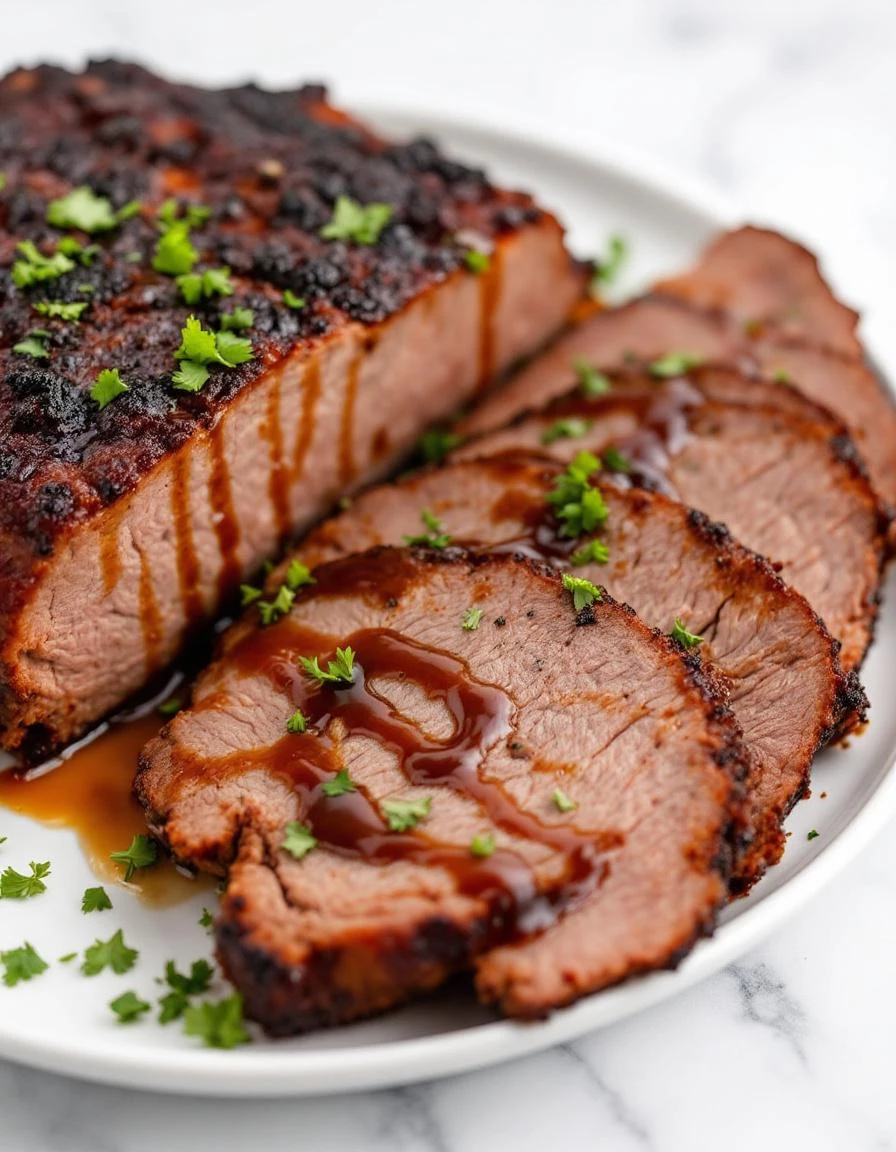
The crackle of the bark as you carve into the brisket, each slice revealing a smoky, juicy interior contrasted by the crisp, seasoned crust.
Key ingredients and swaps
- Brisket: I stick to a well-marbled cut, the fat melts into the meat as it smokes, creating that oozy, smoky richness. Swap for a leaner cut if you prefer less fat, but expect a different texture and flavor profile.
- Salt and sugar: I use a coarse sea salt and brown sugar for that perfect sweet-salty crust. You can tweak the sugar for a drier bark or skip it altogether for a less sweet finish.
- Black pepper: I grind fresh black pepper onto the surface, giving a spicy punch that balances the smoke. For a milder crust, reduce or omit the pepper, but you’ll lose that peppery aroma.
- Paprika: I prefer smoked paprika for that deep, smoky aroma and vibrant color. You could substitute regular paprika for a milder flavor, or add chili powder for heat.
- Garlic powder: I sprinkle a generous layer of garlic powder for aromatic depth. Skip if you’re sensitive to garlic, but you’ll miss that savory, pungent note.
- Wood chunks: I use hickory for its classic smoky flavor, but apple or cherry wood will add a sweeter, fruitier tone. Soak the chunks to prevent flare-ups, especially if using hardwoods like oak.
- Vinegar spray: I keep a spray bottle of apple cider vinegar handy to spritz the brisket during smoking—keeps it moist and adds a tangy brightness. Skip if you prefer a drier bark, but it helps with moisture and flavor layering.
Smoked Beef Brisket
Ingredients
Equipment
Method
- Pat the brisket dry with paper towels, then mix salt, brown sugar, black pepper, smoked paprika, and garlic powder to create the spice rub. Generously coat all sides of the meat with the rub, pressing it into the surface.
- Preheat your smoker to a steady 225°F (107°C). Arrange soaked wood chunks directly on the coals or in the smoker box to generate a steady, smoky environment.
- Place the brisket fat-side up on the smoker grate, ensuring good airflow around the meat. Close the lid and let it smoke for about 6 hours, maintaining a consistent temperature.
- Every hour or so, spritz the brisket with apple cider vinegar using a spray bottle to keep it moist and enhance flavor. Listen for the gentle crackle of the bark forming on the surface.
- Use a meat thermometer to monitor the internal temperature, aiming for around 165°F (74°C). When the bark is dark and firm, and the meat feels resistant but tender, it’s time to wrap.
- Wrap the brisket tightly in foil or butcher paper and continue smoking until it reaches an internal temperature of 195-205°F (90-96°C), which usually takes another 2-3 hours.
- Remove the brisket from the smoker and let it rest, wrapped, for 20-30 minutes. This step allows the juices to redistribute, ensuring moist, flavorful slices.
- Unwrap the brisket and transfer it to a cutting board. Slice it against the grain, revealing the deep red interior with a smoky crust.
- Arrange the slices on a serving platter, showcasing the crust and juicy interior. Serve with your favorite sides and enjoy the rich smoky flavor.
Common mistakes and how to fix them
- FORGOT to monitor the smoker temperature, leading to uneven cooking. Use a reliable thermometer.
- DUMPED too much wood at once, causing bitter, acrid smoke. Add wood gradually for a balanced smoke.
- OVER-TORCHED the bark by cranking the heat at the end. Keep it steady, and watch for darkening.
- MISSED resting the brisket before slicing. Let it rest 20-30 minutes for juices to redistribute.
Make-Ahead and Storage Tips
- The brisket can be smoked a day ahead; let it cool completely before refrigerating for up to 3 days.
- Wrap the cooled brisket tightly in foil or butcher paper before storing in the fridge or freezer.
- Freezing is fine for up to 2 months; thaw in the fridge overnight before reheating.
- The flavors deepen and mellow after a day or two, so reheated slices might taste richer and more concentrated.
- Reheat slowly in the oven at 300°F, wrapped in foil, until warmed through—check for a smoky aroma and juicy texture.
FAQs
1. What does smoked brisket taste like?
Smoked brisket develops a deep, smoky flavor with a tender, juicy interior. The bark is firm and seasoned, offering a satisfying chew and a burst of smoky aroma with every bite.
2. How do I know when it’s done?
The ideal internal temperature is around 195-205°F. Use a reliable thermometer; the meat should feel tender but still have some resistance when pierced.
3. Should I rest the brisket?
Wrap the hot brisket in foil or butcher paper after smoking, then let it rest for 20-30 minutes. This redistributes juices, keeping it moist and flavorful.
4. How do I reheat leftover brisket?
Reheat in a low oven at 300°F, wrapped tightly, until warm. The smell of smoky juices and the texture should remain juicy and tender.
5. How long can I keep smoked brisket?
Store leftover brisket in airtight containers in the fridge for up to 3 days or freeze for 2 months. Reheat slowly to preserve moisture and flavor.

Hello, I’m Oliver James, the person behind Melting Into Flavors. Cooking is my greatest passion, and it’s been the driving force in my life for as long as I can remember.
It’s not just about food for me; it’s about creating experiences, connecting with others, and sharing the love I have for what’s on the plate. Through this blog and my café, I’m able to share my journey with all of you and hopefully inspire some of your own culinary adventures along the way.