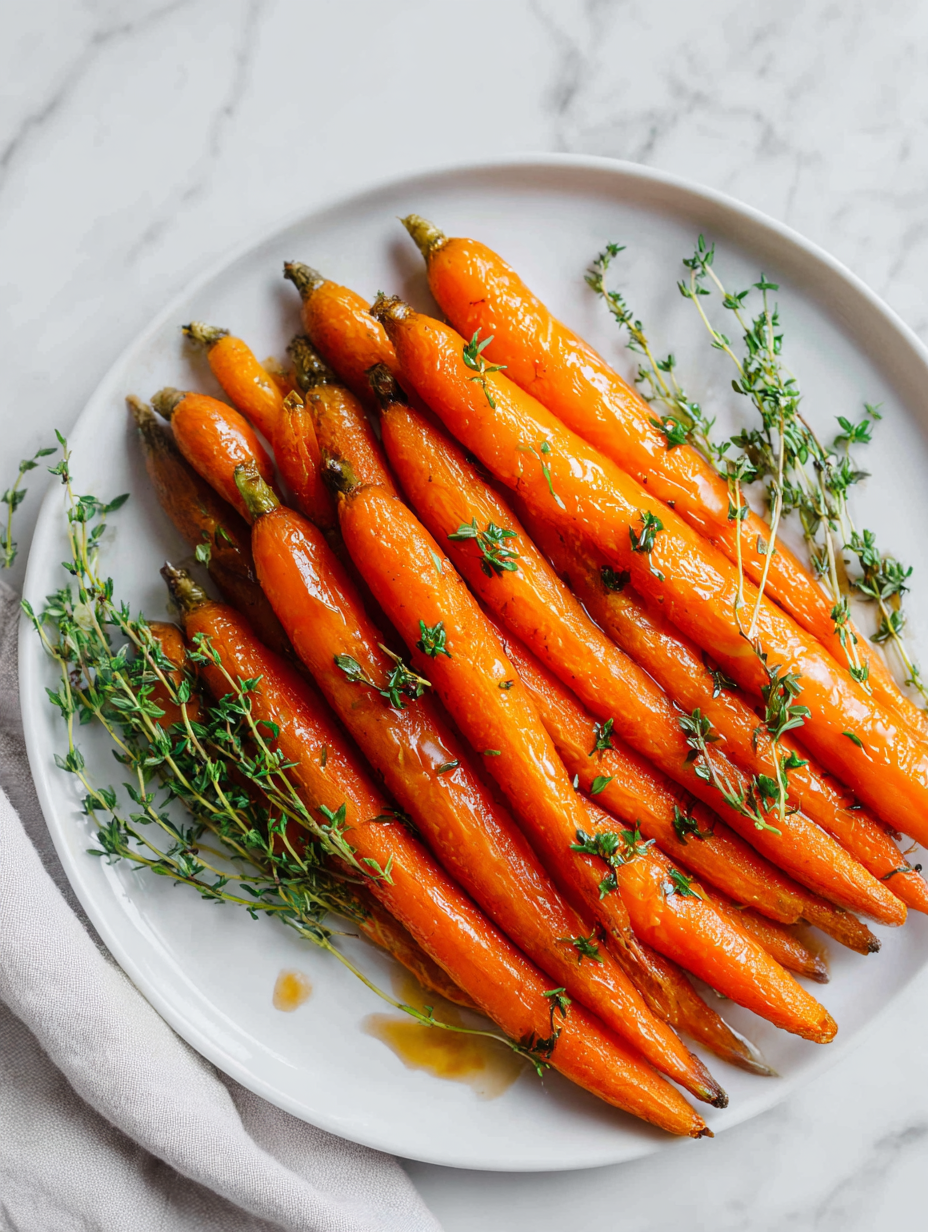
Roasting carrots with maple syrup is a simple act that unlocks a surprising depth of flavor. The sugar caramelizes, creating a smoky, slightly charred crust that makes each bite feel like a little celebration of autumn. It’s one of those humble dishes that feels fancy without any fuss, perfect for a weeknight or a casual dinner with friends.
What I love most is how the natural sweetness of the carrots transforms into something richer and more complex. The maple syrup doesn’t just add sweetness; it turns into a glossy, fragrant glaze that coats each carrot in a sticky, caramelized layer. It’s a small, unassuming dish that somehow elevates your whole meal, making every bite a reminder of how good simple ingredients can be when treated right.
Focusing on the unexpected caramelization that occurs when roasting carrots with pure maple syrup, highlighting how this transforms their natural sweetness into a complex, smoky, and slightly charred flavor profile.
The story behind this recipe
- I first stumbled upon roasting carrots with maple syrup during a chaotic fall dinner prep. The kitchen was filled with the warm, inviting aroma of caramelizing sugar and roasted earthiness, and I couldn’t resist trying to tweak it just a bit. That moment of spontaneous experimentation became a go-to side for cozy gatherings, where everyone always asks for the recipe.
- What keeps me coming back is how a simple drizzle transforms dull carrots into something smoky and complex. It’s about catching that perfect caramelized edge, slightly charred but still tender inside. These carrots remind me that some of the best dishes come from just trusting the humble ingredients—and a little patience in the oven.
- heading: The story behind this recipe
Ingredient breakdown
- Carrots: I prefer thick, earthy carrots that hold up well during roasting; their natural sweetness intensifies with a slightly smoky edge, so pick firm, fresh ones. Swap for parsnips if you want a milder, floral note, but keep an eye on cook time.
- Maple syrup: I use pure Grade A for its rich, floral sweetness that caramelizes beautifully. If you’re out, honey works, but it won’t develop that complex caramel depth—just a lighter glaze.
- Olive oil: I like a good extra virgin for its fruity aroma and smooth texture that helps the syrup cling. For a nuttier flavor, try walnut oil; just add it after roasting for best aroma.
- Salt: I lean on flaky sea salt for crunch and brightness. If you’re watching sodium, a pinch of smoked salt adds a subtle smoky undertone that complements the caramelization.
- Black pepper: I use freshly cracked for a sharp contrast that cuts through the sweetness. For a touch of spice, sprinkle a bit of cayenne—just enough to awaken the palate without overpowering.
- Optional herbs: Thyme or rosemary add a fragrant, herbal note that pairs beautifully. I toss these in before roasting for a rustic aroma, but fresh herbs on top after roasting keep their vibrant scent.
- Vinegar (a splash): I sometimes finish with a drizzle of apple cider vinegar to brighten the sweetness. It’s the secret to balancing that deep, smoky flavor with a hint of sharpness.
Spotlight on Key Ingredients
Carrots:
- I prefer firm, earthy carrots that hold up well during roasting; their natural sweetness intensifies with a slightly smoky edge, so pick fresh, thick ones. Swap for parsnips if you want a milder, floral note, but keep an eye on cook time.
- Maple syrup: I use pure Grade A for its rich, floral sweetness that caramelizes beautifully. If you’re out, honey works, but it won’t develop that complex caramel depth—just a lighter glaze.
Maple syrup:
- I love its deep, fragrant sweetness that turns sticky and caramelized in the oven. For a less intense flavor, you can try honey, but expect a lighter, less smoky glaze.
- ingredient
Notes for ingredient swaps
- Sweeteners: Honey or agave syrup can replace maple, but they lack the woody depth and may caramelize differently.
- Oil: Avocado oil offers a mild, buttery flavor and high smoke point, suitable if you prefer a subtler taste.
- Salt: Kosher salt provides a cleaner, less salty punch; for a smoky note, try smoked sea salt.
- Herbs: Fresh thyme or rosemary add a fragrant punch; dried can work in a pinch, but fresh is brighter.
- Vinegar: Apple cider vinegar brightens the dish; lemon juice can add a citrusy zing if vinegar isn’t available.
Equipment & Tools
- Baking sheet: To hold the carrots for roasting evenly.
- Parchment paper: Prevent sticking and make cleanup easier.
- Mixing bowl: Tossing carrots with oil and syrup thoroughly.
- Spatula or tongs: Turning carrots halfway through roasting.
- Knife and cutting board: Preparing carrots into uniform sticks.
Step-by-step guide to roasting carrots
- Preheat your oven to 200°C (392°F). Line a baking sheet with parchment paper for easy cleanup.
- Prepare carrots: peel them if you prefer a smoother texture, or leave the skins on for rustic charm. Cut into uniform sticks, about 2-3 inches long, to ensure even cooking.
- In a large bowl, toss the carrots with 2 tablespoons of olive oil, making sure each piece is lightly coated. This helps the maple syrup stick and promotes even caramelization.
- Drizzle 3-4 tablespoons of pure maple syrup over the carrots. Toss again to distribute the syrup evenly, coating all sides generously but not drowning them.
- Spread the carrots in a single layer on the prepared baking sheet, leaving space between pieces. Avoid overcrowding, which can cause steaming instead of roasting.
- Roast for 25-30 minutes, flipping halfway through. Look for a deep golden-brown color and slight charring at edges. The carrots should be tender when poked with a fork.
- In the last 5 minutes, sprinkle a pinch of flaky sea salt over the carrots to enhance sweetness and add crunch. Keep an eye on the caramelization; if they start to burn, reduce oven temperature slightly.
- Remove from oven and let rest for 3-5 minutes. The residual heat will deepen the glaze and soften the edges a bit more.
- Transfer to a serving dish, drizzle with a tiny splash of vinegar if desired, and garnish with fresh herbs or pepper. Serve warm.
Let the carrots rest for a few minutes on the baking sheet to deepen flavors. Plate them with a sprinkle of flaky salt and a drizzle of vinegar if you like. Serve hot or warm, straight from the oven.
How to Know It’s Done
- Carrots are deeply golden with slight charring at edges.
- The glaze is sticky and caramelized, not burnt or scorched.
- Carrots are tender when pierced with a fork, without falling apart.
Maple Roasted Carrots
Ingredients
Equipment
Method
- Preheat your oven to 200°C (392°F) and line a baking sheet with parchment paper.
- Peel the carrots if desired, then cut them into uniform sticks about 2-3 inches long for even cooking.
- Place the cut carrots in a large mixing bowl and toss with olive oil until well coated.
- Drizzle the maple syrup over the carrots and toss again, ensuring each piece is generously coated with the sticky syrup for caramelization.
- Spread the carrots out in a single layer on the prepared baking sheet, leaving space between pieces for even roasting.
- Roast in the oven for 25-30 minutes, flipping halfway through, until the edges are deeply golden and slightly charred, and the carrots are tender when pierced with a fork.
- Near the end of baking, sprinkle a pinch of flaky sea salt over the carrots and continue roasting until the glaze is sticky and bubbling.
- Once done, remove from the oven and let rest for 3-5 minutes to allow the flavors to deepen.
- If desired, drizzle a splash of apple cider vinegar and sprinkle fresh herbs over the carrots for added brightness and aroma.
- Serve the carrots warm, with a sprinkle of flaky salt and a few herbs on top for a beautiful presentation and perfect balance of flavors.
Pro tips for perfect roasted carrots
- caramelization: Use high heat to encourage deep browning, but watch closely to prevent burning.
- syrup application: Drizzle maple evenly and generously for a sticky, glossy glaze that caramelizes beautifully.
- flipping: Turn carrots halfway through roasting to ensure all sides develop a rich, caramelized crust.
- salt sprinkle: Add flaky sea salt in the last five minutes to enhance sweetness and add crunch.
- oven watch: Keep an eye on the edges; if they start to blacken, reduce the temperature slightly to avoid bitterness.
- resting: Let the carrots sit for a few minutes after roasting; this deepens flavors and improves texture.
Common mistakes and how to fix them
- FORGOT to check oven temperature → Use an oven thermometer for accuracy.
- DUMPED carrots too close together → Spread in a single, even layer for proper caramelization.
- OVER-TORCHED the edges → Reduce heat or extend roasting time for even color.
- MISSED flipping halfway → Turn carrots to ensure uniform browning and cooking.
Quick fixes and pantry swaps
- If carrots burn quickly, splash a bit of water and reduce oven temp.
- When maple syrup crystallizes, patch with a little warm syrup and stir well.
- Splash vinegar if carrots are too sweet or dull, adding brightness.
- Shield edges with foil if they over-brown before carrots are tender.
- When in doubt, swap honey for maple for a milder, less smoky glaze.
Prep, store, and reheat tips
- Peel and cut the carrots ahead of time; store in an airtight container in the fridge for up to 24 hours. They stay fresh and firm, making roasting quicker when ready.
- Maple syrup can be measured out and kept at room temperature; no need to prep in advance, but keep it sealed to prevent crystallization.
- Roasted carrots are best enjoyed fresh, but can be stored in an airtight container in the fridge for up to 2 days. The glaze may thicken slightly—reheat gently to loosen, aiming for warm, sticky texture, and smell the sweet, caramelized aroma.
- To reheat, spread carrots on a baking sheet and warm in a 180°C (350°F) oven for 8-10 minutes. Watch for bubbling glaze and a slight shimmer of caramelization—that’s your cue they’re ready.
- Avoid freezing roasted carrots, as the texture can become mushy and the glaze may lose its glossy finish. If you must freeze, do so within 24 hours, and reheat directly from frozen—expect a softer bite and less vibrant glaze.
Top questions about maple roasted carrots
1. How do I choose the best carrots?
Look for firm, vibrant carrots with no wrinkles. The fresher they are, the better they caramelize.
2. Can I substitute maple syrup?
Use pure maple syrup for a rich, fragrant caramelization. Avoid imitation syrups—they’re thinner and less flavorful.
3. What temperature and time work best?
Roast the carrots at 200°C (392°F) for 25-30 minutes. Look for deep golden edges and a sticky glaze.
4. Should I coat the carrots in oil first?
Toss carrots in oil first, then drizzle with syrup to ensure even coating and caramelization.
5. When should I add salt?
Flaky sea salt added at the end enhances the sweetness and adds a satisfying crunch.
6. How do I ensure even cooking?
If carrots are unevenly cooked, flip them halfway through roasting for even browning.
7. Can I make this ahead?
Storing roasted carrots in an airtight container in the fridge keeps them fresh for 2 days. Reheat gently in the oven.
8. What if the glaze crystallizes?
If the glaze becomes too thick or crystallized, warm it slightly and stir to restore glossiness.
9. Can I use other root vegetables?
Using fresh, thick carrots helps achieve the best caramelization; thinner or older carrots may burn or cook unevenly.
10. How do I enhance the flavor after roasting?
Add a splash of vinegar or lemon juice after roasting to brighten the flavors and balance the sweetness.
Roasting carrots with maple syrup is a small act that elevates humble ingredients into something richer and more complex. The smoky caramelized edges and tender insides make every bite feel satisfying, especially as the season shifts into fall. It’s a simple dish that reminds me how a little patience and good ingredients can turn everyday vegetables into something special.
In the end, this recipe isn’t just about flavor—it’s about capturing that slow, sweet crackle of caramelization and the warm, earthy aroma that fills the kitchen. It’s a reminder to trust the natural sweetness of carrots and let the oven do its quiet magic. Sometimes, the simplest dishes leave the most lasting impressions.