This green pea curry is like a warm hug from your childhood, when simple foods held the most comfort. I remember lazy weekends in my mom’s kitchen, the smell of cumin and fresh peas filling the air, making everything feel just right. It’s not fancy, but it’s honest and rooted in those quiet, cozy moments.
What keeps me coming back to this dish is how effortlessly it transforms humble ingredients into something deeply satisfying. It’s a reminder that sometimes, the simplest meals—bright green, slightly smoky, with a hint of sweetness—can be the most memorable. Plus, it’s quick enough to make on a weekday, but special enough to serve with a smile.
This recipe focuses on turning a humble green pea curry into a nostalgic comfort food, reminiscent of childhood kitchens and lazy weekend afternoons, highlighting how simple ingredients can evoke powerful memories.
The story behind this recipe
- This green pea curry came about during a late-night kitchen scramble, when I realized how much comfort those bright, sweet peas brought me. I wanted to capture that feeling in a dish that’s easy enough for busy nights but still meaningful.
- Growing up, my grandma’s garden was always bursting with peas in early spring, and her simple curry was a staple on our table. I remember the way the fresh peas burst with a pop when cooked, releasing their sugary aroma that made everything feel just right.
- Now, I love turning that childhood memory into a quick, pantry-friendly recipe—something that feels like home, no matter where I am. It’s a reminder that simple ingredients, treated with care, can create a moment of comfort in any busy day.
Ingredient breakdown
- Fresh green peas: I love that pop of sweetness and brightness they bring, almost like a burst of spring. If you can’t find fresh, frozen works just as well—just avoid canned, they’re too mushy and dull the vibrant color.
- Coconut milk: I use full-fat for creamy richness, but if you want a lighter curry, swap in half coconut milk and half water. Watch out for the thicker cream on top—stir it in for extra velvety texture.
- Garam masala: This spice blend is my secret weapon—warm, aromatic, and a little smoky. If you don’t have it, try a pinch of ground cinnamon, cumin, and coriander to mimic that depth.
- Onion and garlic: The base flavor is built here—sauté until the onion is golden and fragrant, around 5–7 minutes. If it starts to burn, turn the heat down; burnt garlic can turn bitter fast.
- Tomatoes: I prefer crushed canned for convenience, but fresh chopped tomatoes add a brighter, tangy note. Cook them down until they’re jammy, about 10 minutes, for that perfect base.
- Oil: I stick with neutral oil like canola or vegetable—just enough to coat the bottom of the pan. If you want a richer flavor, a splash of ghee is divine, especially as it crisps the spices.
- Fresh herbs: Garnish with cilantro or mint, depending on what mood strikes. The herbs add a fresh, bright finish—don’t skip this step, it really lifts the whole dish.
Spotlight on key ingredients
Green Peas:
- Fresh green peas: I love their sweet, bright pop—if fresh aren’t available, frozen peas work just fine and keep that vibrant color. Avoid canned, they turn mushy and dull the flavor.
- Coconut milk: Full-fat gives a rich, creamy base, but for a lighter version, swap in half coconut milk and half water. Watch for the thicker cream on top—stir it in for extra velvety texture.
- Garam masala: My go-to spice blend—warm, aromatic, smoky. If you don’t have it, a pinch of cinnamon, cumin, and coriander can mimic that depth.
Coconut Milk:
- I use full-fat for creamy richness, but if you want a lighter curry, swap in half coconut milk and half water. Watch out for the thicker cream on top—stir it in for extra velvety texture.
- Garam masala: This spice blend is my secret weapon—warm, aromatic, and a little smoky. If you don’t have it, try a pinch of ground cinnamon, cumin, and coriander to mimic that depth.
Notes for ingredient swaps
- Fresh green peas: I love their sweet, bright pop—if fresh aren’t available, frozen peas work just fine and keep that vibrant color. Avoid canned, they turn mushy and dull the flavor.
- Coconut milk: Full-fat gives a rich, creamy base, but for a lighter version, swap in half coconut milk and half water. Watch for the thicker cream on top—stir it in for extra velvety texture.
- Garam masala: My go-to spice blend—warm, aromatic, smoky. If you don’t have it, a pinch of cinnamon, cumin, and coriander can mimic that depth.
- Onion and garlic: They build the base—sauté until golden and fragrant, about 5–7 minutes. If they start to burn, turn the heat down; burnt garlic turns bitter fast.
- Tomatoes: Crushed canned are convenient, but fresh chopped add brightness. Cook until jammy, about 10 minutes, for that rich, tangy base.
- Oil: Neutral oils like canola or vegetable are perfect—just enough to coat the pan. Ghee adds richness and enhances spice aroma, especially at the end.
- Fresh herbs: Cilantro or mint—garnish at the end for a fresh pop. They lift the dish with their bright, herbal aroma—don’t skip this step.
Equipment & Tools
- Large heavy-bottomed pan: Ensure even heat and prevent sticking during simmering.
- Wooden spoon: Stir ingredients gently without damaging delicate peas.
- Blender or immersion blender: Puree part of the curry for a smoother texture if desired.
Step-by-step guide to pea curry
- Equipment & Tools: Use a large, heavy-bottomed pan for even heat. A wooden spoon for stirring and a blender for pureeing are essential.
- Heat 2 tbsp oil over medium heat (~160°C/320°F). Add 1 chopped onion. Cook until golden, about 5-7 minutes, smelling nutty and sweet.
- Add 3 minced garlic cloves and 1 tsp grated ginger. Stir until fragrant, about 30 seconds. Watch for a spicy aroma and slight crackle.
- Stir in 1 tsp cumin, 1 tsp coriander, and 1/2 tsp turmeric. Toast spices for 1 minute until aromatic and slightly darker.
- Pour in 400g crushed tomatoes. Cook until thickened and jammy, about 10 minutes, stirring often. It should smell rich and slightly smoky.
- Add 200g frozen green peas directly to the pan. Cook for 3-4 minutes until vibrant green and tender. If they’re mushy, reduce heat.
- Pour in 200ml coconut milk. Stir well, bring to a gentle simmer, and cook for another 5 minutes. Look for a velvety, oozing texture with a fragrant aroma.
- Check for doneness: peas should be bright and tender; curry should be thick and fragrant. Adjust seasoning as needed, adding salt to taste.
- Remove from heat. Let rest for 2-3 minutes to deepen flavors. Garnish with chopped cilantro or mint. Serve hot with rice or flatbread.
Let the curry rest off heat for 2-3 minutes to allow flavors to meld. Garnish generously with chopped herbs. Serve warm, accompanied by rice or naan.
How to Know It’s Done
- Peas are tender but still vibrant green, with a slight pop when pressed.
- Curry has thickened to a velvety consistency, coating the back of a spoon.
- Aromatic smell of spices, garlic, and coconut fills the air, signaling readiness.
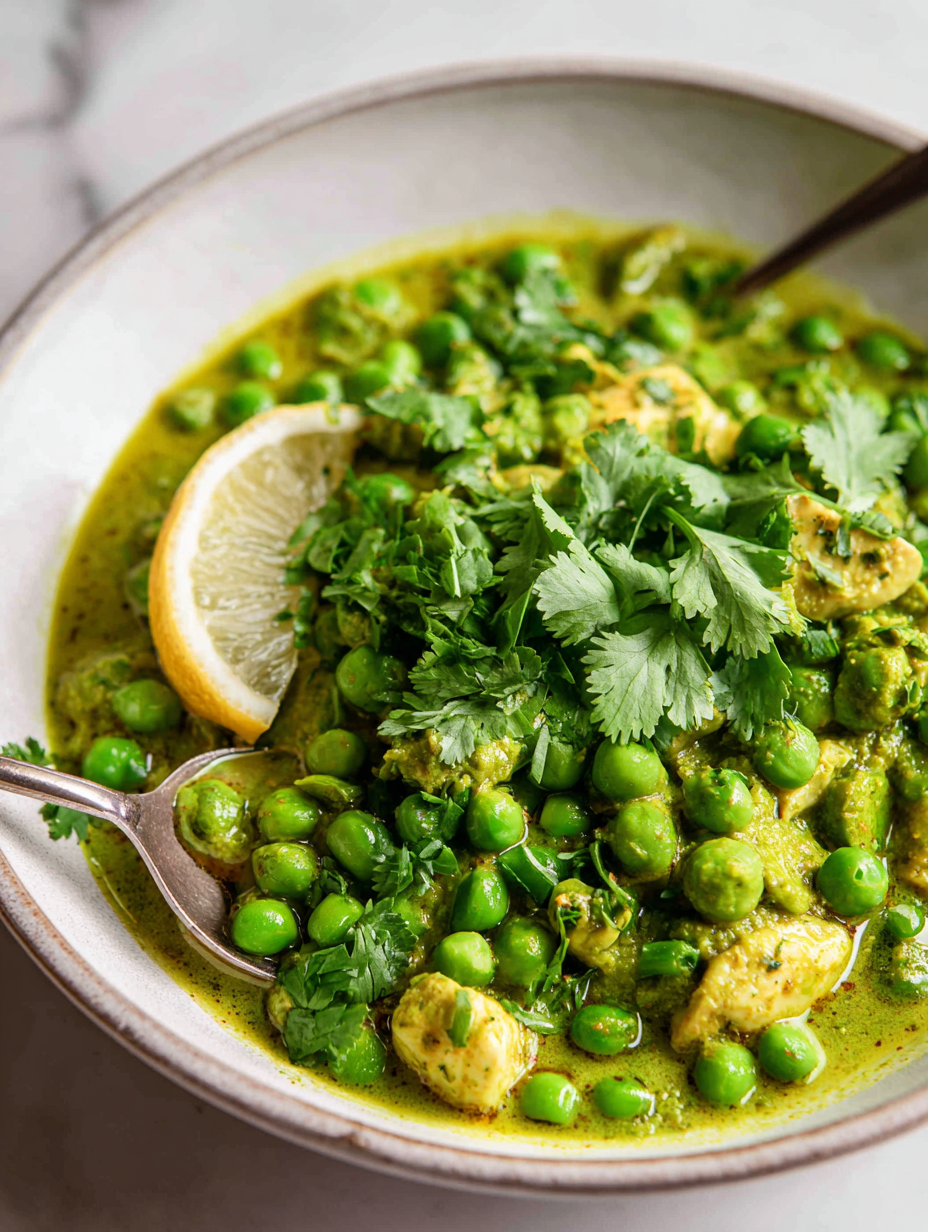
Green Pea Curry
Ingredients
Equipment
Method
- Heat the oil in a large heavy-bottomed pan over medium heat until shimmering and fragrant.
- Add the chopped onion and sauté, stirring occasionally, until golden and soft, about 5-7 minutes. The onion should smell sweet and nutty.
- Stir in the minced garlic and grated ginger, cooking for about 30 seconds until fragrant and slightly crackling.
- Add the ground cumin, coriander, and turmeric. Cook, stirring constantly, for 1 minute until the spices are toasted and aromatic.
- Pour in the crushed tomatoes, stirring to combine. Reduce the heat to medium-low and cook, stirring occasionally, until the sauce thickens and becomes jammy, about 10 minutes.
- Add the frozen green peas directly into the sauce, stirring to distribute evenly. Cook for 3-4 minutes until peas turn bright green and are tender.
- Stir in the coconut milk, mixing well. Bring the curry to a gentle simmer and cook for another 5 minutes, until it’s velvety and fragrant.
- Check the seasoning, adding salt if needed. Remove from heat and let sit for a couple of minutes to allow flavors to deepen.
- Garnish with chopped cilantro or mint. Serve hot over rice or with flatbread for a cozy, satisfying meal.
Tips and tricks for perfect curry
- Use fresh peas when in season for the brightest sweetness and crunch, but frozen peas are a quick, reliable alternative that hold their color.
- When sautéing onions and garlic, cook until golden and fragrant—this develops sweetness and depth—avoid burning by keeping the heat moderate.
- Toast spices gently until aromatic, about 30 seconds to 1 minute, to release their essential oils without scorching—your curry will smell richer.
- When adding coconut milk, stir well to incorporate the cream on top—this ensures a smooth, velvety texture without clumps.
- Check for doneness by tasting peas—they should be tender with a slight pop—and ensure the curry thickens enough to coat the spoon, not pool.
- Finish with a squeeze of fresh lemon or lime for brightness—this balances the richness and heightens the overall flavor.
- If your curry turns out too thick, splash in a little hot water or broth, then stir gently—look for a shiny, slightly runny sauce before serving.
Common mistakes and how to fix them
- FORGOT to check peas for doneness → Test by pressing; they should be tender and pop slightly.
- DUMPED too much oil → Use just enough to sauté; excess oil makes curry greasy.
- OVER-TORCHED spices → Toast spices gently until fragrant, not browned or burnt, to avoid bitterness.
- MISSED resting time → Let curry sit 2-3 minutes after cooking to deepen flavors and improve texture.
Quick fixes and pantry swaps
- When peas seem dull, splash in a squeeze of lemon to brighten their sweetness.
- If curry is too thick, add a quick splash of hot water and stir until smooth.
- Dumped too much oil? Use a paper towel to gently soak excess oil from the surface.
- When spices burn, immediately remove from heat and stir in a splash of coconut milk to mellow bitterness.
- Splash a bit of soy sauce or fish sauce if you need an umami boost—shimmering and savory, it lifts the dish.
Prep, store, and reheat tips
- Prep the curry ingredients—chop onions and garlic, measure spices—ahead to save time when cooking. The flavors meld better when they rest overnight in the fridge.
- Store leftovers in an airtight container in the fridge for up to 2 days. The curry will develop a richer, slightly deeper aroma, but the peas may soften more.
- For longer storage, freeze in portions for up to 3 months. Expect some slight texture change, with peas becoming softer upon reheating.
- Reheat gently on the stovetop over low heat, stirring often. The curry will thicken; add a splash of water or coconut milk to loosen it, and simmer until heated through, about 5–7 minutes. The aroma should reignite, and the flavors will intensify with a good simmer.
Top questions about green pea curry
1. Can I use frozen or canned peas instead of fresh?
Fresh peas give a sweeter, brighter flavor and crunch, but frozen work well and are more convenient. Canned peas tend to be mushy and dull the dish’s vibrancy.
2. How do I know when the peas are cooked properly?
Cooking the peas just until tender and bright green, about 3-4 minutes, keeps their texture lively and prevents them from turning to mush.
3. Can I substitute coconut milk with something else?
Use full-fat coconut milk for a rich, velvety sauce that clings to the peas and spices. Light coconut milk will make it less creamy but still flavorful.
4. What if my curry is too thick or pasty?
If the curry turns out too thick, add a splash of hot water or broth and stir gently until it reaches your preferred consistency. It should shimmer and coat the back of a spoon.
5. How do I toast spices without burning them?
Stir the spices gently in a dry pan until fragrant, about 30 seconds to 1 minute, to avoid burning and bitterness. Aromatic spices release their best flavors this way.
6. When should I add lemon or lime?
Add a squeeze of fresh lemon or lime at the end for brightness. The acidity cuts through the richness and highlights the sweetness of the peas.
7. How long does this green pea curry take to make?
The dish comes together quickly—about 20 minutes from start to finish. Prep your ingredients beforehand to streamline the process.
8. Can I make this ahead and reheat?
Store leftovers in an airtight container in the fridge for up to 2 days. Reheat gently on the stovetop, adding a splash of water or coconut milk to loosen it up.
9. When should I add herbs for the best flavor?
Using fresh herbs like cilantro or mint right before serving adds a fresh, herbal aroma that lifts the dish. Add them at the last minute for maximum brightness.
10. How can I fix a bland curry?
If the curry tastes flat, a quick splash of soy sauce or fish sauce can add umami and deepen the flavor profile without overpowering the bright pea sweetness.
This green pea curry isn’t just a quick weeknight meal; it’s a reminder of the simple pleasures that come from humble ingredients. The way the peas burst with sweetness and the coconut’s velvety richness makes each bite feel like a small celebration of seasonal freshness.
Whenever I make this dish, I think about those childhood afternoons in my family’s kitchen, where comfort came from a bowl of something straightforward but deeply satisfying. It’s a dish that feels like home, no matter where I am or how busy life gets.