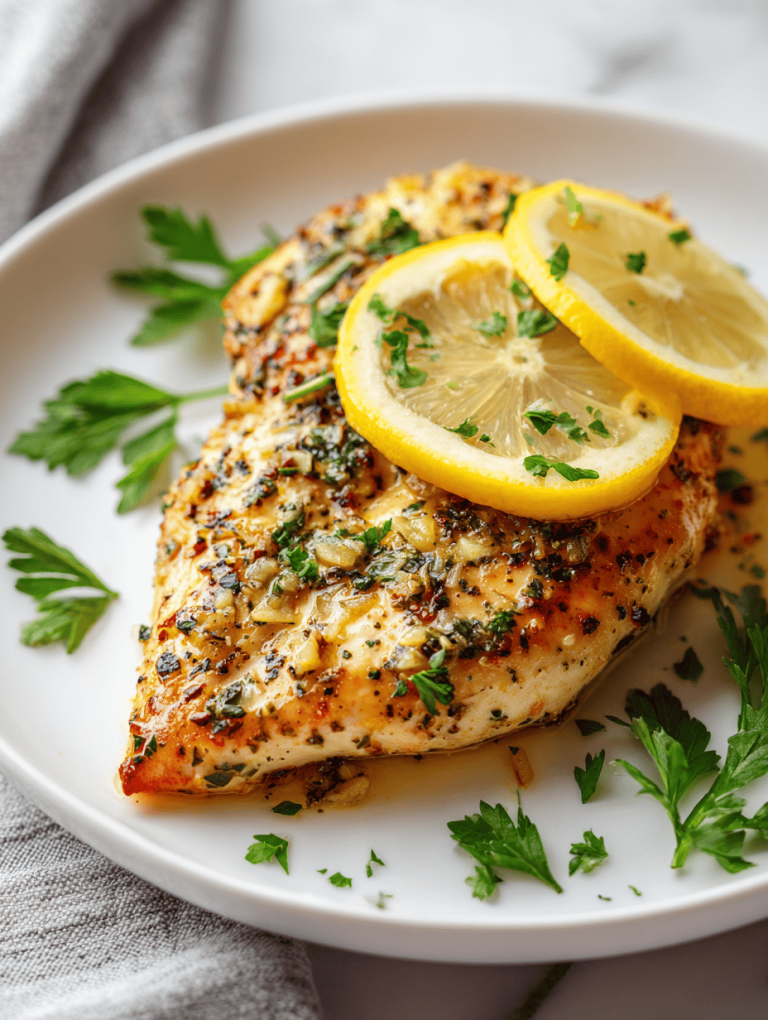
Chicken breasts often get a bad rap for being dry or boring. But with a simple brine and a hot pan, you can unlock their hidden juiciness and flavor. This approach is a bit unorthodox because it combines moistening first with a quick salt soak, then a crisp sear—no oven needed.
What I love about this method is how forgiving it is. It’s less about timing perfectly and more about patience and attention. The result is a chicken that’s juicy, tender, and with a crispy crust—perfect for salads, wraps, or just on its own.
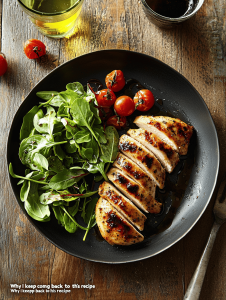
Why I keep coming back to this recipe
It’s straightforward but yields a surprisingly complex flavor and texture. The process feels honest—just heat, patience, and a good pan. I love how the aroma of searing chicken fills the kitchen, promising a satisfying bite. Plus, it’s adaptable—throw on different herbs or sauces to change it up.
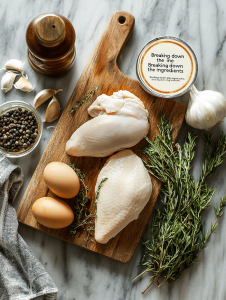
Breaking down the ingredients
- Chicken breasts: Thick, meaty, and mild-flavored; ideal for quick cooking and absorbing flavors.
- Salt and sugar (brine): Enhances moisture retention and balances flavor—don’t skip the brine.
- Oil (high-smoke point, like canola or vegetable): Helps achieve that crisp, golden crust without burning.
- Lemon or herbs (for finishing): Adds brightness and aroma—freshness makes the chicken pop.
- Black pepper: A simple seasoning—adds just enough spice to complement the savory.
- Optional: garlic powder, paprika: For extra flavor—use sparingly to avoid overpowering the chicken’s natural taste.
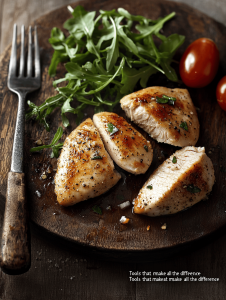
Tools that make all the difference
- Heavy skillet (cast iron ideally): Provides even heat and a crisp sear.
- Meat thermometer: Ensures perfect doneness without overcooking.
- Tongs: Helps flip the chicken without piercing and losing juices.
- Paper towels: Thoroughly dry chicken for optimal searing.
Step-by-step for a juicy, seared finish
Step 1: Start with a quick brine—dissolve salt and sugar in water, then submerge chicken breasts for 15-20 minutes.
Step 2: Pat dry thoroughly—moisture is the enemy of a good sear.
Step 3: Heat a heavy skillet over medium-high heat until shimmering, about 2 minutes.
Step 4: Add oil—enough to coat the bottom—and wait for it to shimmer.
Step 5: Place chicken breasts in the pan, smooth side down. Cook undisturbed for 5-6 minutes, until golden.
Step 6: Flip and cook another 4-5 minutes, until the internal temp hits 75°C (165°F).
Step 7: Remove from heat, cover, and let rest for 5 minutes to keep juices in.
Step 8: Slice and serve with a squeeze of lemon or a drizzle of pan juices.
Cooking checkpoints & tips to get it just right
- Chicken should be firm but not rubbery—poke to check for slight bounce.
- The underside should be a rich, golden-brown—don’t rush the sear.
- Internal temperature hits 75°C (165°F)—use a reliable probe.
- Juices run clear when pierced—no pink or bloody spots.
Common mistakes & how to fix them
- Chicken steamed instead of seared.? Forgot to dry the chicken—pat it completely dry with paper towels.
- Soggy, pale chicken.? Cooked at too low a heat—turn up the heat to get a proper sizzle.
- Overcooked, dry chicken.? Left the chicken in the pan too long—use a timer and probe for 75°C.
- Juice loss and dry bites.? Didn’t rest the meat—let it sit for 5 minutes before slicing.
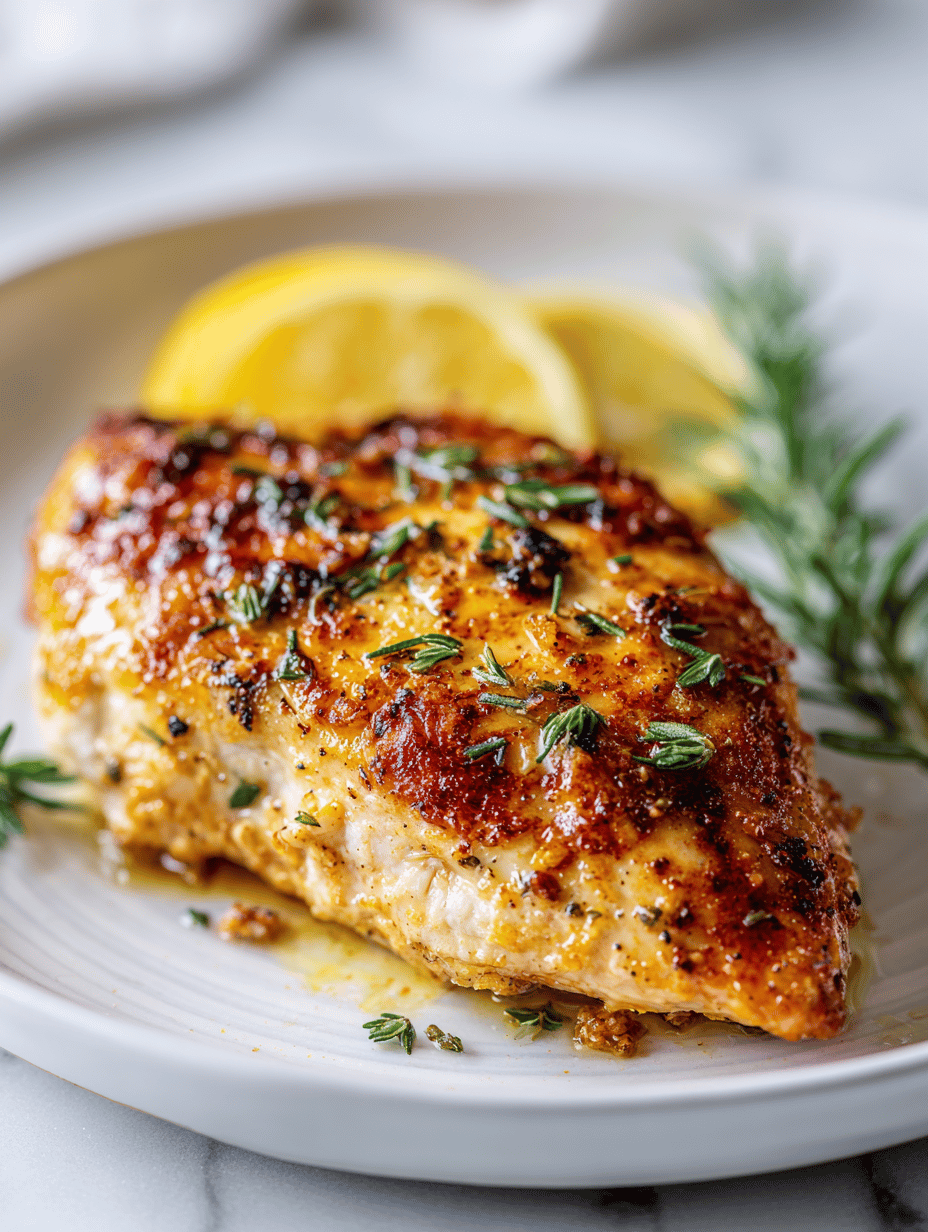
Juicy Crispy Seared Chicken Breast
Ingredients
Equipment
Method
- Dissolve the salt and sugar in 1 cup of water to create a quick brine. Submerge the chicken breasts in the brine and let sit for 15-20 minutes, allowing the flavors to penetrate and moisture to be absorbed.
- Remove the chicken from the brine and pat dry thoroughly with paper towels. Ensuring the surface is dry helps achieve a crisp sear.
- Heat a heavy skillet over medium-high heat until shimmering and hot, about 2 minutes. This ensures an even, high-temperature sear.
- Add the oil to the pan, swirling to coat the bottom evenly. Wait until it shimmers and just begins to smoke slightly.
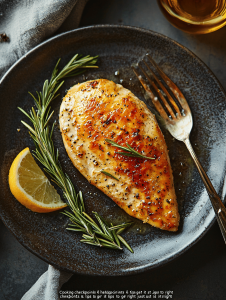
- Place the chicken breasts in the pan, smooth side down. You should hear a satisfying sizzle. Let them cook undisturbed for 5-6 minutes, until the underside turns a deep golden brown and releases easily from the pan.
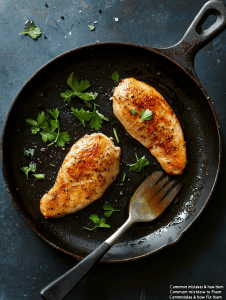
- Flip the chicken using tongs and cook for another 4-5 minutes on the second side. Use a meat thermometer to check that the internal temperature reaches 75°C (165°F).
- Remove the skillet from heat, cover loosely with foil or a plate, and let the chicken rest for 5 minutes. Resting allows the juices to redistribute, keeping the meat juicy.
- Slice the chicken against the grain, then squeeze fresh lemon or drizzle pan juices over the top for brightness and added flavor. Serve immediately for the best crispy, juicy experience.