There’s something about sticky toffee pudding that feels like slipping into a favorite old coat—familiar, warm, and a little bit indulgent. Growing up, this dessert was the star at family dinners, a sticky, sweet hug that made the end of any meal feel special. I love how the rich, caramelized sauce clings to every bite, reminding me of cozy nights and slow weekends.
Making this pudding from scratch isn’t about perfection; it’s about embracing the messy, honest process. It’s forgiving in the best way—overmix, underbake, and still end up with something delightfully gooey and satisfying. It’s one of those recipes that feels like a small act of self-care, a way to slow down and enjoy the simple pleasure of warm, sticky sweetness.
Focusing on the nostalgic comfort and rich history behind Sticky Toffee Pudding, I want to explore how this classic British dessert connects us to simpler times, family gatherings, and cozy evenings. It’s more than just a sweet treat; it’s a vessel for memories and shared moments, a reminder that sometimes, the best recipes are the ones that feel like a warm hug after a long day.
A Cozy Classic with a Modern Twist
- This dessert takes me back to lazy Sunday afternoons at my grandmother’s house, where the smell of caramel and toasted spices filled every corner.
- I find a strange comfort in the sticky, gooey texture—it’s like a warm hug that lingers long after the last bite.
- There’s a quiet pride in mastering this recipe, knowing I can recreate that rich, indulgent sauce without fuss.
- Every time I make it, I feel a bit more connected to my British roots, celebrating a tradition that’s been in my family for generations.
A Personal Connection to Comfort
Making this sticky toffee pudding from scratch is a bit of a ritual for me. It’s not just about the dessert, but the memories it stirs—late nights in the kitchen, the smell of caramel bubbling up, the slow pour of hot sauce over warm sponge. I remember the first time I tried to make it, fumbling through the ingredients, feeling like I was trying to recreate a secret family recipe. Over the years, it’s become a comfort, a connection to my childhood, and a little act of love for anyone I share it with.
Contextual origin, trivia, or history
- Sticky toffee pudding originated in Britain during the 20th century, gaining popularity as a comforting dessert in the post-war era.
- The dish was initially made with simple ingredients—dates, flour, and sugar—reflecting the resourcefulness of its creators during rationing times.
- Despite its British roots, variations of sticky toffee pudding can be found across former British colonies, each adding local twists.
- The rich caramel sauce is believed to have evolved from traditional British toffee recipes, adapted to pair perfectly with moist sponge cake.
- Historically, this dessert was served warm with a generous pour of cream or custard, making it a beloved family treat in cozy settings.
Ingredient breakdown: key components
- Dates: I love how the soft, sticky dates turn almost jammy when cooked—look for plump, moist ones, and if yours are dry, soak them in hot water first.
- Brown sugar: It gives the sauce its deep caramel flavor, and I always opt for dark brown to boost that smoky richness—don’t skimp on it.
- Unsalted butter: Creamy and rich, it melts into the batter like a silken ribbon—if using salted, cut back on added salt in the recipe.
- Self-raising flour: Keeps the sponge light and airy, but if you only have plain, just add a teaspoon of baking powder—no one will notice.
- Heavy cream: I add a splash to the sauce right before serving for a silky finish—substitute with coconut cream for a dairy-free twist, though it’s a bit less luscious.
- Vanilla extract: A splash brightens the whole dish—try using real vanilla bean paste if you want an extra fragrant punch.
- Baking soda: When combined with the hot dates, it creates a gentle rise and helps neutralize the acidity—be careful not to overmix after adding.
Spotlight on key ingredients
Dates:
- I love how the soft, sticky dates turn almost jammy when cooked—look for plump, moist ones, and if yours are dry, soak them in hot water first.
- Brown sugar: It gives the sauce its deep caramel flavor, and I always opt for dark brown to boost that smoky richness—don’t skimp on it.
Heavy cream:
- I add a splash to the sauce right before serving for a silky finish—substitute with coconut cream for a dairy-free twist, though it’s a bit less luscious.
- Vanilla extract: A splash brightens the whole dish—try using real vanilla bean paste if you want an extra fragrant punch.
Notes for ingredient swaps
- Dates: I prefer Medjool dates for their rich sweetness and moist texture, but you can swap in dried apricots or figs for a different fruity note.
- Brown sugar: Dark brown sugar gives a smoky caramel flavor, while light brown makes the sauce a tad milder—use what you have.
- Unsalted butter: For a dairy-free version, coconut oil works great, though it adds a faint coconut aroma and slightly different richness.
- Heavy cream: Swap with evaporated milk or coconut cream for a lighter or dairy-free sauce—expect a different mouthfeel but still luscious.
- Self-raising flour: If you only have plain flour, add 1 teaspoon baking powder per cup to keep the sponge airy and tender.
- Vanilla extract: Use vanilla bean paste for a more intense flavor or a splash of almond extract for a nutty twist—just don’t overdo it.
- Toffee sauce: For a less sweet version, add a dash of sea salt or use dark brown sugar to deepen the caramel notes.
Equipment & Tools
- Oven: Bake the pudding evenly at the right temperature.
- Mixing bowls: Combine ingredients thoroughly.
- Saucepan: Make the toffee sauce with control and precision.
- Spatula: Spread batter smoothly and pour sauce evenly.
- Toothpick or skewer: Test doneness of the pudding.
Step-by-step guide to sticky toffee pudding
- Preheat your oven to 180°C (350°F). Grease a 20cm (8-inch) square baking dish or ramekins if you prefer individual servings. Set aside.
- Chop 200g (7 oz) of pitted dates into small pieces. Place them in a heatproof bowl and pour over 250ml (1 cup) boiling water. Add 1 teaspoon baking soda, stir, and let soak for 10 minutes until softened and jammy. Drain, reserving about 2 tablespoons of the soaking liquid.
- In a mixing bowl, cream together 100g (1/2 cup) unsalted butter and 150g (3/4 cup) dark brown sugar until smooth and slightly fluffy—about 2-3 minutes on medium speed.
- Beat in 2 large eggs, one at a time, ensuring each is fully incorporated before adding the next. Mix in 1 teaspoon vanilla extract.
- Add the soaked dates to the butter mixture, then fold in 200g (1 2/3 cups) self-raising flour and the reserved date soaking liquid. Mix gently until just combined—avoid overmixing to keep it light.
- Pour the batter into your prepared dish or ramekins, smoothing the top with a spatula. Bake for 25-30 minutes, or until the top is golden and a toothpick inserted in the center comes out with moist crumbs, but no wet batter.
- While baking, prepare the toffee sauce: in a small saucepan, combine 150g (3/4 cup) brown sugar, 100g (7 tablespoons) unsalted butter, and 125ml (1/2 cup) heavy cream. Bring to a gentle boil over medium heat, stirring constantly, until thickened slightly, about 3-4 minutes. Remove from heat and stir in a teaspoon of vanilla extract.
- Once baked, poke the warm pudding all over with a skewer or fork, then pour over the hot toffee sauce so it seeps into the sponge. Let sit for 5 minutes to allow flavors to meld.
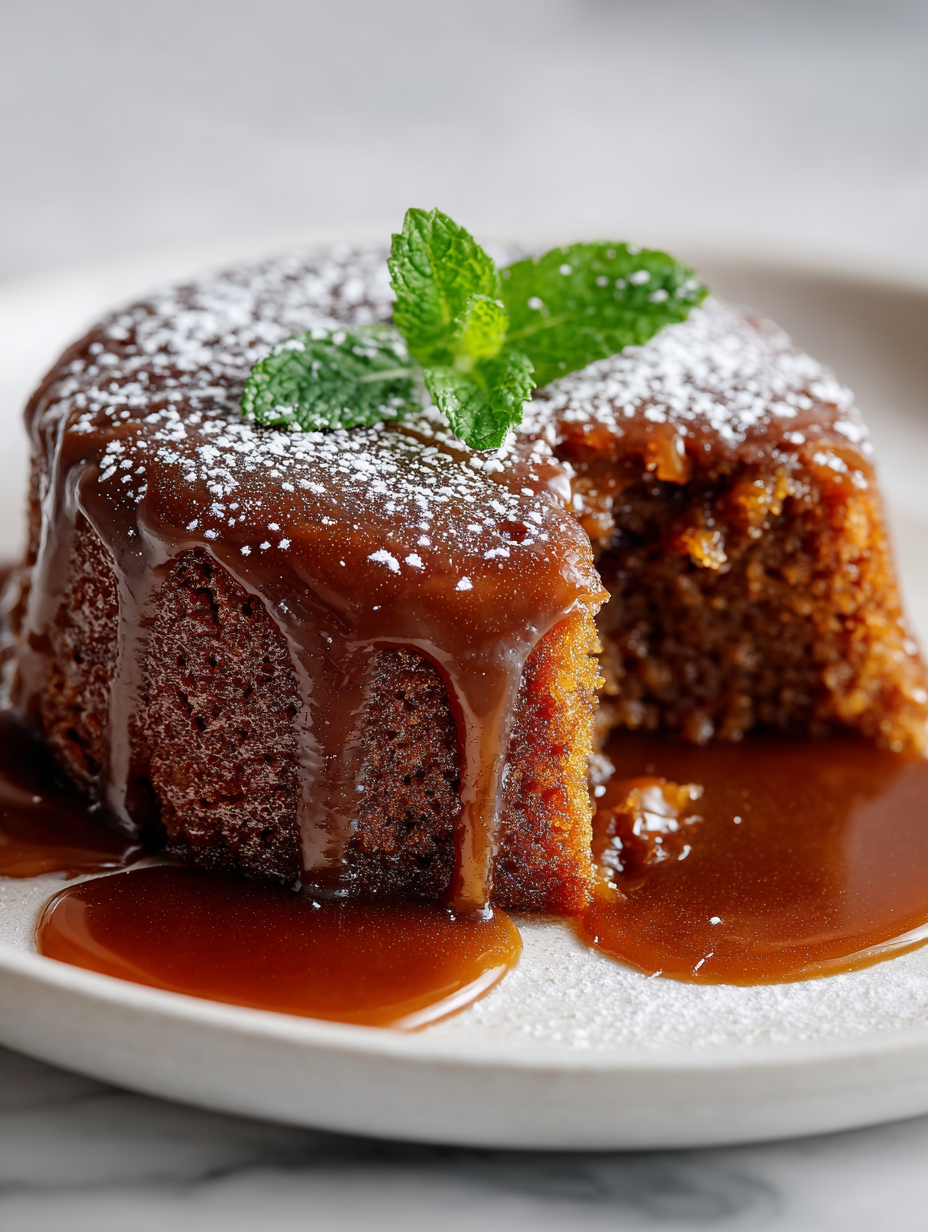
- Serve slices of pudding drizzled with extra toffee sauce, accompanied by cream or ice cream if desired. The pudding should be warm, sticky, and intensely caramel-flavored—think rich, oozy, and just a little bit smoky.
Let the pudding rest for 5 minutes after baking. Serve warm, generously drizzled with the hot toffee sauce. For a more indulgent finish, add a dollop of cream or a scoop of vanilla ice cream on the side.
How to Know It’s Done
- Pudding is golden brown and a toothpick comes out moist but not wet.
- Toffee sauce is thickened and glossy with a caramel aroma.
- The sponge feels springy yet moist when pressed gently.
Sticky Toffee Pudding
Ingredients
Equipment
Method
- Chop the pitted dates into small pieces and place them in a heatproof bowl. Pour over boiling water, add baking soda, and stir. Let soak for 10 minutes until the dates are soft and jammy, then drain, reserving a couple of tablespoons of the soaking liquid.
- In a large mixing bowl, cream together softened butter and dark brown sugar until the mixture is smooth and slightly fluffy, about 2-3 minutes. Use a spatula or hand mixer for best results.
- Add eggs one at a time to the butter mixture, beating well after each addition. Mix in vanilla extract until fully incorporated and the mixture is light and silky.
- Stir the soaked dates into the batter, then gently fold in the self-raising flour until just combined. If the batter feels thick, add a little of the reserved soaking liquid to loosen it slightly.
- Pour the batter into a greased baking dish or individual ramekins, smoothing the top with a spatula. Bake in a preheated oven at 180°C (350°F) for 25-30 minutes, until the top is golden and a toothpick inserted in the center comes out moist but not wet.
- While the pudding bakes, make the toffee sauce by combining brown sugar, butter, and heavy cream in a saucepan. Bring to a gentle boil over medium heat, stirring constantly, until the sauce thickens slightly and becomes glossy, about 3-4 minutes. Remove from heat and stir in vanilla extract.
- Once the pudding is baked and still warm, poke holes all over the surface with a skewer or fork. Pour the hot toffee sauce evenly over the pudding, allowing it to soak in and create a sticky, caramelized coating.
- Let the pudding rest for about 5 minutes to allow the sauce to set and the flavors to meld.
- Serve slices of the warm sticky toffee pudding drizzled with extra toffee sauce, optionally with cream or ice cream on the side. Enjoy the gooey, caramel-rich texture and warm aroma with each bite.
Tips for Perfect Sticky Toffee Pudding
- Bolded mini-head: Use room temperature butter to ensure a smooth, creamy batter that mixes evenly.
- Bolded mini-head: Soak your dates in hot water before chopping to release their natural sweetness and soften them thoroughly.
- Bolded mini-head: Gently fold ingredients to maintain air in the batter—overmixing can make the sponge dense and heavy.
- Bolded mini-head: Pour hot toffee sauce over the baked pudding while it’s still warm for maximum soak and caramel flavor.
- Bolded mini-head: Keep an eye on the pudding during baking; start checking at 25 minutes to prevent over-browning.
- Bolded mini-head: For a glossy finish, brush the top with a little extra melted butter or warm sauce right after baking.
- Bolded mini-head: Rest the pudding for at least 5 minutes before serving to allow the flavors to meld and the texture to set.
Common mistakes and how to fix them
- FORGOT to check oven temperature → Use an oven thermometer for accuracy.
- DUMPED in all ingredients at once → Mix wet and dry separately first.
- OVER-TORCHED the sauce → Remove from heat once thickened and shiny, about 3 minutes.
- MISSED resting time → Let the pudding sit 5 minutes before serving for better texture.
Quick Fixes and Pantry Swaps
- When sauce is grainy, splash in a little hot water and whisk until smooth.
- If pudding is undercooked, bake a few extra minutes until set and golden.
- Dumped too much sauce? Patch with a drizzle of warm cream to balance sweetness.
- Over-baked sponge? Shield with a damp cloth and serve with extra sauce for moisture.
- Splash a pinch of salt into the caramel for a complex, smoky depth.
Prep, store, and reheat tips
- You can prepare the pudding batter up to a day ahead; keep it covered in the fridge and bring to room temperature before baking for even cooking.
- The baked pudding can be stored in an airtight container in the fridge for up to 3 days. Reheat in the oven at 160°C (320°F) for 15-20 minutes until warm and sticky, checking for a gentle shimmer of heat and soft texture.
- The toffee sauce keeps well in the fridge for up to a week. Warm it gently on the stove or in short bursts in the microwave, stirring until smooth and glossy—look for a rich caramel aroma and a shimmer that coats the spoon.
- Reheating the pudding with the sauce poured over it helps maintain its gooey integrity. Avoid overheating to prevent the sauce from becoming too thick or the sponge from drying out.
- For freezer storage, wrap the cooled pudding tightly in plastic wrap and foil. It can be frozen for up to 2 months. Thaw overnight in the fridge and reheat as above, aiming for a warm, fragrant finish.
Top questions about Sticky Toffee Pudding
1. What kind of dates work best?
Look for soft, moist dates—Medjool are ideal. They turn jammy and oozy when cooked, adding richness to the pudding.
2. Can I swap the dates for other dried fruits?
Yes, you can use dried apricots or figs as substitutes. They won’t be as gooey but still add fruity sweetness.
3. How do I know when the toffee sauce is ready?
The sauce should be thick, glossy, and caramel-amber in color. It should shimmer slightly when stirred and smell deeply of caramel.
4. What’s the perfect doneness for the pudding?
Bake until the top is golden and a toothpick inserted in the center comes out moist but not wet. The sponge should feel springy when gently pressed.
5. How long can I keep leftovers?
Store leftovers in an airtight container in the fridge for up to 3 days. Reheat in the oven at 160°C (320°F) for 15-20 minutes until warm and sticky.
6. Can I prepare the batter in advance?
You can make the batter a day ahead, cover and refrigerate. Let it come to room temperature before baking for even rise.
7. What if my pudding turns out dry or the sauce is too thick?
If the pudding is too dry, drizzle extra hot toffee sauce on top. For overly thick sauce, whisk in a splash of hot water or cream.
8. Any tips for mixing the batter?
Use room temperature butter for a smooth batter, and gently fold ingredients to keep it airy. Overmixing makes it dense.
9. When should I add the toffee sauce?
Pour hot sauce over the warm pudding to soak in fully. Let it sit for 5 minutes before serving for maximum gooeyness.
10. What’s the history behind sticky toffee pudding?
This dessert originated in Britain in the 20th century, gaining fame as a comforting, post-war treat. Its rich caramel sauce evolved from traditional toffee recipes and became a classic family favorite across the UK and beyond.
This dessert is a nostalgic reminder of slow weekends and family gatherings, where the smell of caramel and warm sponge lingered long after the plates were cleared. It’s a dish that invites you to pause, savor, and feel a little more rooted in simple pleasures. No matter the season, a slice of sticky toffee pudding can bring a cozy sense of home to any table.
In the end, it’s not just about the recipe but the moments shared over that rich, sticky sauce and tender sponge. Each spoonful carries a bit of history, warmth, and quiet pride—elements that make this dessert a true comfort, year after year.