Mushroom risotto feels like a quiet celebration of the seasons, especially when foraged mushrooms are at their peak. It’s not just about comfort; it’s about digging into that deep, earthy umami that makes each bite feel like a small treasure hunt.
I love how the different varieties—oysters, shiitake, cremini—each add their own personality, transforming this humble dish into something layered and complex. It’s a recipe that invites you to slow down, to really pay attention to the flavors developing in the pot.
This dish is a reminder that simple ingredients—rice, mushrooms, broth—can come together with patience and care to create something deeply satisfying. It’s a bit of a ritual, a mindful moment that ends with a bowl of something warm and grounding.
Focusing on the earthy, umami-rich qualities of mushrooms, this risotto highlights how different varieties can transform the dish from simple comfort food to a celebration of seasonal foraging and flavor depth.
A Forager’s Approach to Risotto
- Cooking this risotto always reminds me of autumn walks in the woods, gathering wild mushrooms for a meal that feels like a treasure hunt.
- There’s a quiet pride in perfecting the creamy, al dente texture—it’s about patience and listening to the rice as it slowly transforms.
- I feel a nostalgic warmth every time I serve this dish, especially when the earthy aroma fills the kitchen and sparks conversations.
- This recipe is my go-to when I need comfort; it’s simple, honest, and always invites slow, mindful cooking.
A Forager’s Approach to Risotto
This mushroom risotto came about during a weekend foraging trip with friends. We found a mix of shiitakes and oyster mushrooms under the autumn canopy, their earthy aroma already filling the air. Later, I realized how those wild finds could be turned into something warm and nourishing, a dish that celebrated the season’s bounty. Cooking it always reminds me of that day—simple ingredients, shared laughter, and the magic of nature’s flavors in one pot.
Mushroom Risotto Trivia & History
- Mushroom risotto has roots in Italy’s northern regions, where foraging mushrooms has been a tradition for centuries.
- The dish’s focus on earthy, umami flavors mirrors Italy’s rustic culinary heritage, emphasizing simple, seasonal ingredients.
- Historically, risotto was a humble peasant dish, transformed over time into a refined comfort food enjoyed across Italy and beyond.
- Different mushroom varieties, like porcini and chanterelles, have long been prized for their unique flavors and foraging lore.
- The technique of slowly cooking rice in broth, known as ‘mantecatura,’ is key to achieving that creamy, cohesive texture.
Ingredient breakdown
- Mushrooms: I love using a mix of shiitake, oyster, and cremini—they each bring a unique earthy aroma and meaty texture that makes every bite interesting. If you only have one type, go for shiitake for that smoky, umami punch.
- Arborio rice: It’s the backbone of this dish—creamy, starchy, and forgiving. Skip this and you lose that signature risotto texture. If unavailable, try Carnaroli, but avoid long-grain varieties.
- Vegetable broth: I prefer homemade if I can, with a rich, simmered flavor that adds depth. Store-bought works fine—just warm it up so it melds smoothly into the rice, avoiding icy patches that can stall cooking.
- Onion & garlic: They form the savory foundation—finely chop and sauté until translucent and fragrant, about 3-4 minutes. If they burn, your risotto will taste bitter, so keep the heat moderate.
- White wine: Adds a bright, slightly acidic lift—use a dry variety and pour it in after the onions soften. If you’re out, a splash of lemon juice can mimic that brightness without the alcohol.
- Butter & Parmesan: For richness and that irresistible umami finish. Use good quality butter and freshly grated Parmesan, adding them at the end for that glossy, cheesy sheen. If dairy-free, try a splash of nutritional yeast for cheesy notes.
- Olive oil: I start with a good drizzle to sauté the mushrooms—brings out their smoky aroma. Use a mild extra virgin oil; stronger oils can overpower the delicate mushroom flavors.
Spotlight on key ingredients
Mushrooms:
- I love using a mix of shiitake, oyster, and cremini—they each bring a unique earthy aroma and meaty texture that makes every bite interesting. If you only have one type, go for shiitake for that smoky, umami punch.
- Arborio rice: It’s the backbone of this dish—creamy, starchy, and forgiving. Skip this and you lose that signature risotto texture. If unavailable, try Carnaroli, but avoid long-grain varieties.
Mushrooms:
- Arborio rice: It’s the backbone of this dish—creamy, starchy, and forgiving. Skip this and you lose that signature risotto texture. If unavailable, try Carnaroli, but avoid long-grain varieties.
- ingredient
Notes for ingredient swaps
- Dairy-Free: Swap butter and Parmesan for coconut oil and nutritional yeast. Expect a slightly nuttier, less tangy flavor.
- Vegan: Use olive oil instead of butter, and skip cheese or substitute with vegan cheese for creaminess.
- Gluten-Free: This risotto is naturally gluten-free, just ensure your broth is certified gluten-free.
- Broth Variations: Use mushroom or chicken broth for deeper umami, or water with added miso paste for a different depth.
- Rice Alternatives: Carnaroli or Vialone Nano can replace Arborio for a slightly different texture—still creamy but with subtle differences.
- Mushroom Types: Substitute shiitake with porcini or chanterelles for more earthy or fruity notes. Dried mushrooms need rehydrating beforehand.
- Wine: Use dry vermouth or a splash of white grape juice if wine isn’t available; adds a different but pleasant acidity.
Equipment & Tools
- Wide pan or skillet: Provides even heat and enough surface area for proper stirring.
- Wooden spoon or spatula: For gentle stirring without damaging the rice.
- Measuring cups: Ensures accurate rice and broth quantities.
- Ladle: To add broth in controlled, ladleful amounts.
- Saucepan: To keep broth warm for gradual addition.
Step-by-step guide to Mushroom Risotto
- Gather your equipment: a large wide pan or skillet (preferably with a lid), a wooden spoon or spatula, measuring cups, and a ladle. Have your broth warmed in a separate pot, kept at a gentle simmer.
- Prepare your ingredients: finely chop one small onion, mince 2 cloves garlic, and clean or slice about 300g mixed mushrooms (shiitake, oyster, cremini). Measure 1 cup Arborio rice and have 1/2 cup dry white wine ready.
- Heat a tablespoon of olive oil in your pan over medium heat (around 160°C / 320°F). Add the mushrooms, sauté for about 5-7 minutes until they release their aroma and start to brown. Remove and set aside.
- In the same pan, add a little more oil if needed. Sauté the onion until translucent, about 3-4 minutes, stirring frequently. Add garlic and cook until fragrant, about 30 seconds.
- Pour in the white wine, stirring constantly until it mostly evaporates, about 2 minutes. This step adds brightness and depth to the risotto.
- Add the rice to the pan, stirring to coat each grain with oil. Toast for about 2 minutes until the edges turn slightly translucent but not browned.
- Begin adding the warm broth, one ladleful (about 1/2 cup) at a time, stirring constantly. Wait until the liquid is mostly absorbed before adding the next ladleful. Maintain a gentle simmer, keeping the temperature steady around 85°C / 185°F.
- Continue this process, stirring frequently, until the rice is creamy and just tender, about 18-20 minutes. Check the texture; it should be al dente—firm but cooked through.
- About 2 minutes before the rice is done, fold in the sautéed mushrooms. Taste and adjust seasoning with salt and pepper as needed.
- Once the risotto reaches a creamy, slightly loose consistency, remove from heat. Stir in a tablespoon of butter and a handful of freshly grated Parmesan cheese for richness.
- Let the risotto rest for 2 minutes, covered loosely, to allow flavors to meld. Then, serve immediately, garnished with a sprinkle of herbs or extra cheese if desired.
Let the risotto rest for 2 minutes off heat, covered loosely. Serve immediately, garnished with fresh herbs or extra cheese for added flavor and presentation.
How to Know It’s Done
- Rice is creamy and al dente, with a slight bite when tested.
- Mushrooms are tender and aromatic, evenly distributed throughout the dish.
- The risotto has a glossy, slightly loose consistency, not stiff or soupy.
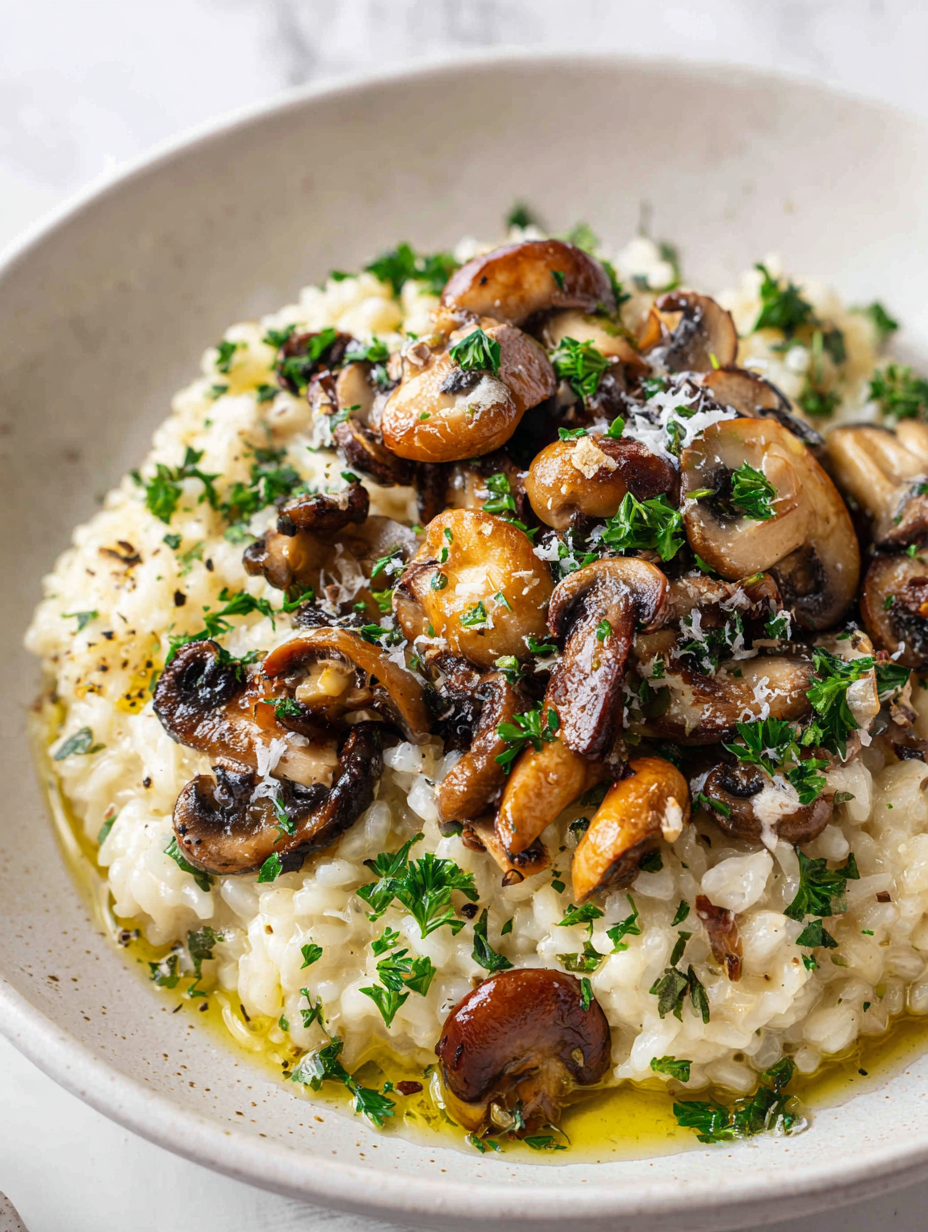
Wild Mushroom Risotto
Ingredients
Equipment
Method
- Warm your vegetable broth in a saucepan over low heat, so it's ready to be added gradually.
- Heat olive oil in a wide pan over medium heat. Add the sliced mushrooms and sauté for 5-7 minutes until they release their aroma and turn golden brown. Remove half of the mushrooms and set aside for later.
- Add the finely chopped onion to the same pan and cook for 3-4 minutes until translucent and fragrant. Stir frequently to prevent burning.
- Stir in the minced garlic and cook for about 30 seconds until fragrant, filling the air with a subtle aroma of garlic and mushrooms.
- Pour in the white wine, stirring constantly, and cook until the liquid mostly evaporates, about 2 minutes. This lifts the flavors and adds brightness to the dish.
- Add the arborio rice to the pan, stirring to coat each grain with oil and toast lightly for about 2 minutes until the edges become slightly translucent and the rice smells nutty.
- Begin adding the warm broth, one ladleful (about 1/2 cup) at a time, stirring constantly and waiting until most of the liquid is absorbed before adding more. Maintain a gentle simmer during this process.
- Continue this gradual addition and stirring process for about 18-20 minutes, until the rice is creamy and just al dente—tender but with a slight bite.
- About 2 minutes before the rice is ready, fold in the sautéed mushrooms that you set aside earlier, distributing them evenly through the risotto.
- Remove the pan from heat, then stir in the butter and grated Parmesan cheese until melted and glossy. Taste and adjust seasonings with salt and pepper as needed.
- Let the risotto rest for 2 minutes off heat, covered loosely, to allow the flavors to meld and the texture to settle into a luscious, creamy consistency.
- Serve hot, garnished with extra Parmesan or fresh herbs if desired, and enjoy the fragrant, earthy, and velvety bowl of mushroom risotto.
Tips and Tricks for Perfect Risotto
- Toast the rice briefly in oil before adding broth—this enhances nuttiness and depth of flavor.
- Keep your broth warm and ladle it in gradually—cold liquid cools the pan and slows cooking.
- Stir consistently but gently—this releases starch and creates that creamy, velvety texture.
- Sauté mushrooms over medium heat until they release their aroma and start to brown—avoid overcrowding the pan.
- Finish with a knob of butter and grated Parmesan—these add richness and shine, making each bite luscious.
- Rest the risotto for a couple of minutes off heat—this helps the flavors meld and the texture settle perfectly.
- Taste and adjust seasoning at the end—salt and pepper can make or break the final dish’s balance.
Common mistakes and how to fix them
- FORGOT to toast the rice briefly, resulting in less depth—toast for 1-2 minutes until fragrant.
- DUMPED too much broth at once, causing uneven cooking—add broth gradually, stirring constantly.
- OVER-TORCHED the mushrooms, making them tough—sauté on medium heat, keep an eye for brown edges.
- UNDERSALTED the final dish—taste and adjust salt after adding cheese for balanced flavor.
Quick fixes and pantry swaps
- If sauce is too thick, splash in hot broth and stir gently—risotto should be creamy, not gluey.
- When mushrooms are limp, quick sauté over high heat until they shimmer—restores flavor and texture.
- Splash a bit of lemon juice if risotto tastes flat—brighten up the earthy flavors instantly.
- Patch over-salted risotto with a dollop of butter or a splash of water—balances the salt without diluting flavor.
- Shield burnt rice by quickly removing from heat and adding more warm broth—rescue with gentle stirring.
Prep, store, and reheat tips
- Prep your mushrooms: Clean and slice the mushrooms a day ahead, store in an airtight container in the fridge—they’ll keep fresh and earthy for up to 24 hours.
- Cook the rice partially: Par-cook the rice in boiling water for 4-5 minutes, then cool quickly and store in a sealed container—good for up to 1 day before finishing.
- Make the broth in advance: Prepare and keep your broth warm in a separate pot. It can be refrigerated for up to 3 days or frozen for 1 month—mushroom-infused broth adds extra depth when reheated.
- Reheat gently: To reheat, stir in a splash of hot broth or water, warm over low heat, and stir constantly until creamy and hot—watch for grainy texture, and add more liquid if needed.
- Flavor intensifies over time: The earthy aroma of mushrooms deepens the next day, so risotto can taste even richer after a night in the fridge—just reheat gently to preserve creaminess.
Frequently Asked Questions about Mushroom Risotto
1. What mushrooms work best?
Use a mix of wild and cultivated mushrooms for the best earthy flavor. Sauté until tender and fragrant, about 5-7 minutes.
2. Can I use different rice types?
Arborio rice is key for its high starch content, creating that creamy, cohesive texture. Carnaroli is a good substitute.
3. Should the broth be hot or cold?
Warm broth helps the rice cook evenly and quickly. Keep it simmering gently on the stove while you prepare the risotto.
4. How much should I stir?
Stir constantly but gently to release starch and build that silky texture. Avoid vigorous stirring which can break the rice.
5. How do I know when to add more broth?
Add broth gradually—about one ladleful at a time—and wait until it’s mostly absorbed before adding more. This controls the cooking process.
6. When is the risotto ready?
Finish with a knob of butter and freshly grated Parmesan for richness. Let sit for 2 minutes before serving to meld flavors.
7. What’s the perfect texture?
Risotto is done when it’s creamy, slightly loose, and the rice is al dente—tender but with a slight bite.
8. How should mushrooms be cooked?
Avoid overcooking mushrooms; sauté over medium heat until fragrant and browned but not shriveled or tough.
9. Can I make risotto ahead?
Storing risotto can cause it to become gluey. Reheat gently with a splash of broth and stir until creamy again.
10. Should I use fresh or dried mushrooms?
Use the freshest mushrooms you can find for the best aroma and flavor. Dried mushrooms need rehydrating for maximum umami.
This risotto isn’t just about the earthy mushrooms or the creamy rice; it’s about those quiet moments in the kitchen, stirring and tasting, that make the process almost meditative. When it’s finished, the aroma alone can fill a room with a sense of warmth and nostalgia, especially if you’ve gathered your ingredients from a recent foraging trip or a local market. It’s a dish that reminds me to slow down and enjoy the simple magic of good ingredients and honest technique.
In the end, this mushroom risotto is more than a recipe—it’s a reminder of the season’s bounty and the small joys of cooking from scratch. Whether served for a cozy weeknight dinner or a laid-back weekend feast, it’s a dish that invites connection—between ingredients, memories, and those you share it with. And really, that’s what makes it special, every single time.