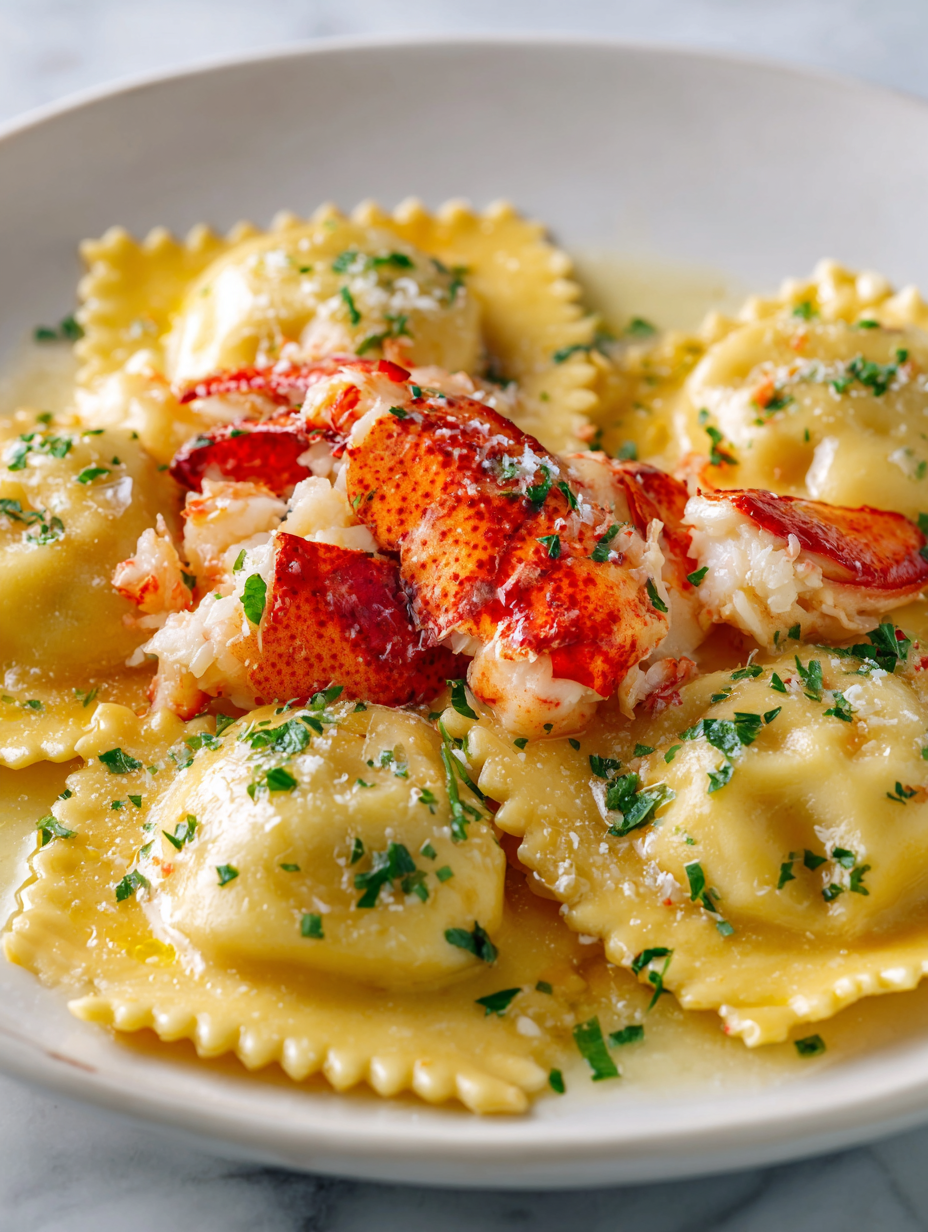
Lobster ravioli isn’t just fancy pasta; it’s a tiny celebration in every bite. I love pulling it out for those moments when a little extra effort feels worth it—like finishing a project or making it through a rough week. The richness of lobster wrapped in tender pasta feels indulgent but surprisingly doable at home, especially if you keep the filling simple and let the seafood shine.
What makes this dish even better is how adaptable it is. You can turn it into a date-night treat or a special family dinner without breaking the bank. It’s about carving out a moment to savor something luxurious, even if the week has been chaos. And honestly, it’s one of those recipes that reminds me that celebration doesn’t have to be complicated.
Every time I make lobster ravioli, I think about how small wins deserve good food. It’s not about fancy ingredients alone, but the act of making something beautiful and delicious with your own hands. The process of rolling out pasta, filling it carefully, then watching it come together feels like a quiet victory.
There’s something about the way the lobster’s sweet, briny aroma mingles with the buttery sauce — it’s a sensory cue that says, ‘You did something worth celebrating.’ It’s a way to mark a milestone, however small, with a dish that feels both special and accessible. That’s what I love about it: it’s a little reminder to celebrate the everyday.
Focusing on how lobster ravioli can be a celebration dish for small, unexpected milestones—like finishing a tough project or surviving a rough week—making it feel special yet accessible for those moments that deserve a little extra effort.
Celebrating Small Wins with Luxury
- Making lobster ravioli feels like a quiet act of luxury I give myself after a hectic week.
- The aroma of lobster and butter always sparks a nostalgic memory of seaside dinners with family.
- There’s a pride in pulling off perfect, tender ravioli that keeps me coming back to this recipe.
- Honestly, it’s a messy process but seeing those delicate little parcels come together makes me feel accomplished.
- This dish reminds me that sometimes, the simplest ingredients can create something truly special.
Celebrating Small Wins with Luxury
- Making lobster ravioli started as a way to elevate simple pasta nights into something special, especially after a tough week when I needed a reminder that small luxuries matter. The first time I tried making my own filling, I was surprised by how much flavor a handful of lobster, butter, and a touch of lemon could pack into those tiny parcels. It’s a dish that feels indulgent but doesn’t demand fancy ingredients—just patience and a bit of love.
- Every time I roll out the dough and fill each pocket, I think about how this dish is a little ritual of celebration. It’s not just about the outcome but the quiet focus it demands, which makes the final plate even more satisfying. The aroma of lobster mingling with butter and herbs has become my signal that I’ve carved out a moment of joy amid everyday chaos.
- The process of making lobster ravioli reminds me that food is a small act of care—both for myself and those I share it with. It’s a dish that turns ordinary ingredients into something memorable, a reminder that sometimes, the best celebrations are simple and homemade.
Lobster Ravioli Trivia
- Lobster ravioli as a dish gained popularity in upscale Italian-American restaurants in the mid-20th century, blending seafood with traditional pasta.
- The tradition of stuffing pasta with luxury ingredients like lobster reflects Italian culinary influences meeting American decadence post-WWII.
- Quirky fact: In some regions, lobster was once considered poor man’s seafood, but now it’s a symbol of celebration and luxury in pasta dishes.
Ingredient breakdown
- Lobster: I prefer fresh lobster tails for the sweetest, most briny flavor, but frozen works if you thaw thoroughly—look for that firm, oozing texture.
- Pasta dough: I use a simple egg and flour mix—knead until smooth and elastic, it should feel like a firm, slightly tacky pillow that won’t tear easily.
- Filling: A blend of chopped lobster, ricotta, lemon zest, and herbs—aim for a creamy, bright mixture that’s easy to pipe without oozing out.
- Butter: Use unsalted, preferably European style—its richness and slight tang elevate the sauce, making every bite feel velvety and decadent.
- Lemon: Fresh lemon juice brightens the filling and sauce—avoid bottled juice, which can taste flat and dull in this delicate dish.
- Herbs: Fresh chives or tarragon add a subtle herbal lift—dry herbs won’t give the same vibrant pop, so stick with fresh if you can.
- Salt and pepper: Season each component lightly—don’t overdo it early, as the flavors will concentrate during cooking, but don’t skimp either.
Spotlight on key ingredients
Lobster:
- I prefer fresh lobster tails for the sweetest, most briny flavor, but frozen works if you thaw thoroughly—look for that firm, oozing texture.
- Pasta dough: I use a simple egg and flour mix—knead until smooth and elastic, it should feel like a firm, slightly tacky pillow that won’t tear easily.
Pasta dough:
- I use a simple egg and flour mix—knead until smooth and elastic, it should feel like a firm, slightly tacky pillow that won’t tear easily.
- Lemon: Fresh lemon juice brightens the filling and sauce—avoid bottled juice, which can taste flat and dull in this delicate dish.
Notes for ingredient swaps
- Seafood Swap: Use cooked crab meat instead of lobster for a sweeter, more affordable filling. It offers a similar delicate flavor but with a slightly different texture.
- Dairy-Free: Substitute ricotta with blended silken tofu or cashew cheese. The texture will be a bit lighter, and the flavor milder, but still creamy enough for filling.
- Gluten-Free: Swap regular wheat pasta with a gluten-free pasta dough or rice paper wrappers. Keep in mind the texture will be slightly different, more tender or chewy.
- Lemon Zest: Use lime or orange zest for a different citrus twist that adds brightness and a slightly different aromatic profile.
- Herbs: If fresh herbs aren’t available, dried herbs can work—just use half the amount to prevent overpowering the delicate filling.
- Butter: For a dairy-free version, try browned margarine or olive oil. It will alter the richness but still provide a tasty sauce.
- Pasta Dough: Replace some of the flour with semolina for a firmer, more textured bite, or use eggless dough if you’re avoiding eggs.
Equipment & Tools
- Pasta machine or rolling pin: To roll dough thinly and evenly.
- Small spoon or piping bag: To place filling precisely without mess.
- Sharp knife: To cut dough into squares cleanly.
- Large pot: To boil ravioli in plenty of salted water.
- Skillet: To make the butter sauce and finish the dish.
Step-by-step guide to lobster ravioli
- Gather your equipment: a pasta roller or rolling pin, a small spoon or piping bag, a sharp knife, and a large pot for boiling.
- Prepare the pasta dough: Mix 2 cups of flour with 2 beaten eggs and a pinch of salt. Knead until smooth, about 8-10 minutes. Wrap in plastic and rest for 30 minutes.
- While dough rests, make the filling: Finely chop ½ pound lobster meat, then combine with ½ cup ricotta, 1 teaspoon lemon zest, a pinch of salt, pepper, and chopped herbs. Mix until creamy and cohesive.
- Roll out the pasta: Divide dough into four portions. Using a pasta machine or rolling pin, roll each into a thin sheet, about 1 mm thick. Keep covered to prevent drying.
- Cut the sheets into 3-inch squares. Place a teaspoon of filling in the center of each square.
- Seal the ravioli: Brush edges with a little water. Fold over to create a triangle or rectangle, pressing out air and sealing edges tightly.
- Cook the ravioli: Bring a large pot of salted water to a gentle boil (~100°C / 212°F). Gently add ravioli in batches, cook for 3-4 minutes. They are done when they float to the surface and are tender.
- Prepare the sauce: In a large skillet, melt 4 tablespoons of unsalted butter over medium heat (~150°C / 300°F). Add a squeeze of lemon juice and chopped herbs, cook until fragrant, about 1-2 minutes.
- Finish and serve: Gently toss cooked ravioli in the butter sauce, ensuring they are coated but not swimming. Rest for 1 minute, then plate carefully. Garnish with additional herbs or lemon zest if desired.
- Check doneness: Ravioli should be tender and slightly firm on the bite, with a bright, briny aroma. The sauce should be velvety and fragrant.
Let the cooked ravioli rest in the sauce for a minute to absorb flavors. Serve immediately, garnished with herbs or lemon zest for brightness.
How to Know It’s Done
- Ravioli float and are tender when cooked.
- Filling is creamy and well sealed without oozing.
- Butter sauce is fragrant, glossy, and slightly foaming.
Lobster Ravioli
Ingredients
Equipment
Method
- Start by mixing the flour and eggs together on a clean surface or in a bowl to form a smooth, elastic dough. Knead for about 8-10 minutes until it feels firm and slightly tacky, then wrap it in plastic wrap and let it rest for 30 minutes.
- While the dough rests, combine the finely chopped lobster meat with ricotta, lemon zest, chopped herbs, salt, and pepper in a bowl. Mix until the filling is creamy and cohesive.
- Divide the rested dough into four equal portions. Using a pasta machine or rolling pin, roll each portion into a thin sheet about 1 mm thick. Keep the sheets covered to prevent drying out.
- Cut the thin sheets into 3-inch squares with a sharp knife or pastry cutter. Place a teaspoon of the lobster filling in the center of each square.
- Brush the edges of each square with a little water, then fold over to form a rectangle or triangle, pressing out any air and sealing the edges tightly to prevent filling from escaping during cooking.
- Bring a large pot of salted water to a gentle boil. Carefully drop the ravioli in batches, cooking for about 3-4 minutes until they float and are tender.
- Meanwhile, melt the butter in a skillet over medium heat until it starts to foam and smell nutty, about 1-2 minutes. Squeeze in fresh lemon juice and stir in chopped herbs for a fragrant, velvety sauce.
- Using a slotted spoon, gently transfer the cooked ravioli to the skillet with the butter sauce. Toss carefully to coat each piece evenly, allowing the flavors to meld for about a minute.
- Plate the lobster ravioli carefully, spooning additional butter sauce over the top. Garnish with extra herbs or lemon zest if desired, then serve immediately while warm and fragrant.
Notes
Pro tips for perfect lobster ravioli
- Bolded mini-head: Use a pasta roller to get an even, thin sheet—no tearing, no thick edges.
- Bolded mini-head: Chill the filling slightly before piping—it firms up and prevents oozing during sealing.
- Bolded mini-head: Seal edges well, pressing out air—air pockets can cause bursting during boiling.
- Bolded mini-head: Cook ravioli in gently boiling water—vigorous boiling can break delicate pasta apart.
- Bolded mini-head: Finish ravioli in warm butter sauce—keeps them tender and coats evenly without overcooking.
- Bolded mini-head: Rest cooked ravioli briefly on a warm plate—allows flavors to meld and prevents sticking.
Common lobster ravioli mistakes and fixes
- FORGOT to adjust heat → The oil should shimmer but not smoke excessively.
- DUMPED ingredients too quickly → Add ingredients gradually for even cooking and flavor buildup.
- OVER-TORCHED sauce → Remove from heat immediately if it darkens and smells burnt.
- MISSED sealing edges → Press firmly to prevent filling from leaking during boiling.
Quick fixes and pantry swaps
- If sauce separates, splash in a teaspoon of cold water and whisk vigorously.
- When ravioli stick together, dust with extra flour before boiling to prevent clumping.
- Patch over torn pasta edges with a tiny dab of water and press gently to seal.
- Shield delicate ravioli from overcooking by lowering heat once they float to the surface.
- Rescue a dull flavor by adding a squeeze of fresh lemon or a pinch of sea salt just before serving.
Prep, store, and reheat tips
- Prep the filling: Cook and chop lobster ahead, then mix with herbs and cheese. Keeps in the fridge for up to 2 days, smell should remain fresh and briny.
- Assemble the ravioli: Fill, seal, and arrange on a baking sheet lined with parchment. Cover tightly with plastic wrap and refrigerate for up to 6 hours; observe for any drying or cracking.
- Cooked ravioli storage: Boil and then cool in ice water, drain well, and store in an airtight container for up to 24 hours. Expect slightly firmer pasta, with a subtle aroma of the sea.
- Reheating: Gently warm in a skillet with a bit of butter or reboil in salted water for a minute or two. The pasta should shimmer and the filling stay moist without overcooking, releasing a faint lemon-bright scent.
Top questions about lobster ravioli
1. Can I use frozen lobster for this recipe?
Fresh lobster gives the best flavor, but frozen lobster works in a pinch if properly thawed and drained, offering a similar briny sweetness.
2. Can I swap lobster with other seafood?
Yes, you can substitute with cooked crab meat or shrimp, but the flavor and texture will be slightly different, more delicate or sweeter.
3. How do I know when the ravioli are cooked?
Cooking time varies; ravioli float to the surface in about 3-4 minutes when done. They should be tender but still hold their shape.
4. What’s the best way to roll out pasta dough?
Use a pasta roller or a rolling pin to get thin sheets. If the dough tears, it’s too thick or not rested enough—roll again to even out.
5. How do I prevent the ravioli from leaking?
Seal the edges well with water or beaten egg to prevent filling from leaking out during boiling, ensuring tidy, intact ravioli.
6. Can I make lobster ravioli ahead of time?
While fresh is best, cooked ravioli can be stored in the fridge for up to 24 hours. Reheat gently in butter or boiling water to preserve texture.
7. How should I cut the ravioli?
Use a sharp knife or a ravioli cutter to trim the pasta neatly. Dipping the cutter in flour helps prevent sticking and tearing.
8. What’s the sign of perfectly cooked butter sauce?
In a hot skillet, butter should shimmer and smell nutty. If it smokes or turns dark, lower the heat immediately.
9. How do I tell if the dish is done?
When the pasta is tender, the filling is hot, and the sauce is velvety and fragrant, your ravioli are ready to serve.
10. How can I enhance the flavor of lobster ravioli?
Use fresh lemon zest or herbs to brighten the dish. Avoid over-seasoning, as the lobster and butter provide plenty of flavor.
Making lobster ravioli feels like a small act of celebration, a way to mark ordinary days with something special. The aroma of lobster and butter curling through the kitchen is a reminder that simple ingredients can create moments of joy. It’s a dish that encourages patience and care, turning a humble pasta into a tiny luxury.
Whenever I finish plating it, I’m reminded that celebration doesn’t have to be complicated or grand. Sometimes, it’s just about taking the time to enjoy the process and savor the flavors—bright, briny, and buttery—right at home. That’s what makes this dish worth the effort, no matter the occasion.