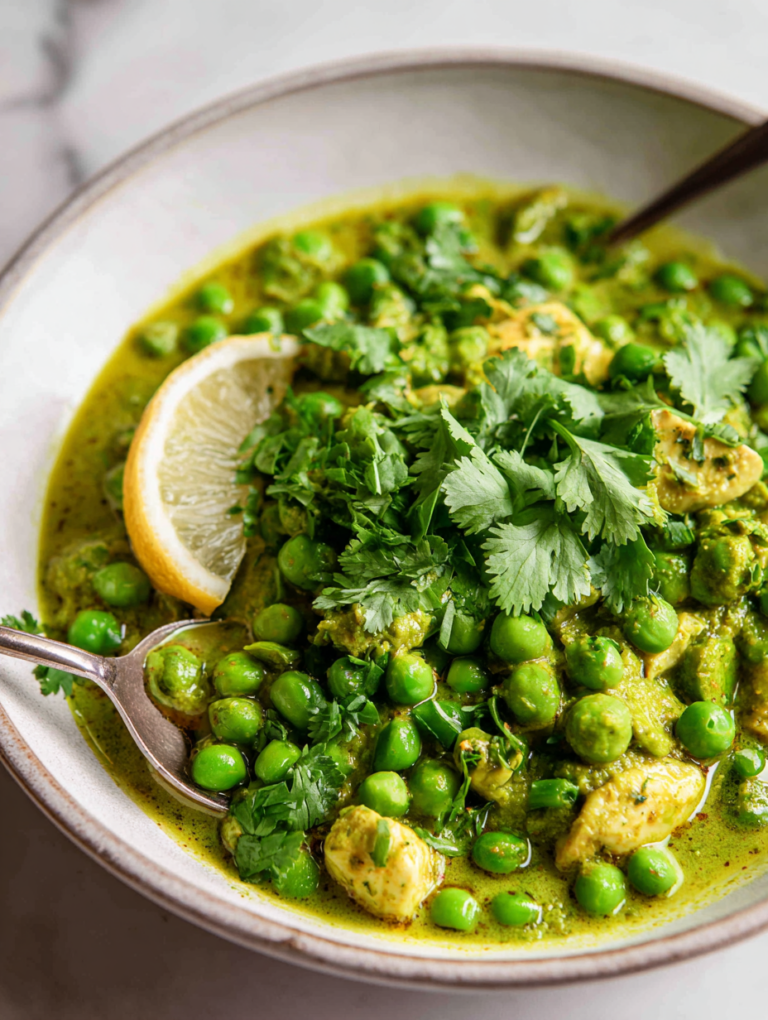
This lemon pea pasta is a reminder that sometimes, the simplest ingredients can create the most lively and satisfying dishes. It’s bright, it’s fresh, and it’s perfect for those days when you want something quick but with a little more flair than your usual go-to.
What makes this recipe special isn’t just the flavor, but the way it feels—light but somehow still filling, with a zing of citrus that wakes up your taste buds. It’s the kind of dish that’s as good for a weeknight dinner as it is for a casual weekend lunch, especially when spring’s green shoots are just starting to pop up.
I love how the sweetness of the peas balances the sharp lemon, and how a handful of herbs or a sprinkle of cheese can turn it into a dish that feels both comforting and bright. It’s honest, straightforward, and honestly, just really good on a plate.
Focusing on the unexpected harmony of bright lemon and sweet peas, this recipe transforms simple pasta into a vibrant, refreshing dish perfect for spring.
The story behind this recipe
- This recipe was born out of a late spring afternoon, when I wandered into my kitchen with just a few leftover ingredients and a craving for something bright and quick. The idea of combining fresh peas and lemon struck me as a way to brighten up even the dullest of weeknights.
- I remember the first time I made it, I was surprised how the simple pairing of peas’ sweetness and lemon’s zing could elevate plain pasta into something unexpectedly lively. It became an instant staple—easy to throw together, but with a flavor that feels thoughtful.
- Now, I keep a stash of frozen peas and a jar of preserved lemons—those small, bright bursts of flavor that make this dish stand out even more. It’s a reminder that sometimes, the most unassuming ingredients can come together to create something memorable.
Ingredient breakdown: key components
- Lemon: I love using fresh lemon zest and juice for that oozy, bright citrus hit. Skip the zest if you’re out—just squeeze more lemon juice for punch.
- Peas: Fresh peas are sweet and tender, but frozen work just as well. Rinse thoroughly to remove any icy crunch before tossing in.
- Olive oil: Use good quality extra virgin—its grassy aroma and smooth texture really carry the dish. If you only have light olive oil, expect a milder flavor.
- Pasta: I prefer a sturdy shape like fusilli or penne—holds the sauce better. Cook until just al dente, not mushy, for perfect bite.
- Garlic: Mince it finely; the aroma when it hits the hot oil is what sets the tone. If you want milder garlic, roast it briefly first.
- Herbs: Fresh basil or mint adds a lovely herbal lift, but dried can work in a pinch—just use less and crumble it in at the end for aroma.
- Parmesan: A sprinkle of grated cheese rounds out the zing. For a non-dairy version, a splash of nutritional yeast gives a cheesy depth.
Spotlight on key ingredients
Lemon:
- I love using fresh lemon zest and juice for that oozy, bright citrus hit. Skip the zest if you’re out—just squeeze more lemon juice for punch.
- Peas: Fresh peas are sweet and tender, but frozen work just as well. Rinse thoroughly to remove any icy crunch before tossing in.
Olive oil & Pasta:
- Olive oil: Use good quality extra virgin—its grassy aroma and smooth texture really carry the dish. If you only have light olive oil, expect a milder flavor.
- Pasta: I prefer a sturdy shape like fusilli or penne—holds the sauce better. Cook until just al dente, not mushy, for perfect bite.
Notes for ingredient swaps
- Lemon: I love using fresh lemon zest and juice for that oozy, bright citrus hit. Skip the zest if you’re out—just squeeze more lemon juice for punch.
- Peas: Fresh peas are sweet and tender, but frozen work just as well. Rinse thoroughly to remove any icy crunch before tossing in.
- Olive oil: Use good quality extra virgin—its grassy aroma and smooth texture really carry the dish. If you only have light olive oil, expect a milder flavor.
- Pasta: I prefer a sturdy shape like fusilli or penne—holds the sauce better. Cook until just al dente, not mushy, for perfect bite.
- Garlic: Mince it finely; the aroma when it hits the hot oil is what sets the tone. If you want milder garlic, roast it briefly first.
- Herbs: Fresh basil or mint adds a lovely herbal lift, but dried can work in a pinch—just use less and crumble it in at the end for aroma.
- Parmesan: A sprinkle of grated cheese rounds out the zing. For a non-dairy version, a splash of nutritional yeast gives a cheesy depth.
Equipment & Tools
- Large pot: To cook the pasta efficiently in boiling water.
- Large skillet: To sauté peas, garlic, and combine the sauce.
- Colander: To drain pasta, reserving some cooking water.
- Microplane or zester: To zest the lemon finely, releasing essential oils.
- Wooden spoon or tongs: To toss the pasta and sauce together evenly.
Step-by-step guide to lemon pea pasta
- Gather all equipment and ingredients before starting. Fill a large pot with water, add a generous pinch of salt, and bring to a rolling boil at 100°C (212°F).
- Cook the pasta: Add your chosen pasta to the boiling water. Cook until just al dente, about 1 minute less than package instructions. Stir occasionally to prevent sticking. Drain, reserving about 1/2 cup of pasta water.
- While pasta cooks, heat a tablespoon of good quality olive oil in a large skillet over medium heat, around 160°C (320°F). When shimmering, add finely minced garlic. Cook until fragrant, about 30 seconds—listen for a gentle crackle and smell that sweet garlic aroma.
- Add peas: Toss in fresh or thawed frozen peas. Sauté for about 1-2 minutes until bright green and tender, but still with a slight crunch. If peas start to brown, reduce heat or add a splash of water to steam them slightly.
- Make the lemon sauce: Zest and juice your lemon directly into the skillet. Stir well, allowing the citrus to brighten the peas and garlic. Cook for another minute until everything is well coated and fragrant. If the sauce seems too thick, add a splash of reserved pasta water to loosen it.
- Combine pasta and sauce: Add the drained pasta to the skillet. Toss everything together over low heat for about 1 minute, letting the flavors meld. Taste and adjust with salt, pepper, or more lemon juice if needed. The sauce should cling lightly to the pasta with a glossy sheen.
- Final touches: Remove from heat. Stir in chopped fresh herbs if using. Add grated Parmesan or nutritional yeast for depth. Give it one last toss to distribute evenly.
- Rest and plate: Let the pasta sit for 1 minute to settle. Plate directly from the skillet, ensuring a good mix of peas, lemon, and herbs on each portion. Finish with a spritz of lemon for extra brightness.
Let the pasta rest for 1 minute after combining. Serve immediately, garnished with extra herbs or lemon zest for a fresh finish.
How to Know It’s Done
- Pasta is al dente, with a slight firmness when bitten.
- Peas are bright green and tender, not mushy or browned.
- Lemon sauce is fresh, aromatic, and coats the pasta evenly with a glossy finish.
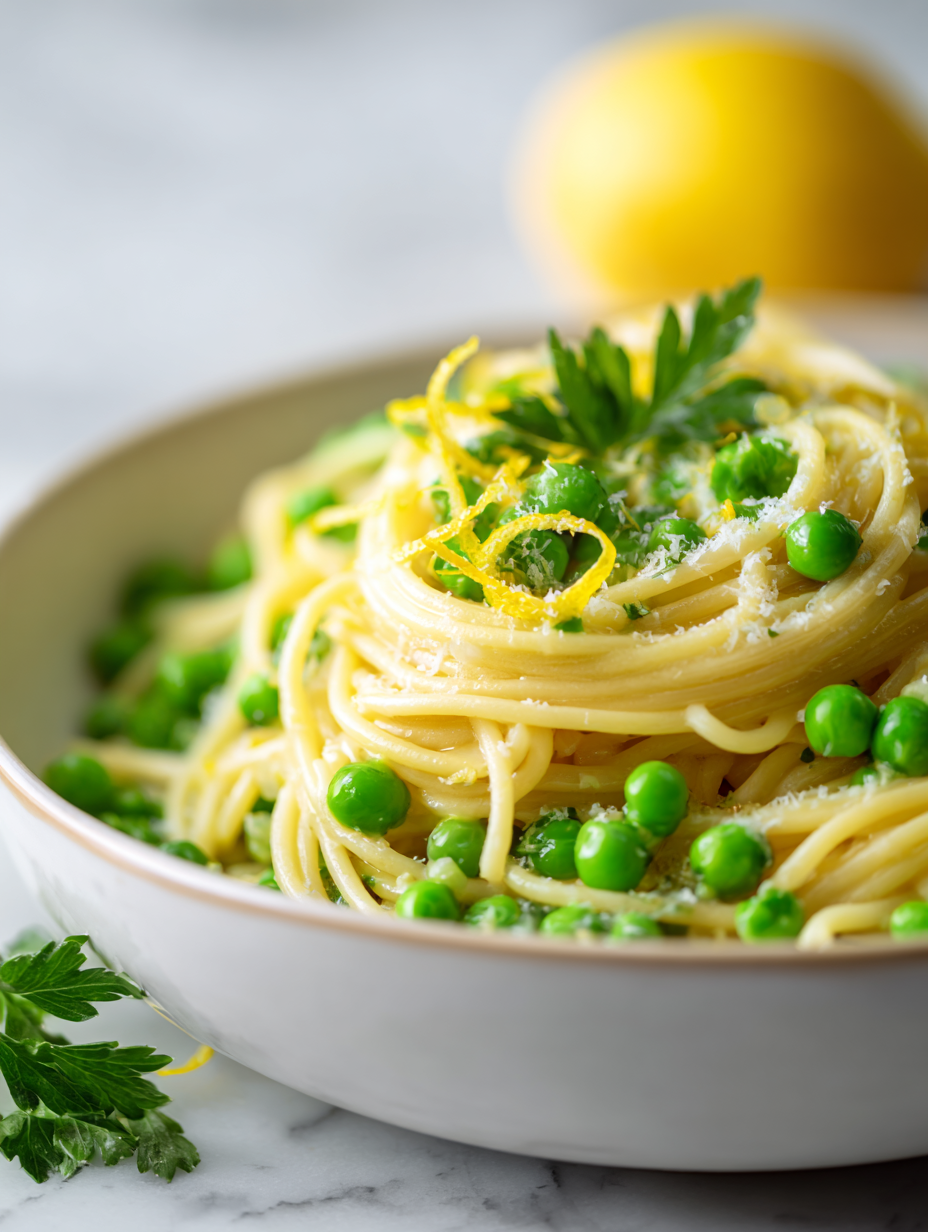
Lemon Pea Pasta
Ingredients
Equipment
Method
- Bring a large pot of salted water to a rolling boil and cook the pasta until just al dente, about 1 minute less than package instructions. Drain, reserving 1/2 cup of pasta water.
- While the pasta cooks, heat olive oil in a large skillet over medium heat. Add the minced garlic and sauté for about 30 seconds until fragrant and golden around the edges, filling your kitchen with a sweet, nutty aroma.
- Add the thawed peas to the skillet and cook for 1-2 minutes, stirring gently until they turn bright green and tender with a slight crunch, releasing their sweet aroma.
- Zest the lemon directly over the skillet, then squeeze in the lemon juice. Stir well, allowing the citrus to coat the peas and garlic evenly, filling the air with a fresh, zesty scent. Cook for another minute until the mixture is glossy and fragrant.
- Add the drained pasta to the skillet, tossing gently with tongs or a wooden spoon. If the mixture seems dry, splash in a little of the reserved pasta water to loosen it and help the sauce cling to the pasta.
- Sprinkle in the chopped herbs and grated Parmesan cheese, then season with salt and pepper to taste. Toss everything together over low heat for about a minute, allowing the flavors to meld and the sauce to become beautifully glossy.
- Remove from heat. Give the pasta a final toss, then plate immediately. Finish by a quick squeeze of lemon zest or a drizzle of olive oil for an extra burst of freshness. Serve hot and enjoy the vibrant, lively flavors!
Tips for perfect lemon pea pasta
- Bolded mini-head: Use your microplane to zest the lemon; it releases essential oils that amplify brightness.
- Bolded mini-head: When sautéing garlic, listen for a gentle crackle—stop as soon as it turns fragrant to avoid bitterness.
- Bolded mini-head: Toss peas into the skillet just until bright green and tender—overcooking turns them dull and mushy.
- Bolded mini-head: Add reserved pasta water slowly to loosen the sauce; it helps cling and adds a starchy depth.
- Bolded mini-head: Finish with a quick squeeze of lemon zest over the plate for an extra zing right before serving.
- Bolded mini-head: Keep the heat moderate when adding lemon juice to prevent curdling or overly sharp flavors.
Common mistakes and how to fix them
- FORGOT to check pasta for doneness → Taste for al dente texture, not just timing.
- DUMPED too much lemon juice at once → Add gradually, tasting for brightness and balance.
- OVER-TORCHED peas → Sauté gently, just until bright green and tender, not browned.
- MISSED reserving pasta water → Save a splash to adjust sauce consistency if needed.
Quick fixes and pantry swaps
- If sauce is too thick, splash in reserved pasta water and stir gently until glossy.
- When peas turn dull, quickly add a squeeze of lemon and a pinch of salt to brighten.
- Splash lemon juice after cooking to preserve its fresh aroma and zesty punch.
- Patch overcooked pasta by tossing with a little olive oil and fresh herbs for added moisture.
- Shield delicate peas from overcooking by adding them at the very end and stirring gently.
Prep, store, and reheat tips
- Prepare the lemon zest and juice in advance; store in a small jar in the fridge for up to 24 hours—brightens the dish with minimal effort.
- Cook and drain the pasta ahead of time; keep in an airtight container in the fridge for up to 2 days. Reheat gently to avoid mushiness.
- Blanch or cook peas slightly earlier; store in an airtight container in the fridge. Rinse frozen peas before adding to reheat for a fresh burst of sweetness.
- The lemon sauce can be made ahead, stored in a jar in the fridge for up to 1 day. Reheat gently, stirring to reincorporate the bright citrus flavor.
- For leftovers, reheat pasta and sauce separately in the microwave or on the stove over low heat. Add a splash of pasta water or lemon juice to refresh the sauce’s vibrancy. Expect a slightly softer texture but maintain that lemony brightness.
Top questions about lemon pea pasta
1. Can I use bottled lemon juice instead of fresh?
Use fresh lemon zest and juice for the brightest flavor; bottled lemon won’t give the same zing.
2. Should I use fresh or frozen peas?
Frozen peas work just as well as fresh; just rinse them well and don’t overcook to keep their sweetness.
3. How do I know when the pasta is done?
Cook pasta until just al dente, about 1 minute less than package suggests, to keep it firm and avoid mushiness.
4. How much lemon juice should I use?
Add lemon juice gradually and taste as you go; it’s easy to overpower the dish if you add too much at once.
5. Why should I save pasta water?
Reserve some pasta water before draining; it’s starchy and perfect for loosening the sauce if needed.
6. Can I substitute olive oil with another oil?
Use good quality extra virgin olive oil for that grassy aroma and smooth texture that elevates the dish.
7. Can I use dried herbs instead of fresh?
Fresh herbs like basil or mint add a herbal lift, but dried herbs can work if crumbled in at the end.
8. How do I cook peas properly for this dish?
Don’t overcook the peas; they should be bright green and tender, but still with a slight crunch for the best texture.
9. When should I add herbs and lemon?
Finish with a squeeze of lemon and a sprinkle of herbs right before serving to keep the flavors bright.
10. Can I make this dish ahead of time?
Leftovers can be stored in the fridge for up to 2 days; reheat gently, adding a splash of water or lemon to revive the flavor.
This lemon pea pasta feels like a little burst of spring in a bowl, especially when the air still has that slight chill. It’s honest, simple, and somehow still feels special—like a quiet victory after a busy day.
Whenever I make it, I’m reminded how a handful of fresh ingredients can turn into something that’s both bright and deeply comforting. It’s not just a meal; it’s a little moment of fresh, honest flavor that keeps me coming back.