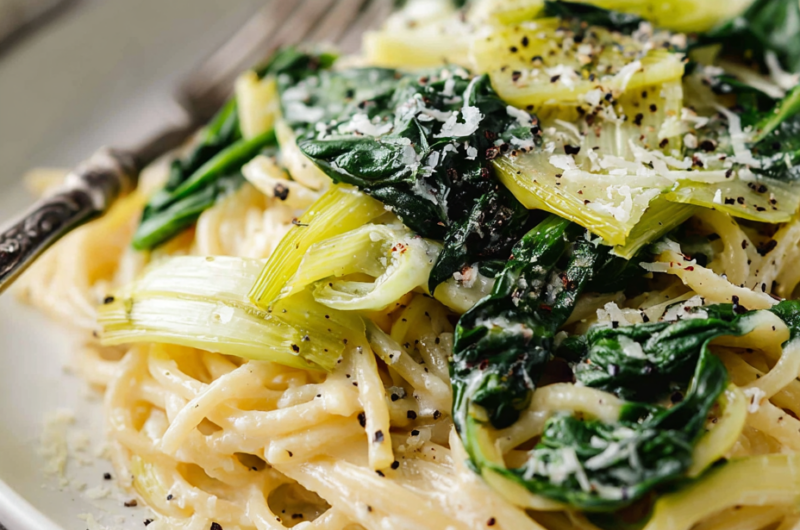
This leek and spinach pasta is my go-to when I want something soothing but not boring. It’s about taking those humble, often overlooked ingredients and giving them a little love—letting their quiet flavors shine. The gentle sweetness of leeks, combined with tender spinach, creates a dish that feels both seasonal and nourishing, perfect for a quick weeknight meal or a lazy weekend lunch.
I’ve always loved how simple ingredients can be transformed with just a bit of patience and care. There’s something honest about this recipe—no fancy tricks, just good produce, a good pasta, and a splash of olive oil. It’s the kind of dish that feels like a small act of kindness, a reminder to appreciate the everyday beauty in what we might usually toss aside.
Focusing on the quiet, overlooked beauty of humble ingredients—making a comforting yet refined pasta that celebrates simplicity and seasonal freshness.
The story behind this recipe
This dish came together one rainy afternoon when I rummaged through my fridge and found a bunch of leeks that needed using. I wanted something cozy but not heavy, a way to brighten up a gray day. The idea of pairing the mellow sweetness of leeks with fresh spinach and good pasta just clicked; it’s a reminder that simple, humble ingredients can create something unexpectedly satisfying. I remember making it late at night, the kitchen filled with the smell of toasted garlic and melting spinach, and feeling like I’d rediscovered a little secret.
Key Ingredients Breakdown
- Leeks: I find slicing leeks lengthwise then rinsing thoroughly removes grit. Their gentle, slightly sweet aroma when sautéed is what makes this dish special—tweak the cooking time for softer or more bite-sized textures.
- Spinach: Fresh spinach wilts quickly, so I add it in batches until just tender. If you prefer a more pronounced green burst, toss in extra at the end—just watch it soften into a vibrant, slightly smoky leaf.
- Pasta: I usually go for long, thin spaghetti or linguine. Cook it al dente, then save a bit of that starchy pasta water—it helps create a silky, cohesive sauce that clings to every strand.
- Olive Oil: Use good quality extra-virgin; its fruity, peppery notes really elevate the dish. For a nuttier twist, toast the oil lightly before adding the leeks—just be careful not to burn it.
- Garlic: Finely minced garlic adds a fragrant punch. When sautéing, keep an eye until it turns golden and smells nutty—if it browns too fast, turn down the heat to avoid bitterness.
- Lemon Juice: Brightens everything with a splash at the end. If you want more zing, add a little lemon zest along with the juice—just enough to shimmer on the palate.
- Salt & Pepper: I prefer kosher salt for better control, and freshly cracked black pepper for a slight spicy kick. Taste as you go—sometimes a pinch more salt makes all the difference.
Spotlight on key ingredients
Leeks:
- I find slicing leeks lengthwise then rinsing thoroughly removes grit. Their gentle, slightly sweet aroma when sautéed is what makes this dish special—tweak the cooking time for softer or more bite-sized textures.
- Spinach: Fresh spinach wilts quickly, so I add it in batches until just tender. If you prefer a more pronounced green burst, toss in extra at the end—just watch it soften into a vibrant, slightly smoky leaf.
Spinach:
- Fresh spinach wilts quickly, so I add it in batches until just tender. If you prefer a more pronounced green burst, toss in extra at the end—just watch it soften into a vibrant, slightly smoky leaf.
- ingredient”:
Notes for ingredient swaps
- Dairy-Free: Swap butter for coconut oil or a splash of cashew cream. Keeps it rich without dairy, though the flavor shifts slightly.
- Gluten-Free: Use gluten-free pasta. It cooks a bit differently—watch for softer or firmer textures depending on the brand.
- Vegan: Replace Parmesan with nutritional yeast or vegan cheese. Still offers that cheesy umami but less creamy.
- Leafy Greens: Swap spinach for kale or Swiss chard. These add more texture and a slightly bitter note that balances the sweetness of leeks.
- Olive Oil: Use avocado oil for a milder, buttery flavor. It’s a good neutral swap if you like a subtler taste.
- Lemon: Substitute with a splash of white wine vinegar or apple cider vinegar for tangy brightness, especially if lemons are out of reach.
- Pasta Type: Try whole wheat or chickpea pasta for extra fiber and protein—cooks a little firmer but still satisfying.
Equipment & Tools
- Large pot: Boil pasta efficiently
- Skillet: Sauté leeks and spinach
- Colander: Drain pasta without breaking strands
- Wooden spoon: Stir ingredients gently
- Knife: Slice leeks and chop spinach
Step-by-step guide to pasta
- Gather your equipment: a large skillet, a wooden spoon, a colander, and a sharp knife. Fill a large pot with water, add a generous pinch of salt, and bring to a boil (100°C / 212°F).
- While water heats, prepare the ingredients: slice the leeks thinly, rinse well to remove grit, and roughly chop the spinach. Mince the garlic finely.
- Add pasta to boiling water. Cook until just al dente, about 8 minutes. Stir occasionally to prevent sticking. Reserve a cup of starchy pasta water before draining.
- Meanwhile, heat the skillet over medium heat (around 160°C / 320°F). Pour in olive oil, enough to coat the bottom. Add sliced leeks, a pinch of salt, and cook gently for 8-10 minutes. They should soften and turn slightly golden, smelling sweet and earthy.
- Add minced garlic to the leeks. Cook for 1-2 minutes until fragrant and golden. Watch carefully, as garlic burns quickly and turns bitter.
- Toss in the spinach in batches, stirring until just wilted, about 2-3 minutes. If it releases too much water, cook a bit longer until liquid evaporates. The leaves should be vibrant and slightly smoky.
- Combine drained pasta with the leek and spinach mixture in the skillet. Add a splash of reserved pasta water to loosen. Cook together for 2 minutes, stirring constantly, until glossy and well-coated.
- Finish with a squeeze of lemon juice, taste for salt and pepper, and adjust accordingly. Remove from heat and let rest for 1 minute before plating.
- Plate the pasta in warm bowls or plates. Drizzle with a little more olive oil or a sprinkle of grated cheese if desired. Serve immediately while fragrant and steaming.
Let the pasta rest for 1 minute to settle flavors. Finish with a drizzle of olive oil and a squeeze of lemon for brightness. Serve immediately for best aroma and texture.
How to Know It’s Done
- Leeks are soft and slightly caramelized, not bitter or raw.
- Spinach is wilted but still vibrant green, with no excess water.
- Pasta is al dente, with a slight bite and coated in sauce.
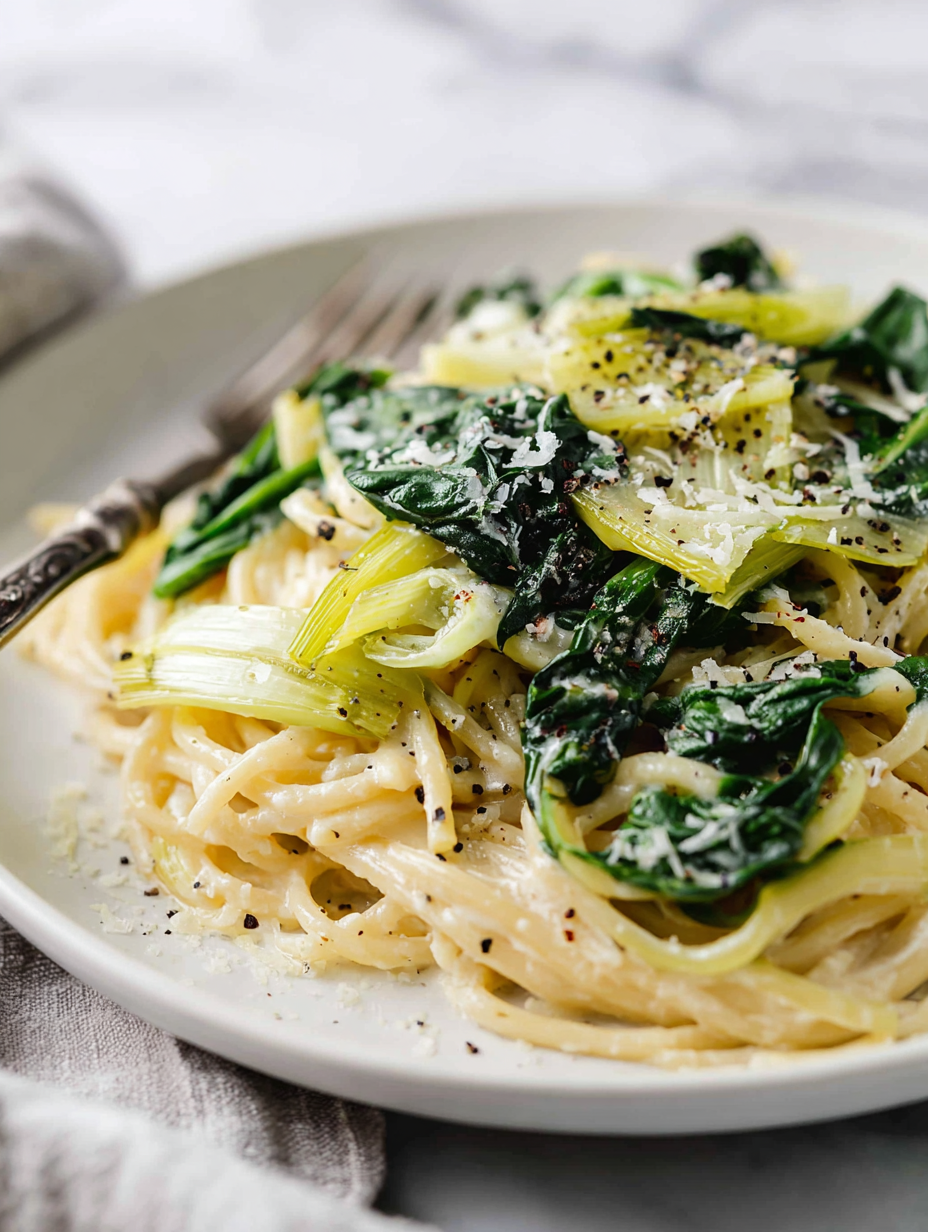
Leek and Spinach Pasta
Ingredients
Equipment
Method
- Bring a large pot of salted water to a rolling boil and cook the spaghetti until just al dente, about 8 minutes. Reserve a cup of starchy pasta water, then drain and set aside.
- While the pasta cooks, heat the olive oil in a large skillet over medium heat until shimmering and fragrant. Add the sliced leeks and a pinch of salt, cooking gently for about 8-10 minutes until they soften and turn a light golden brown, filling the kitchen with a sweet, earthy aroma.
- Add the minced garlic to the skillet with the leeks and cook for another 1-2 minutes, stirring constantly until the garlic is golden and fragrant, avoiding any browning that can make it bitter.
- Gradually add the chopped spinach in batches, stirring until each addition wilts down and turns a vibrant green, about 2-3 minutes. If the mixture releases excess water, cook a little longer until it evaporates, leaving the greens tender and slightly smoky.
- Combine the drained pasta directly into the skillet with the leeks and spinach. Toss to coat the strands evenly, adding a splash of the reserved pasta water to create a silky, cohesive sauce that clings to every piece of spaghetti.
- Squeeze fresh lemon juice over the pasta and toss again to brighten the flavors. Taste and adjust with salt and pepper as needed for seasoning.
- Remove from heat, plate the pasta, and serve immediately, garnished with a drizzle of olive oil or a sprinkle of grated cheese if desired, while still steaming and fragrant.
Pro Tips for Perfect Leek & Spinach Pasta
- Bolded mini-head: Caramelize leeks slowly → Cook over medium-low heat until they turn a soft, golden hue and smell sweet, not raw.
- Bolded mini-head: Use hot pasta water → Toss in a splash of starchy water to create a silky, clingy sauce.
- Bolded mini-head: Mind the garlic → Sauté until fragrant and golden, avoiding browning to prevent bitterness.
- Bolded mini-head: Wilt spinach briefly → Add in batches; it should just wilt, keeping vibrant color and a slight smoky aroma.
- Bolded mini-head: Test for doneness → Leeks soft and sweet, pasta al dente, and sauce glossy before serving.
- Bolded mini-head: Finish with lemon → Brighten the dish with a squeeze, adding zest for extra shimmer and flavor.
- Bolded mini-head: Adjust seasoning last → Taste and tweak salt and pepper after mixing to balance the flavors perfectly.
Common mistakes and how to fix them
- FORGOT to check leek grit → Rinse thoroughly to avoid sandy bites.
- DUMPED too much pasta water → Save starchy water for a silky sauce texture.
- OVER-TORCHED garlic → Sauté gently until golden, not browned for bitter notes.
- MISSED to adjust salt at the end → Taste and season after tossing for balanced flavor.
Quick fixes and pantry swaps
- When sauce is too thick, splash in hot pasta water and stir until silky.
- If pasta sticks, toss with a drizzle of olive oil before draining.
- Splash lemon juice when over-salty—brightens dish and balances saltiness quickly.
- Patch burnt garlic by adding fresh and cooking briefly—smells wonderful again.
- Shield delicate spinach with gentle heat—stir often to prevent overcooking and bitterness.
Prep, store, and reheat tips
- Prep the leeks and spinach: slice and rinse the leeks thoroughly a day ahead; store in an airtight container in the fridge for up to 24 hours. Keep spinach loosely wrapped in a paper towel inside a bag for up to 2 days.
- Cook the pasta: boil and drain the pasta just until al dente, then toss with a little olive oil to prevent sticking. Store in a sealed container in the fridge for up to 1 day—the texture might soften slightly, but it’s still good.
- Make the sauce components: sauté the leeks and prepare garlic in advance; cool and refrigerate separately for up to 24 hours. Reheat gently in a skillet before combining with pasta.
- Reheating: warm the pasta gently in a skillet over low heat with a splash of water or olive oil. The flavors will mellow slightly, and the texture of the pasta will soften—aim for hot but not mushy, smelling fragrant and fresh.
- Flavor development: note that the dish’s brightness from lemon diminishes slightly overnight. Add an extra squeeze of lemon or fresh herbs just before serving for a fresh, vibrant finish.
Top questions about leek and spinach pasta
1. What do leeks taste like in this dish?
Leeks have a mild, sweet onion flavor that becomes more pronounced when sautéed until golden. They add a gentle sweetness and aromatic depth.
2. How does spinach influence the flavor?
Spinach adds a fresh, slightly smoky green flavor that balances the sweetness of leeks. It wilts quickly and should be added near the end.
3. How do I know when the pasta is al dente?
Cooking pasta al dente means it’s tender but still has a slight bite. It should be cooked until just firm to avoid mushiness.
4. Can I use a different oil?
Use good quality extra-virgin olive oil to enhance flavor. Toast it lightly before adding leeks for a nuttier aroma.
5. When should I add lemon juice?
Adding lemon juice brightens the dish with a fresh, zesty note. It’s best added just before serving for maximum shimmer.
6. How do I fix a thick sauce?
If the sauce is too thick, splash in some reserved pasta water and stir until silky. It helps coat the pasta evenly.
7. How do I prevent garlic from burning?
Overcooking the garlic can make it bitter. Sauté until fragrant and golden, then remove from heat promptly.
8. How long can I store leftovers?
Storing prepped ingredients like sliced leeks and cooked pasta in airtight containers keeps flavors fresh for a day or two.
9. How do I reheat without losing texture?
Reheat pasta gently in a skillet with a splash of water or oil. Avoid high heat to prevent over-softening.
10. What if I add too much pasta water?
Mistakenly using too much pasta water can dilute flavors. Use sparingly, adding little at a time to achieve desired creaminess.
This simple pasta reminds me to slow down and savor the small things, especially now when quick fixes often overshadow true flavor. The gentle aroma of sautéed leeks and the vibrant green of spinach make every bite feel like a quiet celebration of seasonal produce.
In a world that moves so fast, this dish offers a moment of honest nourishment—no fuss, just good ingredients and a bit of care. It’s the kind of meal that sticks with you, not for flashy tricks, but for the honest, comforting taste of humble ingredients well-loved.

Hello, I’m Oliver James, the person behind Melting Into Flavors. Cooking is my greatest passion, and it’s been the driving force in my life for as long as I can remember.
It’s not just about food for me; it’s about creating experiences, connecting with others, and sharing the love I have for what’s on the plate. Through this blog and my café, I’m able to share my journey with all of you and hopefully inspire some of your own culinary adventures along the way.