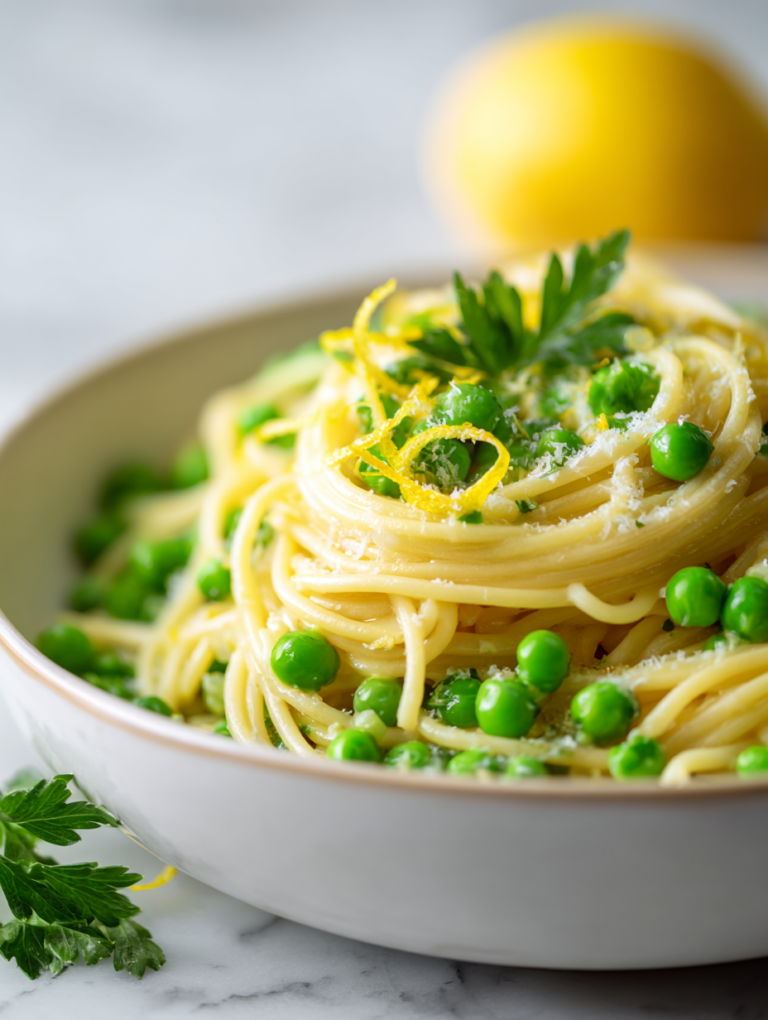
Green peas in risotto might seem like a simple spring trick, but for me, it’s a reminder of how fresh ingredients can turn something familiar into a burst of brightness. When those tiny, sweet peas hit hot rice, they release this vivid aroma that’s almost grassy, almost buttery, with a hint of sweetness that makes you pause for a moment. It’s not just about flavor; it’s about capturing the essence of a fleeting season.
Growing up, I remember my grandmother tossing handfuls of fresh peas from her garden into everything—soups, salads, and yes, risotto. That vibrant green color and lively bite stuck with me. Making this dish now, I try to keep that spirit alive, using the best peas I can find, because it’s not just a recipe—it’s a little celebration of spring’s quick, joyful arrival.
Focusing on how fresh green peas can make a simple risotto taste like spring in a bowl, highlighting their vibrant flavor and the satisfying pop they give with each bite.
The story behind this recipe
- This recipe sprouted from a lazy spring afternoon, when I wandered into the kitchen with a bag of fresh peas and a craving for something bright and simple. I remembered how my grandmother used to toss peas into her risotto, adding a pop of sweetness that felt like a secret ingredient. That moment of spontaneous improvisation became this dish—an ode to quick, honest cooking with ingredients at their peak.
- It’s funny how a handful of peas can evoke a season’s fleeting joy, a memory of childhood gardens and warm summer days. I started making it whenever I wanted a reminder of spring’s quiet arrival, just in a bowl, with a little Parmesan to round it out. It’s not fancy, but it’s honest—like a small celebration of what’s fresh and easy.
- heading
- The story behind this recipe
Ingredient breakdown: key components
- Green peas: I love using bright, freshly shelled peas; they burst with sweetness and a vivid, grassy aroma. If you can’t find fresh, frozen works almost as well—just rinse and drain thoroughly.
- Arborio rice: This is the heart of a good risotto—creamy, starchy, and able to absorb flavors. Don’t skip rinsing it briefly to remove excess surface starch, which helps keep the texture tender but not gluey.
- Parmesan: I prefer aged Parmesan for its nutty, complex flavor that melts smoothly into the rice. If you want a milder taste, try Pecorino Romano—just grate it finely and add it at the end for creaminess.
- Vegetable broth: Use homemade if you can—rich and full of umami. Store-bought is fine, but warm it up before adding to keep the risotto simmering steadily. You can also add a splash of white wine for extra depth.
- Olive oil: I reach for a good quality extra virgin for sautéing. It adds a subtle fruitiness, and the aroma will fill your kitchen as you cook. Avoid overly bitter or processed oils; they can dull the dish.
- Butter: A knob of unsalted butter at the end adds richness and gloss. If you’re dairy-free, a splash of good olive oil can help mimic that velvety finish—though it won’t be quite the same.
- Fresh mint or basil (optional): A tiny handful stirred in just before serving elevates the freshness—think of it as a little spring kiss, brightening the whole bowl.
Spotlight on key ingredients
Green peas:
- I love their bright, sweet aroma and plump, oozing texture when cooked. They burst with a grassy freshness that elevates the whole dish.
- Freshness matters: Frozen peas are almost as good—just rinse thoroughly. Fresh peas should be bright green and slightly firm to maintain their lively bite.
Parmesan:
- I prefer aged Parmesan—its nutty, complex flavor melts seamlessly into the rice, creating that signature creamy finish.
- Grate just before adding: Freshly grated Parmesan has a sharper aroma and melts better. Store in an airtight container to preserve its pungency.
Notes for ingredient swaps
- Dairy-Free: Use nutritional yeast instead of Parmesan for a cheesy umami boost, but it won’t melt like cheese.
- Gluten-Free: Swap Arborio rice for short-grain gluten-free rice; expect a slightly less creamy texture, but still satisfying.
- Vegan: Replace Parmesan with a mix of toasted cashews blended with a pinch of nutritional yeast and lemon juice for brightness.
- Fresh Herbs: Use chopped fresh mint or basil instead of dried herbs; they add a lively, aromatic punch and freshness.
- Broth: Tomato or mushroom broth can add a deeper, earthy flavor, replacing the neutral vegetable broth.
- Peas: Frozen peas work just as well as fresh—rinse and drain thoroughly for the brightest color and flavor.
- Oil: Avocado oil or light sesame oil can stand in for olive oil, adding subtle different flavor notes, but keep the heat moderate.
Equipment & Tools
- Wide pan: For even heat and easy stirring.
- Wooden spoon: Gentle stirring to prevent sticking.
- Ladle: To add warm broth gradually.
- Sharp knife: Prepping peas and herbs efficiently.
Step-by-step guide to green pea risotto
- Gather your equipment: a wide, heavy-bottomed pan (about 25cm diameter) for even heat; a wooden spoon for stirring; a ladle for adding broth; and a sharp knife for prepping peas and herbs.
- Heat 1 tbsp olive oil over medium heat (around 160°C/320°F). Add one finely chopped small onion or shallot. Cook until translucent, about 3-4 minutes, until it smells sweet and slightly caramelized around the edges.
- Stir in 200g (1 cup) Arborio rice. Toast for 2 minutes, stirring constantly, until edges turn a faint, pearly white and it starts to crackle slightly. Adjust heat if rice browns too fast.
- Add 125ml (1/2 cup) dry white wine, if using. Stir until mostly absorbed, about 1-2 minutes. This adds a bright, slightly tangy aroma to the rice.
- Begin adding warm vegetable broth, about 100ml (1/2 cup) at a time. Stir until the liquid is mostly absorbed before adding more. Keep the heat steady at just below simmer (around 85°C/185°F). This slow addition helps develop creaminess.
- After about 15 minutes, stir in 100g (1 cup) fresh or frozen peas. Continue adding broth and stirring. The peas should turn vibrant green and release their sweet aroma. Watch for the rice to become tender but still slightly firm to bite (al dente).
- Check the rice’s texture; it should be creamy and slightly runny, with a slight jiggle when shaken. If it’s too stiff, add a splash more broth and cook a minute longer. If it’s too soupy, simmer for a minute more, stirring often.
- Remove from heat. Stir in 30g (2 tbsp) butter and 50g (1/2 cup) freshly grated Parmesan. Mix until melted and glossy. Taste and adjust salt if needed. Cover loosely with a lid or clean towel and let rest 2 minutes.
- Serve immediately, garnished with extra Parmesan and a few fresh herbs if desired. It should be creamy, with the peas bursting with sweetness and the cheese adding a salty, umami note.
- Checkpoints & How to Know It’s Done:
- The rice grains are tender but still hold shape, not mushy.
- The risotto is creamy with a slight jiggle when shaken.
- Peas are bright green, tender, and aromatic.
Once off heat, stir in butter and Parmesan until glossy. Cover loosely and rest 2 minutes. Serve hot, garnished with extra cheese or herbs if you like.
How to Know It’s Done
- Rice is tender but not mushy.
- Risotto is creamy with a slight jiggle.
- Peas are bright, tender, aromatic.
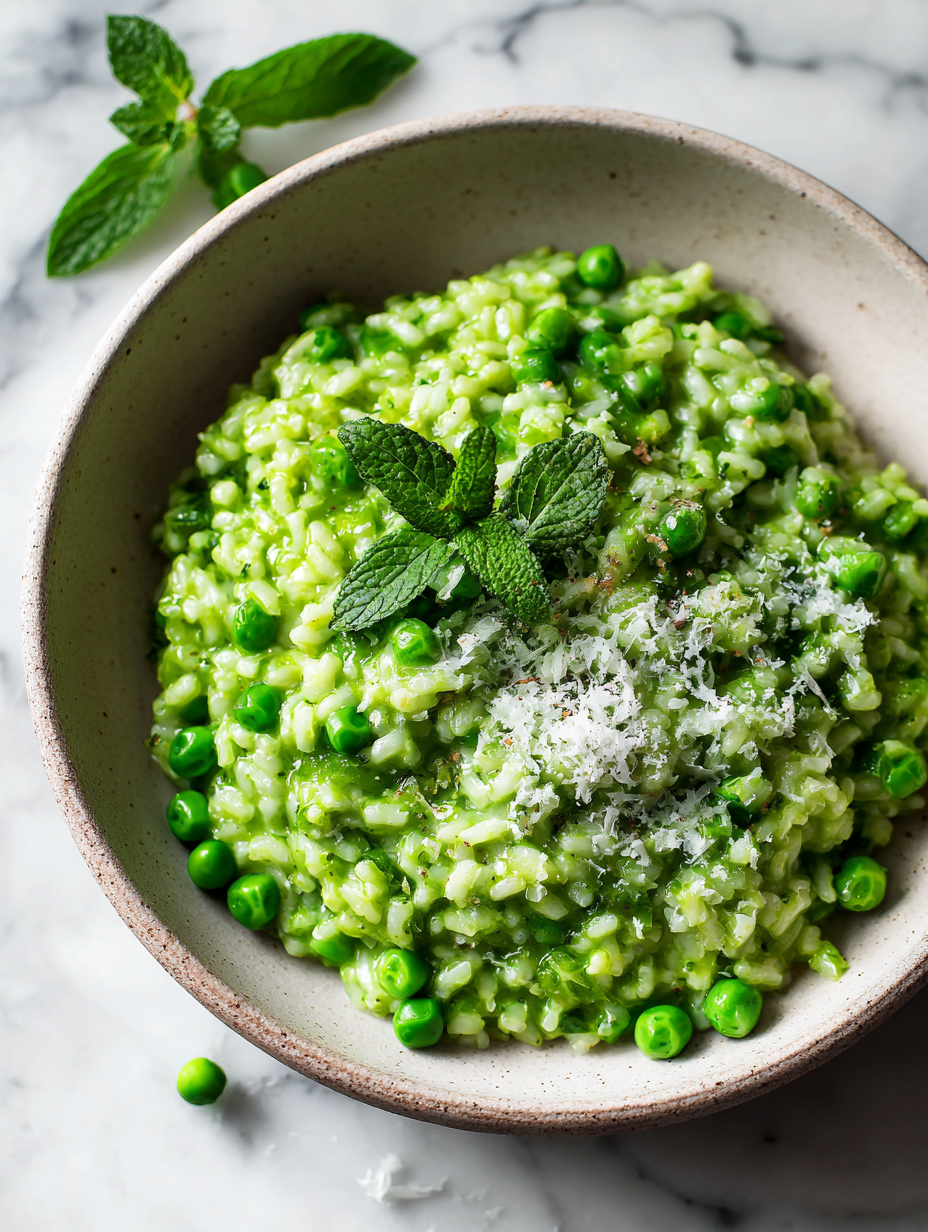
Spring Green Pea Risotto
Ingredients
Equipment
Method
- Heat the olive oil in a wide pan over medium heat until it shimmers and starts to gently ripple.
- Add the finely chopped onion or shallot and cook, stirring often, until translucent and fragrant, about 3-4 minutes. The onion should look soft and smell sweet.
- Stir in the rinsed Arborio rice and toast, stirring constantly, until the edges look pearly white and the rice starts to crackle, about 2 minutes. The rice should be lightly coated with oil and smell nutty.
- If using, pour in the white wine and stir until mostly absorbed, about 1-2 minutes. You’ll notice a slight bubbling and aroma of fresh wine filling the kitchen.
- Begin adding the warm broth, about half a cup at a time. Stir gently and continuously until the liquid is mostly absorbed before adding more broth. Keep the heat steady at just below simmer, so the rice cooks evenly and releases starch, creating a creamy texture.
- After about 15 minutes, stir in the green peas, which will turn vibrant green and release their sweet aroma as they cook. Continue adding broth and stirring until the rice is tender but still slightly firm—al dente.
- Check the consistency; the risotto should be creamy with a slight jiggle when shaken, not dry or soupy. If needed, add a splash more broth or cook a bit longer until the desired texture is achieved.
- Remove the pan from heat and stir in the butter and grated Parmesan cheese until melted and glossy. Taste and adjust seasoning with salt if necessary. Cover loosely and let rest for 2 minutes, allowing flavors to meld.
- Garnish with chopped fresh herbs if desired, then serve immediately to enjoy the bright, creamy texture with bursts of sweetness from the peas.
Notes
Pro tips for perfect risotto
- Gentle heat: Keep the broth at a gentle simmer, around 85°C/185°F, to ensure even cooking and creamy texture.
- Consistent stirring: Stir the risotto regularly but gently to release starch and prevent sticking or burning on the bottom.
- Timing the peas: Add peas in the last 5 minutes; they should stay vibrant and slightly firm, not mushy or overcooked.
- Taste as you go: Regularly taste the rice for doneness and seasoning; this helps avoid over- or under-cooking.
- Finish with butter and cheese: Off heat, stir in butter and Parmesan to achieve that glossy, velvety finish.
Common mistakes and how to fix them
- FORGOT to stir constantly → Stir regularly to prevent rice from sticking or burning.
- DUMPED all broth at once → Add broth gradually for creamy, evenly cooked risotto.
- OVER-TORCHED the garlic → Cook garlic gently until fragrant, not browned, to avoid bitterness.
- SKIPPED tasting during cooking → Taste and adjust salt, acidity, and seasoning as you go.
Quick fixes and pantry swaps
- When peas look dull → Splash in a squeeze of lemon for brightness.
- If risotto is too thick → Patch with a quick splash of warm broth, stir gently.
- When rice sticks to the pan → Shield with a little more broth and gentle stirring.
- If you forget to add salt → DUMP in a pinch of finishing salt or Parmesan for umami.
- When risotto shimmers and crackles → 5s rescue by lowering heat, then stir to cool slightly.
Prep, store, and reheat tips
- Prepping the peas: Shell fresh peas ahead of time; frozen peas can be rinsed and drained, and stored in an airtight container for up to 3 months. They retain their bright color and sweetness well.
- Rice and broth: Measure and keep the rice in a dry container; warm the broth in advance and store in the fridge for up to 24 hours. Reheat gently to preserve flavors.
- Grating cheese: Grate Parmesan ahead of time and keep in an airtight jar in the fridge. It will retain its aroma and texture for several days.
- Reheating: Gently reheat leftovers in a pan over low heat, adding a splash of warm broth or water. The risotto will lose some creaminess but can be refreshed with a quick stir and extra cheese.
- Flavor changes: The dish might become slightly less vibrant after sitting; a fresh squeeze of lemon or a small handful of fresh herbs can brighten it up before serving.
- Sensory notes during reheating: Expect the risotto to smell slightly nuttier, with the peas less plump but still flavorful, and the cheese melded into a creamy, comforting texture.
Top questions about green pea risotto
1. Can I use frozen peas instead of fresh?
Fresh peas add a sweet, grassy flavor and a slight pop with each bite, making the risotto feel lively and seasonal. Frozen peas work too—just rinse well before adding.
2. Should I thaw the peas before cooking?
Yes, but add frozen peas towards the end of cooking to keep their bright color and firm texture. Thaw and drain thoroughly first.
3. How often should I stir the risotto?
Stirring regularly releases the rice’s natural starch, giving the risotto its creamy texture. Keep the heat steady but gentle to prevent sticking.
4. When is the risotto done?
Taste throughout cooking to check for doneness and seasoning. The rice should be tender but still slightly firm, and the dish flavorful and balanced.
5. Should I add Parmesan early or at the end?
Adding Parmesan at the end melts into the rice, making it velvety and rich. Use freshly grated for the best flavor and texture.
6. What tools do I need?
Use a wide, heavy-bottomed pan to cook evenly. A wooden spoon helps prevent sticking and allows gentle stirring for creaminess.
7. How do I add the broth properly?
Add broth gradually—about half a cup at a time—and stir until absorbed. Keep the broth warm to maintain a steady simmer.
8. How should I finish and serve?
Finish with a knob of butter and a good handful of Parmesan. Let it sit covered for a couple of minutes to settle before serving.
9. Can I make this ahead?
Leftovers can be stored in an airtight container in the fridge for up to 2 days. Reheat gently on the stove with a splash of broth to restore creaminess.
10. What if my risotto is too thick or too runny?
If the risotto becomes too thick, stir in a little warm broth to loosen it up. If it’s too runny, cook a minute longer, stirring constantly.
This risotto feels like a quiet celebration of spring, with every bite bursting with fresh, sweet peas and rich Parmesan. It’s simple but deeply satisfying, especially when you want something honest and quick. No fuss, just good ingredients coming together in a bowl.
Making it reminds me to slow down a little, appreciating the season’s fleeting brightness. It’s a dish that comforts but also sparks a little joy with its vibrant color and lively flavor. Perfect for those days when you want food that’s straightforward, honest, and a little bit special.