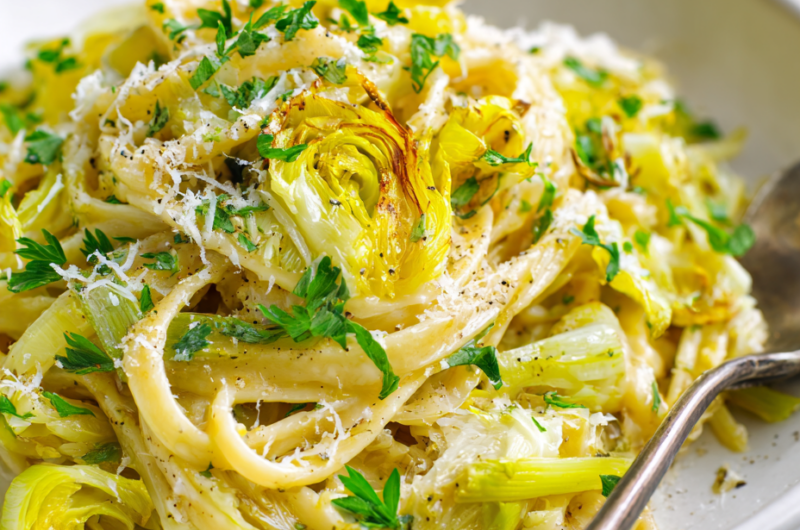
Leeks are often overlooked in favor of onions or garlic, but when slow-cooked, they become sweet, tender, and almost custardy. This recipe is about embracing that transformation—letting the leeks caramelize gently until they’re deeply golden and fragrant, which takes time but pays off with a layered, almost meditative flavor. It’s a simple pleasure to stand over the stove, stirring occasionally, watching the leek slices turn silky and caramelized.
The creamy pasta that follows is more than just comfort food; it’s a quiet celebration of patience and understated ingredients. I find that taking the time to develop the leeks’ sweetness elevates the whole dish, making it richer and more satisfying than a quick sauté ever could. It’s a reminder that sometimes, slow is the way to get the most flavor out of humble ingredients.
This dish is perfect for days when you want something unpretentious but deeply flavorful. It’s about savoring those gentle, slow moments in the kitchen—letting the leeks do their quiet magic—while knowing that the end result will be a bowl of pasta that feels like a small, thoughtful ritual.
Focusing on how the gentle, slow caramelization of leeks transforms this simple pasta dish into a depth-rich, almost meditative experience that highlights patience and the beauty of understated ingredients.
The story behind this recipe
- This recipe came from a lazy Sunday afternoon when I had a pile of leeks and no clear plan, just a craving for something creamy and simple. Watching the leeks slowly soften and caramelize—those delicate, sweet layers—felt like a quiet revelation. It’s funny how such humble ingredients can transform into something so rich with just patience and a gentle touch. That moment made me realize that some of the best dishes are born out of improvisation and a bit of waiting, not fuss or fancy techniques.
- heading: ‘The story behind this recipe’
Key ingredients and tips
- Leeks: I love the way they soften and release a sweet, almost velvety aroma as they caramelize slowly. If yours aren’t as tender, give them a bit more time over low heat.
- Heavy cream: It makes the sauce luxuriously rich and smooth, but if you want a lighter version, swap in half-and-half or even almond milk—just expect a less decadent finish.
- Pasta: I prefer using a sturdy shape like pappardelle or fettuccine that holds onto the creamy sauce. For a gluten-free option, rice or chickpea pasta works but can be a tad softer.
- Butter: I use a good knob to start the leeks off; it adds a gentle sweetness. Olive oil can replace it for a slightly fruitier note, but don’t skip the fat—it’s essential for that silky texture.
- Lemon juice: Brightens everything up and cuts through the richness. A squeeze of lemon at the end really makes the flavors pop and keeps the dish feeling fresh.
- Salt & pepper: I season gradually—taste as you go. Freshly ground black pepper adds a subtle spice that complements the sweetness of the leeks beautifully.
- Parmesan: I like it grated finely, melting into the sauce for that nutty, umami hit. For a vegan twist, nutritional yeast offers a similar savory note without the dairy.
Spotlight on key ingredients
Leeks:
- I love how they soften and develop a sweet, velvety aroma as they caramelize slowly. If yours aren’t tender enough, give them more time over low heat.
- Heavy cream: It makes the sauce luxuriously smooth and rich, but if you prefer a lighter touch, swap in half-and-half or almond milk—expect less decadence but still creamy.
Parmesan & Lemon:
- Parmesan: I prefer finely grated for melting into the sauce, adding a nutty, umami punch. For vegan versions, nutritional yeast offers a similar savory boost without dairy.
- Lemon juice: Brightens the dish with a zingy sharpness and cuts through the richness, making the flavors pop—don’t skip it at the end.
Notes for ingredient swaps
- Dairy-Free: Swap heavy cream for coconut cream or cashew cream—adds richness but slightly different texture and flavor.
- Gluten-Free: Use brown rice or chickpea pasta—these hold sauce well but may be softer or slightly grainy.
- Vegan: Replace butter with olive oil or vegan margarine; skip cheese or substitute with nutritional yeast for umami.
- Lemon Variations: Lime juice works just as well for brightness, or skip citrus altogether for a milder profile.
- Cheese Choices: Pecorino or Gruyère can replace Parmesan, each adding a distinct salty, nutty note.
- Pasta Types: Whole wheat or vegetable-infused pasta add fiber and color, but may alter the texture slightly.
- Leek Substitutes: Shallots or ramps can mimic the mild oniony-sweetness, but won’t develop the same deep caramelization.
Equipment & Tools
- Large skillet: To slowly caramelize the leeks and cook the sauce
- Wooden spoon: For gentle stirring without damaging the leeks
- Large pot: Boiling pasta efficiently
- Grater: Finely grate Parmesan or other cheese
Step-by-step guide to creamy leek pasta
- Gather your equipment: a large skillet, a wooden spoon, a pot for boiling pasta, and a grater for cheese.
- Bring a generous pot of salted water to a boil—about 4 liters, or 1 gallon, with a good pinch of salt. Cook pasta until al dente, about 8-10 minutes. Drain and set aside, saving a cup of pasta water.
- While pasta cooks, prepare the leeks. Trim off root ends and tough dark green tops. Slice leeks thinly, about 0.5 cm (1/4 inch). Rinse slices thoroughly under cold water to remove grit.
- Heat the skillet over low to medium-low heat, about 120°C (250°F). Add a tablespoon of butter or olive oil. Once melted and shimmering, add sliced leeks.
- Cook the leeks slowly, stirring occasionally. Let them soften and turn a deep golden, about 20-25 minutes. They should be fragrant, sweet, and tender—watch for caramel color.
- Once leeks are caramelized, pour in 1 cup of heavy cream. Stir gently, allowing it to warm and thicken slightly, about 3-5 minutes. If it bubbles too vigorously, lower heat.
- Add the cooked pasta to the skillet. Toss to coat thoroughly with the leek and cream mixture. If sauce is too thick, loosen with a splash of reserved pasta water, stirring until silky.
- Finish with a squeeze of lemon juice, freshly grated Parmesan, salt, and pepper to taste. Stir well to combine, tasting and adjusting seasoning as needed.
- Remove from heat. Let the pasta rest for 2 minutes to allow flavors to meld. Serve immediately, garnished with extra cheese or herbs if desired.
Serve immediately while warm. Garnish with extra cheese if desired. Rest for 2 minutes to let flavors settle, then plate and enjoy.
How to Know It’s Done
- Leeks are deeply golden and fragrant, not burnt or bitter.
- Cream is slightly thickened and coats the pasta evenly.
- Pasta is al dente, with a slight bite, not mushy or underdone.
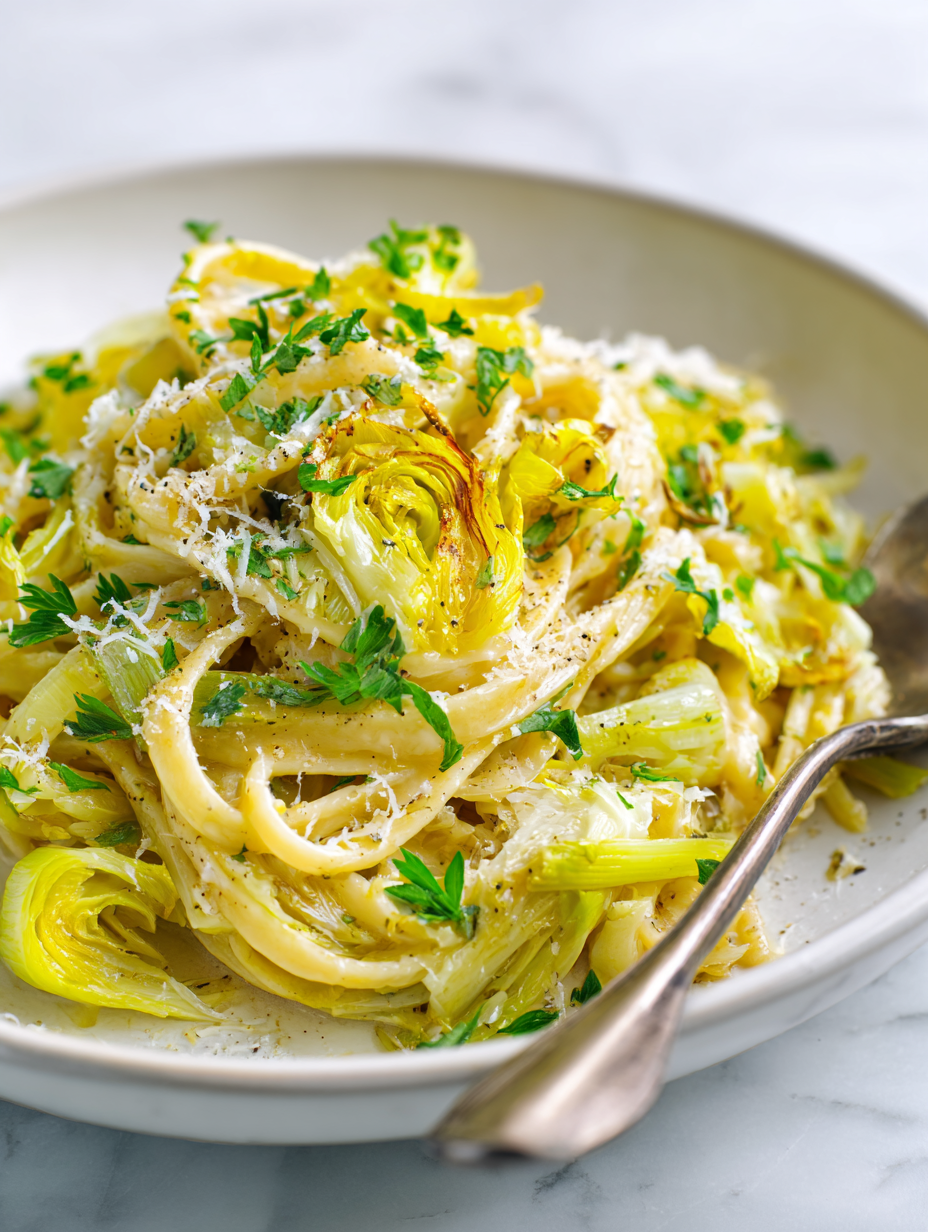
Creamy Caramelized Leek Pasta
Ingredients
Equipment
Method
- Trim off the root ends and dark green tops of the leeks, then slice them thinly into half-moon shapes. Rinse thoroughly under cold water to remove any grit.
- Bring a large pot of salted water to a boil, then add your pasta. Cook until al dente, about 8-10 minutes, then drain, saving a cup of pasta water for later.
- While the pasta cooks, heat the large skillet over low to medium-low heat and add the butter. Let it melt gently until it starts to shimmer and smells slightly nutty.
- Add the sliced leeks to the skillet. Stir gently to coat them in butter, then cook slowly over low heat, stirring occasionally. Watch as they soften and gradually turn a deep golden color, filling your kitchen with a sweet, caramelized aroma—this takes about 20-25 minutes.
- Once the leeks are beautifully golden and fragrant, pour in the heavy cream. Stir gently and let it warm up, allowing the sauce to thicken slightly and coat the leeks with a silky texture, about 3-5 minutes.
- Add the drained pasta to the skillet with the leek cream sauce. Toss everything together, stirring gently to coat the noodles evenly. If the sauce feels too thick, add a splash of the reserved pasta water and stir until silky.
- Finish by stirring in the lemon juice, then sprinkle with finely grated Parmesan cheese. Season with salt and pepper to taste, adjusting until the flavors are balanced and bright.
- Remove from heat and let the pasta rest for a couple of minutes. Serve hot, garnished with extra cheese or herbs if desired, and enjoy the rich, silky textures of this slow-cooked leek pasta.
Tips for perfect creamy leek pasta
- Use low heat for caramelizing leeks; it prevents burning and draws out sweetness.
- Stir gently and frequently once leeks start to turn golden; this keeps them tender and evenly caramelized.
- Add a splash of pasta water when mixing; it helps the sauce cling beautifully to the noodles.
- Keep an eye on the cream; lower the heat once it begins to thicken to avoid curdling.
- Finish with lemon juice off-heat; it’s brightest and sharpest when added at the end.
- Use freshly grated Parmesan; it melts better and enhances the sauce’s umami richness.
- For extra depth, let the cooked leeks rest in the pan for a few minutes after caramelizing; they develop even more flavor.
Common mistakes and how to fix them
- FORGOT to monitor heat levels, leeks can burn if too high.
- DUMPED the pasta water too early, losing flavor; save some for sauce looseness.
- OVER-TORCHED the cream, causing curdling; lower heat immediately if bubbling too vigorously.
- MISSED the final taste test, resulting in under-seasoned dish; always taste before serving.
Quick fixes and pantry swaps
- When sauce separates, splash in a little hot pasta water to rescue creaminess.
- If leeks burn, lower heat immediately and add a splash of water to deglaze the pan.
- Splash extra lemon juice if the sauce feels flat or dull in flavor.
- Patch over under-seasoned pasta with a pinch of salt and freshly ground pepper.
- Shield the cream from over-torching by reducing heat once it starts to bubble.
Prep, store, and reheat tips
- Pre-cook the leeks and refrigerate in an airtight container for up to 2 days. Reheat gently, watching for steam and aroma of sweet caramelized leek notes.
- Prepare the sauce components ahead—caramelized leeks and cream mixture—and store separately for up to 24 hours. Reheat over low heat, stirring until warmed through and fragrant.
- Cook the pasta al dente, toss with a bit of oil to prevent sticking, and store in the fridge for up to 1 day. Reheat in boiling water briefly or microwave until steaming and tender, restoring softness and aroma.
- The flavors deepen if the dish rests for 30 minutes after mixing; reheat gently and adjust seasoning before serving. The sauce may thicken—stir in a splash of hot pasta water or cream to loosen.
- For longer storage, freeze the assembled dish in an airtight container for up to 1 month. Thaw overnight in the fridge, then reheat slowly, checking for fragrant aroma and silky texture.
Top questions about Creamy Leek Pasta
1. Why slow-cook the leeks?
Slow caramelizing leeks brings out their natural sweetness and creates a rich, tender base for the sauce. It’s worth the extra time!
2. Can I use a different cream?
Using heavy cream makes the sauce luxuriously smooth, but half-and-half can be a lighter alternative, though it won’t be as creamy.
3. Is gluten-free pasta okay?
Yes, you can swap in gluten-free pasta like rice or chickpea varieties. Expect a slightly softer texture, but they soak up the sauce well.
4. Why add lemon juice?
Adding a squeeze of lemon brightens the dish, balancing the richness of the cream and sweetness of the leeks with a fresh zing.
5. How do I keep the sauce from curdling?
Make sure to stir the sauce gently and frequently once the cream is added. This prevents curdling and helps the sauce stay silky.
6. What if the sauce thickens too much?
If the sauce gets too thick, loosen it with reserved pasta water. It adds flavor and helps everything coat evenly.
7. How do I know when leeks are done?
Caramelized leeks turn a deep golden and fragrant, with a sweet aroma. Overcooking can make them bitter, so watch the color.
8. Can I make this ahead?
Prepare the leeks, cream, and pasta separately and store in the fridge for up to a day. Reheat gently to preserve their soft texture.
9. How to fix a split sauce?
If your sauce separates or the flavor feels flat, splash in a bit more lemon or reheat slowly with a splash of pasta water to rescue creaminess.
10. When should I adjust seasoning?
Taste as you go—season gradually with salt, pepper, and lemon. The balance of flavors makes all the difference in this simple dish.
This dish is about patience and coaxing out the natural sweetness of leeks. It’s a simple, honest meal that rewards slow cooking and gentle flavors. Sometimes, the quietest ingredients make the biggest impact, especially when treated with care.
In the end, it’s a humble pasta that turns into something cozy and satisfying—a reminder that good food doesn’t need fuss. It’s perfect for those days when you want comfort without distraction, just honest, well-made flavor to bring you back to the kitchen.

Hello, I’m Oliver James, the person behind Melting Into Flavors. Cooking is my greatest passion, and it’s been the driving force in my life for as long as I can remember.
It’s not just about food for me; it’s about creating experiences, connecting with others, and sharing the love I have for what’s on the plate. Through this blog and my café, I’m able to share my journey with all of you and hopefully inspire some of your own culinary adventures along the way.