Carrots are often seen as humble, everyday vegetables, but when they caramelize, they reveal a hidden sweetness that transforms any dish. This soup takes that unexpected twist—those roasted, golden carrots add a rich depth that balances the fiery kick of fresh ginger. It’s a cozy bowl that surprises with its layers of flavor, perfect for chilly days or when you need a little comforting warmth.
I love how the natural sugars in carrots develop during roasting, creating a complex, almost smoky sweetness. Paired with sharp, fresh ginger, it’s a dance of earthiness and spice that feels both grounding and invigorating. This recipe is one I return to when I want a soup that’s simple but layered—something that makes you pause and really taste each spoonful.
Focusing on the unexpected sweetness that caramelized carrots bring to a spicy ginger soup, creating a complex depth of flavor that balances heat and earthiness.
The story behind this recipe
- This soup was born out of a rainy afternoon craving something cozy but with a twist. I had a bunch of carrots that needed using, and I remembered how roasting them brings out this sweet, almost caramel-like flavor that feels unexpected in a soup. I wanted that richness, but with a punch of ginger to keep it lively—that’s how this recipe came together.
- I often think about how simple ingredients can surprise you when treated right. Roasting transforms the carrots from plain to punchy, and blending them into a smooth soup feels like capturing a little jar of sunshine. It’s become my go-to when I want something warm, familiar, and a little bit special.
- heading: ‘The story behind this recipe’
Ingredient breakdown
- Carrots: I love how roasting brings out their natural sweetness and a slight smoky note. For a deeper flavor, try tossing them with a touch of maple syrup before roasting, but skip if you prefer a more straightforward earthy tone.
- Ginger: Fresh ginger adds a zesty, pungent punch that brightens the soup. Grate it finely to avoid fibrous bits, or if you want a milder heat, use a smaller piece or even substitute with ground ginger, but fresh really makes a difference.
- Olive oil: Drizzled over the carrots before roasting, it helps caramelize them beautifully and adds richness. Use good quality extra virgin for the best flavor, or a neutral oil if you want the focus on the carrots’ sweetness.
- Vegetable stock: I prefer homemade if I have time, but a good store-bought one works. Look for a rich, well-seasoned variety. If it’s too salty, dilute with a splash of water or add a squeeze of lemon to balance.
- Cream or coconut milk: A splash at the end adds a silky texture and rounds out the spice. Coconut gives a tropical brightness, while cream keeps it classic; use whichever suits your mood or dietary needs.
- Salt and pepper: Essential for balancing sweetness and heat. I start light and adjust as I blend, but don’t skimp—proper seasoning makes all the difference.
- Lemon juice: A quick squeeze just before serving elevates the whole bowl with brightness. If you don’t have fresh, a splash of apple cider vinegar can add a similar lively note.
Spotlight on key ingredients
Carrots:
- I love how roasting brings out their natural sweetness and a slight smoky note. For a deeper flavor, try tossing them with a touch of maple syrup before roasting, but skip if you prefer a more straightforward earthy tone.
- Ginger: Fresh ginger adds a zesty, pungent punch that brightens the soup. Grate it finely to avoid fibrous bits, or if you want a milder heat, use a smaller piece or even substitute with ground ginger, but fresh really makes a difference.
Ginger:
- Its fiery, pungent aroma intensifies as it cooks, releasing a spicy freshness that enlivens the soup. During sautéing, it should turn fragrant and slightly golden—too dark and it gets bitter, so watch the heat.
- Carrots: They soften and develop a tender, almost melting texture when roasted. Keep an eye on their color—deeply caramelized edges signal optimal flavor, but avoid burning to prevent bitterness.
Notes for ingredient swaps
- Dairy-Free: Swap cream or coconut milk with almond or cashew cream for a nutty, less rich finish.
- Vegan: Use olive oil instead of butter for roasting, and opt for vegetable broth to keep it plant-based.
- Spice Level: Reduce ginger or skip for a milder soup; add a dash of turmeric for subtle earthiness instead.
- Sweetness: Honey can be replaced with maple syrup or agave nectar, slightly changing the flavor nuance.
- Salt: Use sea salt or Himalayan pink salt for a more mineral-rich flavor, but adjust quantity to taste.
- Fresh Herbs: Garnish with cilantro or parsley instead of traditional herbs—adds a fresh, vibrant touch.
- Add-Ins: Toss in roasted chickpeas or a swirl of yogurt for texture contrast and extra richness.
Equipment & Tools
- Baking sheet: Roast carrots evenly and develop flavor
- Parchment paper: Prevent sticking and make cleanup easier
- Chef’s knife: Peel and chop carrots, ginger
- Large pot: Simmer soup and blend flavors
- Immersion blender or regular blender: Puree the soup smoothly
- Ladle: Serve the soup
Step-by-step guide to carrot ginger soup
- Preheat your oven to 200°C (400°F). Line a baking sheet with parchment paper.
- Peel and chop 4 large carrots into 2-inch pieces. Toss with 2 tbsp olive oil, a pinch of salt, and a drizzle of honey if you like a touch of sweetness.
- Spread carrots in a single layer on the prepared baking sheet. Roast for 25-30 minutes, until golden and caramelized, stirring halfway through.
- While carrots roast, peel and finely grate 1-2 inches of fresh ginger. Set aside.
- In a large pot over medium heat (about 180°C/356°F), add a splash of oil. Sauté the ginger for 1-2 minutes until fragrant, just starting to crackle.
- Add 4 cups vegetable stock and bring to a gentle simmer. Once simmering, add roasted carrots. Cook for another 10 minutes, blending the flavors.
- Use an immersion blender to purée the soup until smooth, or transfer in batches to a blender. Be careful with hot liquids—blend slowly and vent the lid.
- Check the soup’s consistency. If too thick, stir in a splash more stock or water. Taste and adjust salt and pepper.
- Finish with a squeeze of fresh lemon juice or a swirl of coconut milk. Ladle into bowls and serve hot.
Serve the soup immediately with a drizzle of coconut milk or a squeeze of lemon. Garnish with fresh herbs if you like. No need to rest—just enjoy while hot.
How to Know It’s Done
- Carrots are caramelized and golden, with a slight smoky aroma.
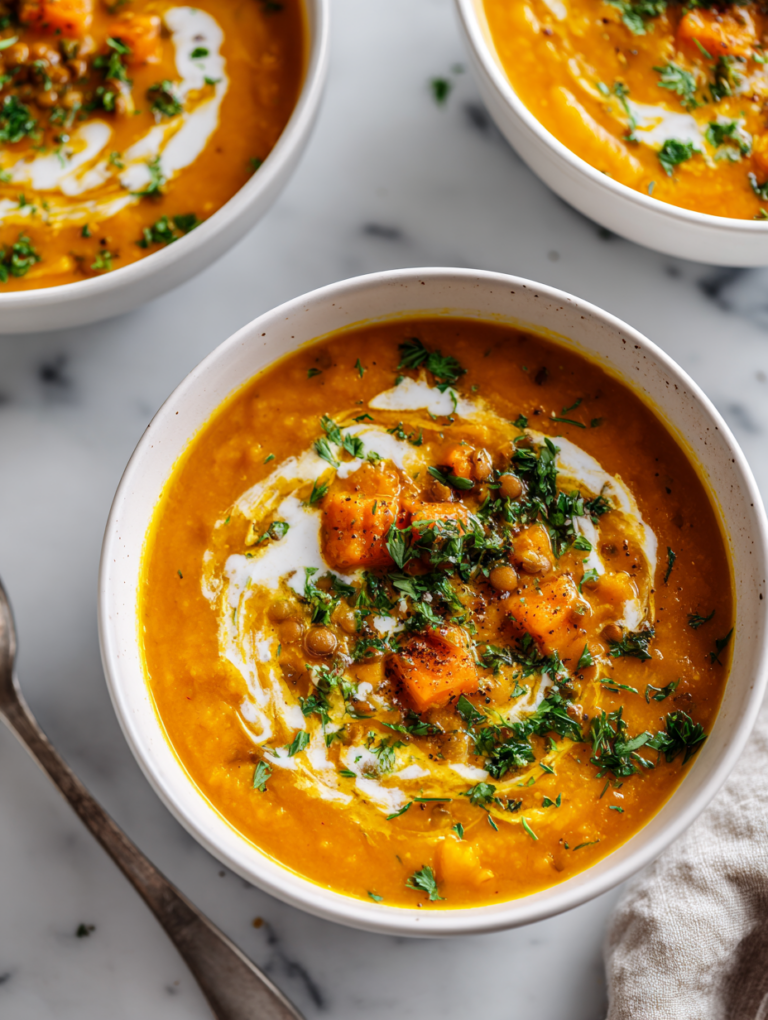
- Soup is smooth, bright orange, and steaming hot with a gentle simmer when blended.
- A quick taste confirms balanced sweetness, spice, and acidity—adjust seasoning as needed.
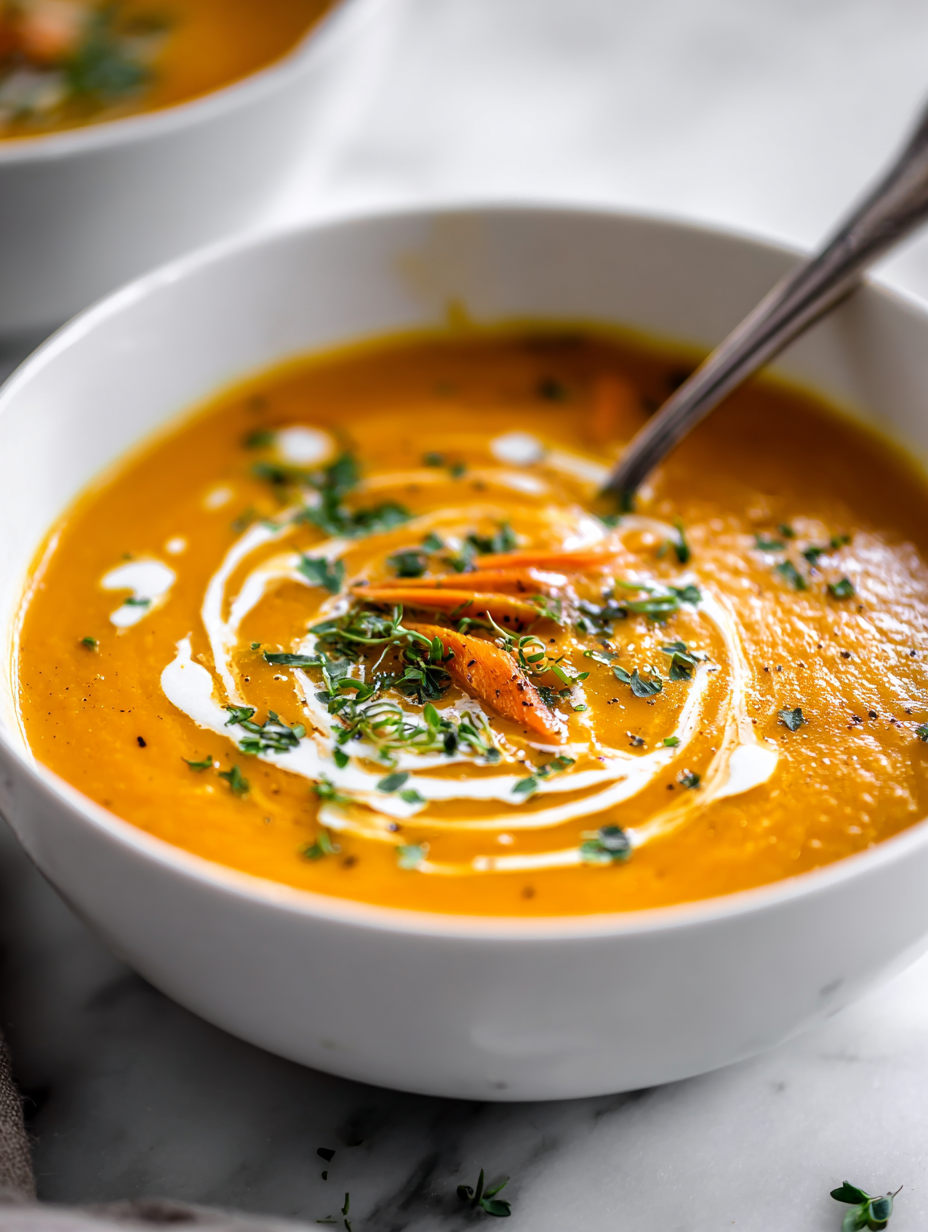
Caramelized Carrot and Ginger Soup
Ingredients
Equipment
Method
- Preheat your oven to 200°C (400°F) and line a baking sheet with parchment paper.
- Peel and chop the carrots into evenly sized 2-inch pieces, then toss them with 2 tablespoons of olive oil and a pinch of salt. Spread them out in a single layer on the prepared baking sheet.
- Roast the carrots in the oven for about 25-30 minutes, until they are golden and caramelized around the edges, stirring halfway through to ensure even roasting.
- While the carrots roast, peel and finely grate the fresh ginger, setting it aside for later.
- In a large pot over medium heat, add a splash of oil and sauté the grated ginger for about 1-2 minutes until fragrant, the kitchen filling with a warm, spicy aroma.
- Add the vegetable stock to the pot and bring it to a gentle simmer. Once simmering, carefully add the roasted carrots and cook for an additional 10 minutes to allow the flavors to meld.
- Use an immersion blender or transfer the soup in batches to a blender, then blend until smooth and velvety, about 1-2 minutes. Be cautious with hot liquids—blend slowly and vent the lid if necessary.
- Stir in the coconut milk for added creaminess, then season with salt and pepper to taste. Add a squeeze of fresh lemon juice to brighten the flavor.
- Warm the soup gently over low heat if needed, then ladle into bowls. Garnish with extra herbs or a drizzle of coconut milk if desired, and serve hot.
Pro tips for perfect carrot ginger soup
- Bolded mini-head: Caramelize carrots deeply for a richer sweetness. Roast until edges are dark amber, then watch closely to avoid burnt bits.
- Bolded mini-head: Grate ginger finely to maximize its pungent burst. Larger pieces can turn fibrous; a fine grate releases more flavor quickly.
- Bolded mini-head: Use a gentle simmer when blending to prevent splattering. Vent the lid slightly if using a blender to avoid pressure buildup.
- Bolded mini-head: Salt gradually during blending. Tasting as you go ensures balanced sweetness and spice without over-salting.
- Bolded mini-head: Finish with a splash of lemon juice or vinegar right before serving. It brightens the flavors and cuts through the richness.
- Bolded mini-head: Keep an eye on the soup’s texture—add a little water or stock if it gets too thick while blending or reheating.
- Bolded mini-head: For a smoky twist, toss roasted carrots with a pinch of smoked paprika before blending. It adds depth without overpowering.
Common mistakes and how to fix them
- FORGOT to check carrot doneness — taste and texture reveal when roasted properly.
- DUMPED the ginger in all at once — add gradually, tasting for heat balance.
- OVER-TORCHED the carrots — keep an eye, stir halfway, and remove once golden, not burnt.
- SKIPPED tasting during blending — adjust seasoning and acidity before serving.
Quick fixes and pantry swaps
- When carrots are undercooked, splash a little water and steam for 2 more minutes.
- If soup is too thick, pour in a splash of hot water and stir until smooth.
- DUMPED too much ginger? Patch it with a squeeze of lemon to brighten the heat.
- Over-torched carrots? Shield them with foil and lower oven heat for even caramelization.
- Splash a pinch of cinnamon or smoked paprika if the soup lacks depth and smoky aroma.
Prep, store, and reheat tips
- Peel and chop carrots a day ahead; store in an airtight container in the fridge for up to 24 hours. They stay firm and retain their sweet aroma.
- Roast carrots and grate ginger in advance; keep separately in sealed containers. Reheat roasted carrots gently or add directly to hot soup.
- Soup can be made a day ahead and stored in the fridge for up to 3 days. Reheat over low heat, stirring occasionally until steaming and fragrant.
- For longer storage, freeze the cooled soup in portions for up to 2 months. Thaw in the fridge overnight, then reheat, checking for flavor and texture.
- Reheating releases a richer, deeper aroma as flavors meld. Warm gently, tasting and adjusting seasoning before serving to reawaken the taste.
Top questions about carrot ginger soup
1. How do roasted carrots enhance the soup?
Carrots have a natural sweetness that caramelizes when roasted, intensifying their flavor and adding a smoky note. Use fresh, plump carrots for the best results.
2. What role does ginger play in the flavor?
Ginger adds a sharp, spicy brightness that balances the sweetness of carrots. Use fresh ginger, grated finely, for a vibrant, zesty kick.
3. How can I fix a too-thick soup?
If the soup is too thick, stir in a little warm water or stock until you reach your desired consistency. It should be smooth and velvety.
4. When should I add lemon juice?
A squeeze of fresh lemon juice right before serving brightens the soup, highlighting the sweetness and spice with a fresh, tangy note.
5. Are there good dairy-free options?
You can substitute coconut milk or plant-based creams for dairy to keep it vegan and add a silky texture without the dairy richness.
6. Why roast the carrots instead of boiling them?
Roasting the carrots until they are deeply caramelized brings out a richer, more complex sweetness than boiling or steaming.
7. What kind of broth should I use?
Use homemade or well-flavored store-bought vegetable broth. It adds depth, so avoid bland or watery stocks.
8. How do I avoid burning the carrots?
Be careful not to over-roast the carrots—they can turn bitter if they burn. Watch for deep amber edges and remove from oven immediately.
9. How can I boost flavor if it’s bland?
If the soup tastes flat, add a pinch of salt or a splash of vinegar to enhance the flavors and bring brightness.
10. How long does the soup keep?
Storing the soup in an airtight container in the fridge for up to 3 days keeps it fresh. Reheat gently on the stove, tasting and adjusting seasoning as needed.
This soup feels like a little hug in a bowl—warm, sweet, with just enough zing to wake you up. I love how simple ingredients come alive when roasted and blended, turning into something unexpectedly complex. It’s a dish that’s perfect for cozy mornings or when you need a quiet moment to yourself.
Whenever I make this, I’m reminded that the best comfort foods are often the simplest—and that caramelized carrots and fresh ginger can surprise with their depth. It’s not just about feeding the body, but also about enjoying each spoonful and the little moments of warmth they bring.