This asparagus and spinach quiche is my go-to for those spring weekends when I want something fresh but filling. It’s a way to use up the last of the local asparagus and those tender spinach leaves that somehow taste brighter right now. Honestly, I love how it feels almost like a little celebration on a plate, simple but packed with flavor.
I’ve made this several times, and each time I tweak the veggies a bit—sometimes adding a splash of lemon or a sprinkle of nutmeg. It’s one of those dishes that feels like a gentle hug, but it’s also flexible enough to adapt to what’s in the fridge. Plus, the smell of those baked eggs mingling with roasted asparagus—nothing beats it on a lazy weekend morning.
This recipe is inspired by the idea of transforming simple, seasonal greens into a comforting, versatile dish that celebrates the fleeting freshness of spring. I love how asparagus and spinach can elevate a humble quiche into something that feels both nourishing and special, especially when using the best local produce.
The story behind this recipe
This quiche came about on a spring morning, when I wandered into the garden and saw the first tender shoots of asparagus paired with bright green spinach. I remembered childhood Sunday brunches where my mom would toss together whatever was fresh and call it a feast. That nostalgic feeling drives me to keep this simple, honest dish in my rotation—something that feels like a slice of the season, no fuss needed. I like how the ingredients transform in the oven, releasing earthy and fresh aromas that make everyone pause and smile. It’s a humble recipe, but one that always reminds me of slow mornings and the joy of seasonal cooking.
Ingredient breakdown: key components
- Asparagus: I love the snap and earthy aroma of fresh asparagus; look for firm, bright green spears with closed tips. If yours are limp or dull, try roasting them first for added sweetness.
- Spinach: Tender, bright green leaves that wilt beautifully when sautéed. If your spinach is bitter or old, a quick blanch can mellow the flavor before chopping.
- Eggs: Fresh eggs give a richer, custardy texture—crack one and listen for a clear, crisp shell. For a fluffier filling, consider adding a splash of cream or milk, but don’t overdo it.
- Cheese: I prefer a mild Gruyère or sharp cheddar for depth, but a handful of crumbled feta gives a salty punch. Use grated cheese for even melting, and sprinkle plenty over the filling before baking.
- Pie crust: A flaky, buttery crust is key—buy pre-made or make your own. Keep it cold until baking to prevent sogginess, and blind bake slightly for a crisp base.
- Herbs & seasonings: Fresh thyme or chives brighten the dish; I toss a pinch of nutmeg into the custard for warmth. Adjust herbs based on what’s in your garden or fridge.
- Lemon zest: A little bright lemon zest can lift the entire dish, adding a subtle zing that balances the richness. Use a microplane for fine, fragrant shavings.
Spotlight on key ingredients
Asparagus and Spinach:
- Asparagus: I love the snap and earthy aroma of fresh asparagus; look for firm, bright green spears with closed tips. If yours are limp or dull, try roasting them first for added sweetness.
- Spinach: Tender, bright green leaves that wilt beautifully when sautéed. If your spinach is bitter or old, a quick blanch can mellow the flavor before chopping.
Notes for ingredient swaps
- Dairy-Free: Swap regular milk or cream with almond or oat milk. Slightly less rich, but still smooth.
- Cheese Alternatives: Use nutritional yeast or a dairy-free cheese for a vegan twist. Expect a nuttier, milder flavor.
- Gluten-Free Crust: Opt for a store-bought gluten-free pie crust or make your own with almond flour. Slightly denser texture.
- Egg Substitute: Try silken tofu blended until smooth for a vegan custard base. Creamy but less fluffy.
- Fresh Herbs: Basil or parsley can replace chives or thyme, adding a different aromatic lift.
- Lemon Zest: Skip or substitute with a splash of vinegar for brightness. The lemon zest adds a fresh, zingy note.
- Vegetables: Swap asparagus for roasted zucchini or snap peas for different crunch and sweetness.
Equipment & Tools
- 9-inch pie dish: Holds the crust and fillings, provides structure.
- Mixing bowls: Whisk eggs and mix custard ingredients.
- Whisk: Blend custard smoothly without lumps.
- Skillet: Wilt spinach and sauté asparagus.
- Parchment paper and pie weights: Prevent crust from puffing up during blind baking.
- Oven: Bake the crust and quiche evenly.
Guide to Asparagus & Spinach Quiche
- Preheat your oven to 180°C (350°F). Gather your equipment: a 9-inch pie dish, mixing bowls, a whisk, and a skillet.
- Blind bake the pie crust: Place the chilled crust in the dish, prick the bottom with a fork, line with parchment, and fill with pie weights or dried beans. Bake for 10 minutes, then remove weights and parchment, bake another 5 minutes until lightly golden.
- Trim the asparagus: Snap off the woody ends, then cut the spears into 2-inch pieces. Toss with a little olive oil, salt, and pepper.
- Roast the asparagus: Spread on a baking sheet, roast for 10-12 minutes until tender and slightly caramelized. Let cool slightly.
- Sauté the spinach: In a skillet over medium heat, add a teaspoon of oil. Wilt the spinach, about 2-3 minutes. Remove excess moisture by pressing with a spatula or draining in a colander.
- Prepare the custard: In a bowl, whisk together 4 large eggs, 1 cup of cream, a pinch of nutmeg, salt, and pepper. Stir in grated cheese (about 1 cup) and lemon zest if using.
- Assemble the quiche: Spread the cooled roasted asparagus evenly over the crust. Distribute the sautéed spinach on top. Pour the custard mixture over evenly.
- Bake the quiche: Place in the oven and bake for 35-40 minutes. The edges should be golden, and the center just set with a slight jiggle.
- Check for doneness: The custard should be firm but still slightly wobbly in the center, and the top golden brown. If overbaked, it becomes dry; if underbaked, it remains too jiggly.
- Rest and serve: Let the quiche rest for 10 minutes out of the oven. Slice and serve warm or at room temperature with a simple side salad.
Let the quiche rest for 10 minutes before slicing. Serve with a simple green salad. The resting allows the custard to set, ensuring clean slices and preventing runny filling.
How to Know It’s Done
- The top is golden and slightly crispy.
- Center of the quiche is just set with a gentle jiggle.
- A skewer inserted near the center comes out clean or with moist crumbs.
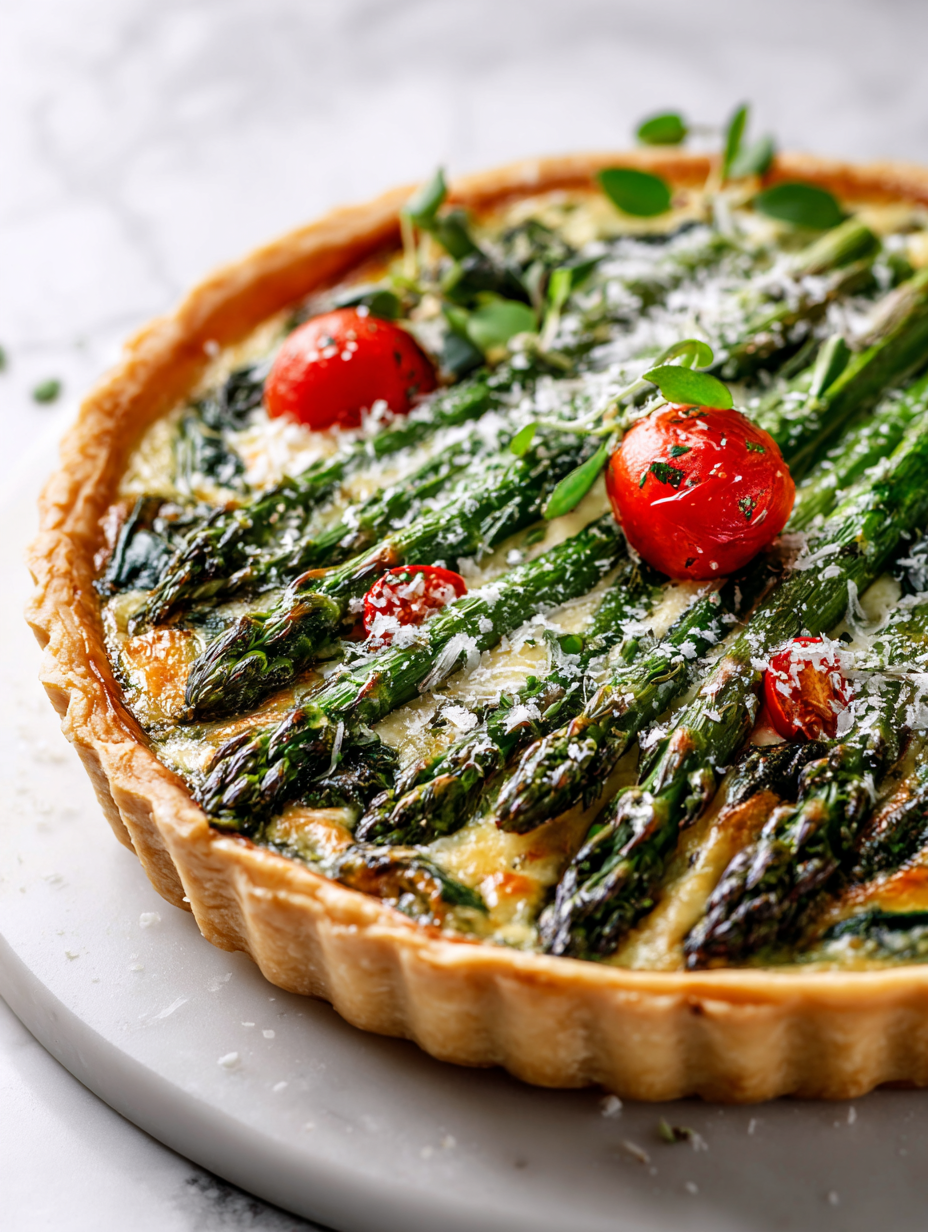
Asparagus and Spinach Quiche
Ingredients
Equipment
Method
- Preheat the oven to 180°C (350°F). Roll out your pie crust and fit it into a 9-inch pie dish, then prick the bottom with a fork. Chill in the fridge while you prepare the filling.
- Trim the woody ends off the asparagus, then toss the spears with olive oil, salt, and pepper. Spread them on a baking sheet and roast for 10-12 minutes until tender and slightly caramelized. Let cool slightly.
- While the asparagus cools, wash and chop the spinach. In a skillet over medium heat, add a splash of olive oil and wilt the spinach for about 2-3 minutes until vibrant green. Drain excess moisture and set aside.
- In a mixing bowl, whisk together the eggs, heavy cream, nutmeg, lemon zest (if using), salt, and pepper until smooth. Stir in the grated cheese until evenly combined.
- Remove the pie crust from the fridge and line it with parchment paper. Fill with pie weights or beans and bake for 10 minutes. Remove the weights and parchment, then bake for another 5 minutes until lightly golden.
- Spread the roasted asparagus evenly over the bottom of the pre-baked crust, then layer the wilted spinach on top.
- Pour the custard mixture over the vegetables, ensuring it fills the crust and covers everything evenly.
- Bake the quiche in the oven for 35-40 minutes, or until the top is golden brown and the custard is just set with a slight jiggle in the center.
- Remove from the oven and let the quiche rest for 10 minutes to allow the filling to set fully. The aroma of baked cheese and vegetables should fill the air.
- Slice and serve the warm or at room temperature, enjoying the creamy custard paired with tender roasted asparagus and wilted spinach.
Pro tips for perfect quiche
- & bright: Blanch asparagus briefly in salted boiling water to boost vibrant color and tender-crisp texture.
- Layer carefully: Spread roasted asparagus in a single layer for even baking and consistent flavor infusion.
- Pulse with care: When blending eggs and cream, avoid overmixing to keep the custard light and airy.
- Cheese distribution: Sprinkle cheese evenly over the filling for melt-in-your-mouth pockets of flavor.
- Crust prep: Chill your pie crust before baking to prevent shrinking and maintain flaky layers.
- Bake with confidence: Start at 180°C (350°F) and check for a golden top and a slightly jiggle in the center.
- Rest & relax: Let the quiche sit out for at least 10 minutes after baking; this helps the filling set perfectly.
Common mistakes and how to fix them
- FORGOT to preheat oven → Always preheat to ensure even baking.
- DUMPED filling → Pour slowly to prevent spillage and uneven layers.
- OVER-TORCHED crust → Cover edges or reduce oven temp if browning too fast.
- MISSED resting time → Resting helps set the custard and makes slicing cleaner.
Quick fixes and pantry swaps
- When asparagus spears are limp → Splash with lemon juice to brighten and revive their crunch.
- If filling cracks during baking → Patch with a dollop of whipped cream or extra cheese, then bake briefly.
- When crust edges brown too quickly → Shield with foil or a pie crust shield to prevent burning.
- If quiche is too runny → Let it rest for at least 10 minutes, then gently reheat to firm up the custard.
- Splash extra milk or cream if the custard feels too thick or dense before pouring.
Prep, store, and reheat tips
- Prepare the crust and blind bake it a day ahead; keep it in an airtight container at room temperature for up to 24 hours, preventing sogginess.
- Roast the asparagus and sauté the spinach a few hours before; store in separate airtight containers in the fridge, where they’ll keep for 1-2 days.
- Assemble the quiche (without baking) up to 24 hours in advance; wrap loosely and refrigerate. The flavors meld overnight, making it more cohesive.
- Reheat the assembled quiche in a 160°C (320°F) oven for 15-20 minutes until warmed through, watching for the crust to crisp and filling to steam gently.
- The baked quiche lasts in the fridge for 2-3 days. Reheat slices in the oven or microwave until just warm, noting the aroma of melted cheese and baked eggs.
FAQs about asparagus and spinach quiche
1. How do I pick good asparagus?
Use fresh, firm asparagus with closed tips for the best snap and flavor. Dull or limp spears won’t give the same crunch.
2. What kind of spinach works best?
Fresh spinach should be bright green and tender. If it’s bitter or wilted, blanch briefly to mellow before using.
3. How do I get a smooth custard?
Whisk eggs thoroughly with cream, salt, and pepper until smooth. Proper mixing ensures a silky, even custard.
4. Can I prep ingredients in advance?
Roast or sauté asparagus and spinach ahead. Store in the fridge for up to 2 days to save time on assembly.
5. How do I know when it’s done?
Bake until the top is golden and the filling is just set, with a slight jiggle in the center. Check at 35 minutes.
6. What if the crust over-browns?
If crust edges brown too quickly, shield with foil or a pie crust shield to prevent burning while the filling finishes.
7. Can I add lemon zest?
Use a sharp microplane to zest lemon for a bright, fragrant touch that elevates the overall flavor.
8. What dairy-free substitutions work?
For a dairy-free version, swap cream with almond or oat milk; it’s lighter but still smooth and tasty.
9. What if it cracks while baking?
If the quiche cracks during baking, cover it with foil or a damp towel and bake a few minutes longer.
10. How should I reheat leftovers?
Reheat slices in a low-temperature oven until warm and the cheese is melty. Serve with a fresh salad for contrast.
Making this asparagus and spinach quiche feels like capturing a moment of spring in every slice. The aroma of baked eggs mingling with roasted asparagus is a gentle reminder of how simple ingredients can create something truly comforting.
It’s a dish that’s perfect for lazy weekend mornings or a quick brunch when you want something honest, flavorful, and unpretentious. No matter how often I make it, I’m always glad to come back to this humble, seasonal favorite.