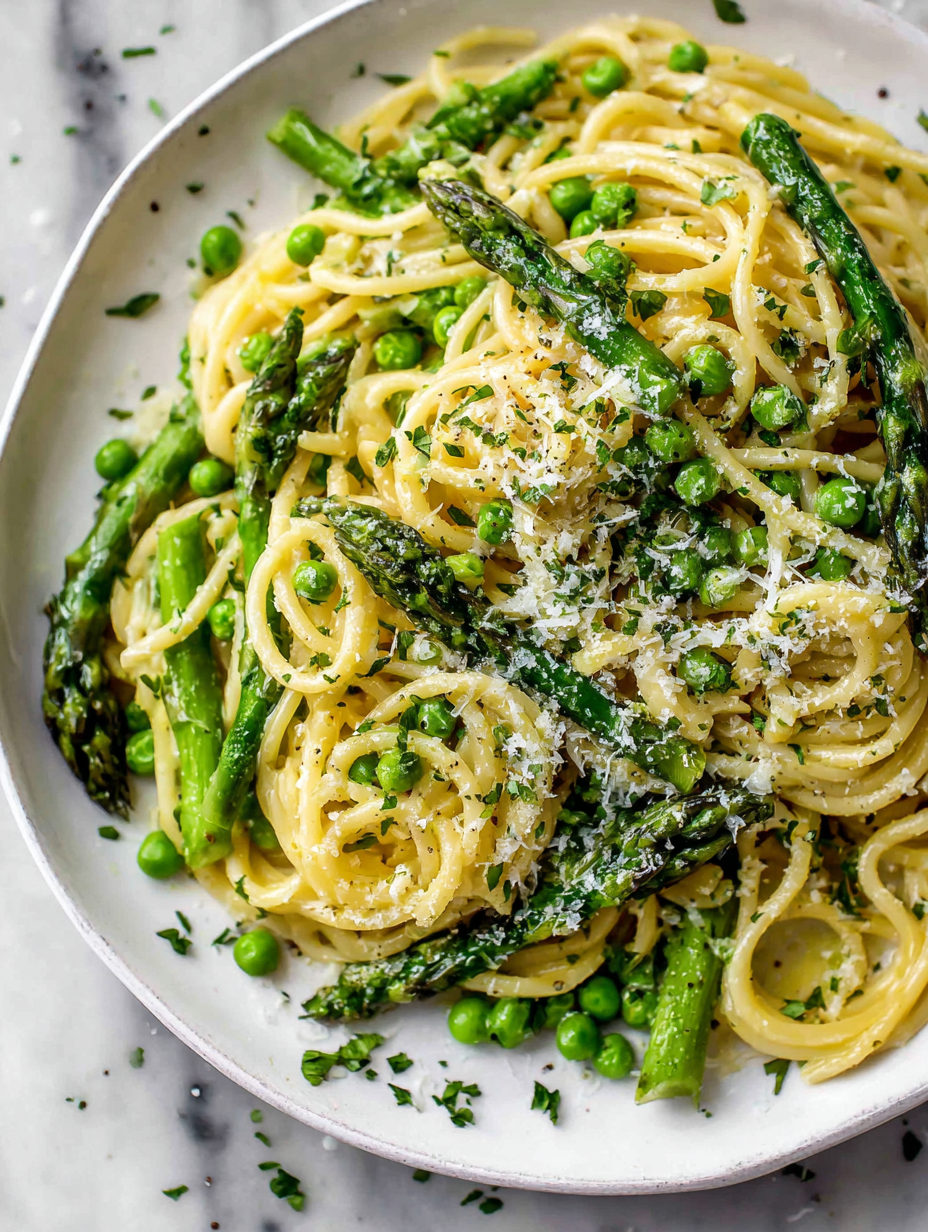
Spring’s quick tease, that’s what this pasta feels like. Bright green peas, crisp-tender asparagus, all tossed with al dente pasta and a splash of lemon. It’s simple, but I swear, it’s the kind of dish that captures a fleeting moment—like catching sunlight through a window at just the right angle.
I’ve made this recipe more times than I can count, each time feeling like I’m squeezing the last bits of early season into a bowl. It’s not fancy, just honest ingredients, thrown together with a little care. Perfect for those days when you want something fresh, vibrant, and fast, but still deeply satisfying.
Focusing on the overlooked beauty of peak spring produce, this recipe celebrates how asparagus and peas transform simple pasta into a fresh, vibrant dish that captures the fleeting essence of early season.
The story behind this recipe
This dish grew out of a lazy spring afternoon when I found myself rummaging through the fridge, craving something bright and simple. I remember the first time I tossed fresh peas and tender asparagus into hot pasta, the way the flavors burst—fresh, slightly sweet, with a whisper of earthiness. It’s one of those meals that feels like a little secret, a reminder to keep things uncomplicated and let seasonal produce do the work. Every time I make it, it’s like capturing a little piece of spring’s fleeting magic.
Ingredient breakdown: key components
- Asparagus: I love the snap of fresh asparagus, especially when it’s just cooked and still vibrant green. If yours feels limp, give it a quick blanch to revive that bright color and crisp bite.
- Peas: Sweet, tender peas are the star here. Frozen work perfectly, just thaw and drain well — avoid adding excess water to keep the sauce bright and not soggy.
- Pasta: I prefer a sturdy shape like penne or rigatoni that can hold onto the sauce and veggies. Cook it al dente for a slight chew that echoes the freshness of spring.
- Lemon: Brightens everything with a zingy, citrusy punch. Use a fresh lemon for maximum aroma—if it’s dull, the dish loses its sparkle; zest first for extra depth.
- Olive oil: Use good-quality extra virgin—it makes all the difference in flavor. Drizzle generously at the end to tie everything together with a fruity, slightly peppery note.
- Garlic: I like it minced fine so it melts into the oil, releasing a fragrant aroma that hints at warmth and comfort. If you’re sensitive, toss it in later to avoid bitter notes.
- Parmesan: Freshly grated adds a salty, nutty finish. Skip it if you want a dairy-free version, but beware, it does add a creamy richness that’s hard to replace.
Spotlight on key ingredients
Asparagus and Peas:
- Asparagus: I love the snap of fresh asparagus, especially when it’s just cooked and still vibrant green. If yours feels limp, give it a quick blanch to revive that bright color and crisp bite.
- Peas: Sweet, tender peas are the star here. Frozen work perfectly, just thaw and drain well — avoid adding excess water to keep the sauce bright and not soggy.
Notes for ingredient swaps
- Dairy-Free: Swap Parmesan for nutritional yeast or a splash of olive oil. It keeps the dish savory without dairy, but loses that nutty, cheesy punch.
- Vegetarian: Use a plant-based cheese or omit cheese altogether. You’ll miss some creaminess but keep the fresh bite.
- Gluten-Free: Replace regular pasta with chickpea or rice pasta. The texture can be slightly different, maybe a bit softer or more brittle, but still satisfying.
- Peas: Fresh peas are ideal, but frozen peas work just as well—just thaw and drain thoroughly to avoid excess water diluting the sauce.
- Lemon: Use bottled lemon juice in a pinch, but fresh lemon zest and juice give a brighter, more vibrant flavor that truly lifts the dish.
- Asparagus: Green beans or snap peas can stand in for asparagus. They add a similar snap and freshness, but the flavor profile shifts slightly.
- Oil: If you’re out of good-quality olive oil, a neutral oil like canola or avocado works, but the fruity aroma of olive oil is hard to replicate.
Equipment & Tools
- Large pot: Boil pasta and blanch asparagus.
- Skillet: Sauté vegetables and combine everything.
- Slotted spoon: Remove vegetables from boiling water.
- Zester or microplane: Add lemon zest and enhance citrus aroma.
Step-by-step guide to asparagus and pea pasta
- Gather your equipment: a large pot for boiling pasta, a skillet for sautéing, a slotted spoon, and a zester or microplane. Fill the pot with water, add salt, and bring to a rolling boil at 100°C (212°F).
- Trim the tough ends of the asparagus—about 2 inches from the bottom. Cut into 2-inch pieces. Blanch in boiling water for 2 minutes until bright green and slightly tender. Transfer to ice water to stop cooking and preserve color.
- While the asparagus cools, cook the pasta in salted boiling water until al dente, about 8 minutes. Save a cup of pasta water before draining.
- In the skillet, heat 2 tablespoons of good olive oil over medium heat (about 160°C/320°F). Add minced garlic and cook for 30 seconds until fragrant but not browned. If garlic starts to turn bitter, lower the heat.
- Add the blanched asparagus and thawed peas to the skillet. Sauté for 2-3 minutes until warmed through, stirring gently. The vegetables should remain vibrant and crisp-tender, with a slight sizzle and bright aroma.
- Toss the cooked pasta into the skillet with the vegetables. Add a splash of reserved pasta water (about ¼ cup) to loosen the sauce. Stir well and cook for another minute, letting flavors meld. Look for a glossy, slightly saucy texture that clings to the pasta.
- Finish with a squeeze of lemon juice, a drizzle of olive oil, and freshly grated Parmesan if using. Toss to combine, then check for seasoning—add salt or pepper as needed.
- Serve immediately, garnished with extra Parmesan and lemon zest if desired. Rest for 1-2 minutes to let flavors settle before plating.
Serve immediately on warm plates, garnished with extra cheese and lemon zest. Let it rest for 1-2 minutes to settle, then enjoy the fresh, vibrant flavors.
How to Know It’s Done
- Vegetables are bright green and tender, not mushy or dull in color.
- Pasta is al dente, with a slight bite, not overcooked or sticky.
- Sauce is glossy, clinging well to the pasta, with a fresh, citrus aroma.
Spring Asparagus and Pea Pasta
Ingredients
Equipment
Method
- Bring a large pot of salted water to a rolling boil. Add the pasta and cook until al dente, about 8 minutes, until it offers a slight resistance when bitten. Drain, reserving about ¼ cup of pasta water, and set aside.
- Trim the tough ends of the asparagus and cut into 2-inch pieces. Drop them into the boiling water for 2 minutes until they turn bright green and slightly tender. Use a slotted spoon to transfer the asparagus to a bowl of ice water to stop the cooking and lock in their color.
- Heat a skillet over medium heat and add two tablespoons of olive oil. Once shimmering, add the minced garlic and cook gently for about 30 seconds until fragrant, avoiding browning to keep it sweet and mellow.
- Add the blanched asparagus and thawed peas to the skillet. Sauté for 2-3 minutes, stirring gently, until everything is warmed through and the vegetables remain vibrant and crisp-tender. The mixture should emit a fresh, slightly sweet aroma.
- Pour the cooked pasta into the skillet with the vegetables. Add a splash of the reserved pasta water and toss everything together over medium heat for about a minute, allowing the flavors to meld and the sauce to become glossy.
- Finish by zesting the lemon directly over the pasta, then squeeze in its juice. Drizzle with a little extra virgin olive oil, sprinkle with freshly grated Parmesan if using, and season with salt and pepper to taste. Toss again to combine thoroughly.
- Serve immediately on warm plates, garnished with additional Parmesan and lemon zest if desired. The dish should look bright, glossy, and inviting, with vibrant green vegetables nestled among the pasta.
Notes
Pro tips for perfect asparagus and pea pasta
- Bolded Mini-Head: Use a quick blanch for asparagus to lock in color and crispness, then shock in ice water.
- Bolded Mini-Head: Toast garlic gently in oil until fragrant but not browned to avoid bitterness.
- Bolded Mini-Head: Save pasta water before draining; it’s starchy and perfect for loosening the sauce.
- Bolded Mini-Head: Toss vegetables and pasta over medium heat to meld flavors without overcooking.
- Bolded Mini-Head: Finish with a squeeze of lemon and good olive oil off heat for maximum brightness.
- Bolded Mini-Head: Watch the asparagus—bright green and tender, not dull or mushy, signals done.
- Bolded Mini-Head: Keep an eye on the pasta—al dente is ideal, with a slight bite that echoes freshness.
Common mistakes and how to fix them
- FORGOT to trim asparagus ends → Trim the tough ends for a tender bite.
- DUMPED pasta water prematurely → Save some for sauce to enhance flavor and texture.
- OVER-TORCHED garlic → Cook garlic gently to avoid bitterness.
- MISSED the color check → Vegetables should be bright green, not dull or mushy.
Quick fixes and pantry swaps
- When asparagus feels limp, splash in boiling water for 30 seconds to revive crispness.
- DUMPED pasta water before adding sauce? Rescue with a splash of olive oil and a pinch of salt.
- OVER-TORCHED garlic? Patch by adding a squeeze of lemon to mellow bitterness.
- Forgot to check vegetable color? Bright green and tender veggies mean you’re good to go.
- Splash extra lemon juice for a quick flavor boost if the dish feels dull or muted.
Prep, store, and reheat tips
- Prep the vegetables: Trim and blanch the asparagus, then cool in ice water to lock in color and crunch, up to 2 hours ahead. Keep covered in the fridge for freshness.
- Cook the pasta al dente, drain, and toss with a little olive oil to prevent sticking. Store in an airtight container for up to 24 hours. Reheat briefly if needed, but best served fresh.
- Thaw frozen peas thoroughly—drain excess water to keep the sauce bright and not watery. Combine with vegetables just before serving for maximum freshness.
- Reheating leftovers gently in a skillet over low heat, adding a splash of pasta water or olive oil, helps revive the texture and keeps flavors vibrant. Expect softer veggies and a slightly mellowed aroma.
- The flavors may mellow slightly after chilling, so a quick squeeze of lemon and fresh drizzle of olive oil before serving can refresh the dish, restoring brightness and shine.
Top questions about asparagus and pea pasta
1. Can I use frozen peas instead of fresh?
Yes, frozen peas work great; just thaw and drain well to avoid excess water diluting the sauce.
2. Can I substitute other vegetables for peas and asparagus?
Absolutely, swap in zucchini or snap peas for a different crunch and flavor, but they’ll change the overall taste.
3. Can I skip lemon or use bottled juice?
Yes, fresh lemon zest and juice really brighten the dish, but bottled lemon juice can be a quick stand-in.
4. Is olive oil really necessary?
Yes, a dash of olive oil at the end ties everything together with a fruity, peppery note. Use good-quality oil for best flavor.
5. How do I know when the pasta is al dente?
Al dente means the pasta has a slight bite—firm but cooked through. Test a piece at 8 minutes, it should resist a bit.
6. Can I prepare this dish in advance?
Yes, you can make the components ahead. Blanched asparagus and cooked pasta keep well for a few hours in the fridge.
7. How do I prevent garlic from burning?
Overcooked garlic turns bitter. Cook it gently over medium heat for about 30 seconds until fragrant but not browned.
8. What if the vegetables look dull?
If the veggies turn dull or mushy, give them a quick blast of boiling water or a splash of lemon juice to revive their color and brightness.
9. What’s the best pan size for this recipe?
Use a large, deep skillet to give the ingredients room to cook evenly and avoid overcrowding, which can make everything soggy.
10. How do I tell when the dish is ready?
When vegetables are bright green and crisp, and the pasta is glossy with a slight citrus aroma, it’s done.
This pasta feels like a breath of spring, simple but packed with that fleeting freshness of early season. It’s the kind of dish that makes me pause, appreciating how minimal ingredients can come together so lively and satisfying.
Whenever I make it, I’m reminded to keep things uncomplicated—let the produce do the work, and trust in those bright, natural flavors. It’s a little reminder that good food doesn’t need fuss, just a bit of care and seasonal spirit.