
Focusing on the caramelization process, I want to explore how slow, patient onion cooking transforms the soup into a deep, complex bowl. It’s about the love in each golden layer and the magic of patience that turns simple ingredients into something nostalgic and soul-warming.
There’s something almost meditative about standing by the stove, stirring those onions as they soften and turn a rich amber. It’s a slow dance that rewards with a scent that fills the kitchen—sweet, smoky, and a little tangy from the natural sugars caramelizing. That’s when I know I’m on the right track.
This soup is more than just a recipe; it’s a ritual of patience and attention. It reminds me that good things take time, and sometimes, the simplest ingredients—onions, broth, a splash of wine—can become something deeply satisfying when given the space to develop their full flavor.
Focusing on the caramelization process, I want to explore how slow, patient onion cooking transforms the soup into a deep, complex bowl. It’s about the love in each golden layer and the magic of patience that turns simple ingredients into something nostalgic and soul-warming.
The quiet magic of caramelized onions
- That first sniff of caramelized onions always takes me back to my grandma’s kitchen, cozy and warm.
- I used to rush through making this, but now I savor every slow, sticky minute of caramelization.
- There’s a strange pride in perfecting that deep, glossy onion layer—like capturing a fleeting moment of magic.
- Cooking this soup reminds me how patience can turn simple into extraordinary, even on the busiest days.
- Sharing a bowl of this feels like passing down a quiet, delicious secret I’ve loved for years.
The magic of slow caramelization
Growing up, I remember the kitchen always smelling of slow-cooked onions and beef broth. My grandmother would simmer her onion soup on weekends, the caramelized onions turning everything golden and sweet. It was her quiet way of turning simple ingredients into something cozy and memorable, long before it became trendy to fuss over caramelization. Making this soup now feels like a small act of gratitude for those Sunday afternoons in her warm, bustling kitchen.
Historical and Cultural Trivia
- French Onion Soup dates back to ancient Rome, where onions and bread were common fare for hearty, simple meals.
- The modern version gained popularity in Paris cafés in the 18th century, turning humble ingredients into a refined dish.
- Traditionally, caramelizing onions for this soup takes patience—sometimes over an hour—to develop their deep, sweet flavor.
- The cheese topping is a relatively recent addition, becoming popular in the 19th century with the rise of baking dishes.
- In France, this soup was once considered peasant food, but now it’s a symbol of comfort and culinary craft worldwide.
Ingredient breakdown: key components
- Yellow onions: I love the natural sweetness they bring when slowly caramelized; if you prefer a milder flavor, use sweet onions instead.
- Beef broth: I make mine from scratch, rich and deep, but a good quality store-bought works too—just watch the salt levels.
- Dry white wine: Adds a subtle acidity and brightness; if you don’t have wine, a splash of sherry or apple cider vinegar can mimic that tang.
- Baguette slices: Toasted until golden and crispy, they soak up the soup beautifully—skip this step if you want a softer bread experience.
- Gruyère cheese: Melts into a gooey, nutty blanket—if you’re dairy-free, try a smoked vegan cheese, but the flavor will be different.
- Butter: I use a generous knob for the caramelization; olive oil can work in a pinch, but it won’t develop the same richness.
- Fresh thyme: Just a sprig or two adds a hint of earthiness—dried thyme can substitute, but use a little less to avoid overpowering.
Spotlight on key ingredients
Yellow onions:
- I love how they soften and turn a deep amber, releasing a sweet, caramel aroma. If you prefer milder sweetness, try sweet onions instead.
- Their natural sugars caramelize slowly, developing a rich, sticky texture and a complex, smoky flavor that’s essential to this soup. Use fresh, firm onions for the best results.
Gruyère cheese:
- Melts into a gooey, nutty blanket on top—watch for bubbling and golden edges for perfect broil. If dairy-free, a smoky vegan cheese can mimic the richness.
- Its sharp, slightly salty flavor complements the sweet caramelized onions beautifully. When melted, it creates a crispy crust that adds texture and richness to each spoonful.
Notes for ingredient swaps
- Dairy-Free: Swap Gruyère for a nutty, melted vegan cheese—won’t have that same gooey richness but still tasty.
- Gluten-Free: Use toasted slices of sourdough or gluten-free bread; they’ll soak up the broth just as well.
- Vegan Broth: Replace beef broth with hearty mushroom or vegetable stock—adds earthy depth without animal products.
- Wine: Substitute with extra broth or a splash of apple cider vinegar diluted in water—adds acidity without alcohol.
- Onion Varieties: Use sweet onions like Vidalia for milder sweetness or red onions for a sharper bite—adjust caramelization time.
- Butter: Olive oil or vegan butter can stand in, but expect a different depth of flavor—less richness, more fruitiness.
- Cheese: Nutritional yeast or a smoky vegan cheese works as a topping—won’t melt the same but still adds umami.
Equipment & Tools
- Heavy-bottomed pot or Dutch oven: Caramelize onions evenly and develop deep flavor.
- Wooden spoon: Stir onions gently to avoid breaking slices and to prevent sticking.
- Sharp knife: Slice onions uniformly for even cooking.
- Baking sheet: Toast baguette slices until crisp.
- Oven-safe bowls or baking dish: Finish the soup with cheese in a way that melts perfectly.
- Broiler or oven with grill setting: Melt and brown cheese topping quickly and evenly.
Step-by-step guide to French Onion Soup
- Gather your equipment: a heavy-bottomed pot or Dutch oven for slow onion caramelization, a wooden spoon for stirring, a sharp knife, and a baking dish or oven-safe bowls for finishing the soup.
- Slice 4-5 large yellow onions thinly. Uniform slices help them cook evenly and caramelize faster.
- Heat 2 tablespoons of butter (or a mix of butter and oil) over medium heat (about 160°C/320°F). Add the onions and a pinch of salt. Stir well to coat.
- Cook onions slowly, stirring every 8-10 minutes. Adjust heat to medium-low (around 130°C/265°F). Cook for 45-60 minutes until deep golden brown and sweet-smelling. If they start to burn, lower the heat or add a splash of water to deglaze.
- Once onions are caramelized, pour in ½ cup of dry white wine. Stir, scraping up any browned bits from the bottom. Cook for 2-3 minutes until the wine reduces slightly.
- Add 4 cups of beef broth (or vegetable for vegetarian version), a sprig of fresh thyme, and a bay leaf if you like. Bring to a gentle simmer.
- Simmer uncovered for 20-30 minutes, allowing flavors to meld and the soup to thicken slightly. Taste and adjust salt or add a splash more wine if desired.
- Meanwhile, preheat your oven to 200°C/390°F. Slice a baguette into ½-inch thick rounds. Toast on a baking sheet until golden, about 8-10 minutes.
- Ladle soup into oven-safe bowls or a baking dish. Top each with toasted baguette slices, then generously sprinkle grated Gruyère cheese over the bread.
- Place the bowls on a baking sheet and broil (about 3-5 minutes) until the cheese melts into a bubbly, golden crust. Keep an eye to prevent burning.
- Remove from oven, let sit for 2 minutes. Rest the soup slightly so the cheese sets a bit, then serve hot with a spoonful of broth and crispy cheese topping.
Let the soup sit for 2 minutes after broiling to settle. Serve hot directly from the bowls, ensuring each has a crispy cheese topping and a few toasted bread slices. The initial sip should be rich, sweet, with a savory, cheesy crust giving a satisfying crunch.
How to Know It’s Done
- Onions are deeply golden and sweet-smelling before adding wine.
- Wine reduces by half, leaving a glossy coating on the onions.
- Cheese is bubbly and golden, with a slight crust on top when broiled.
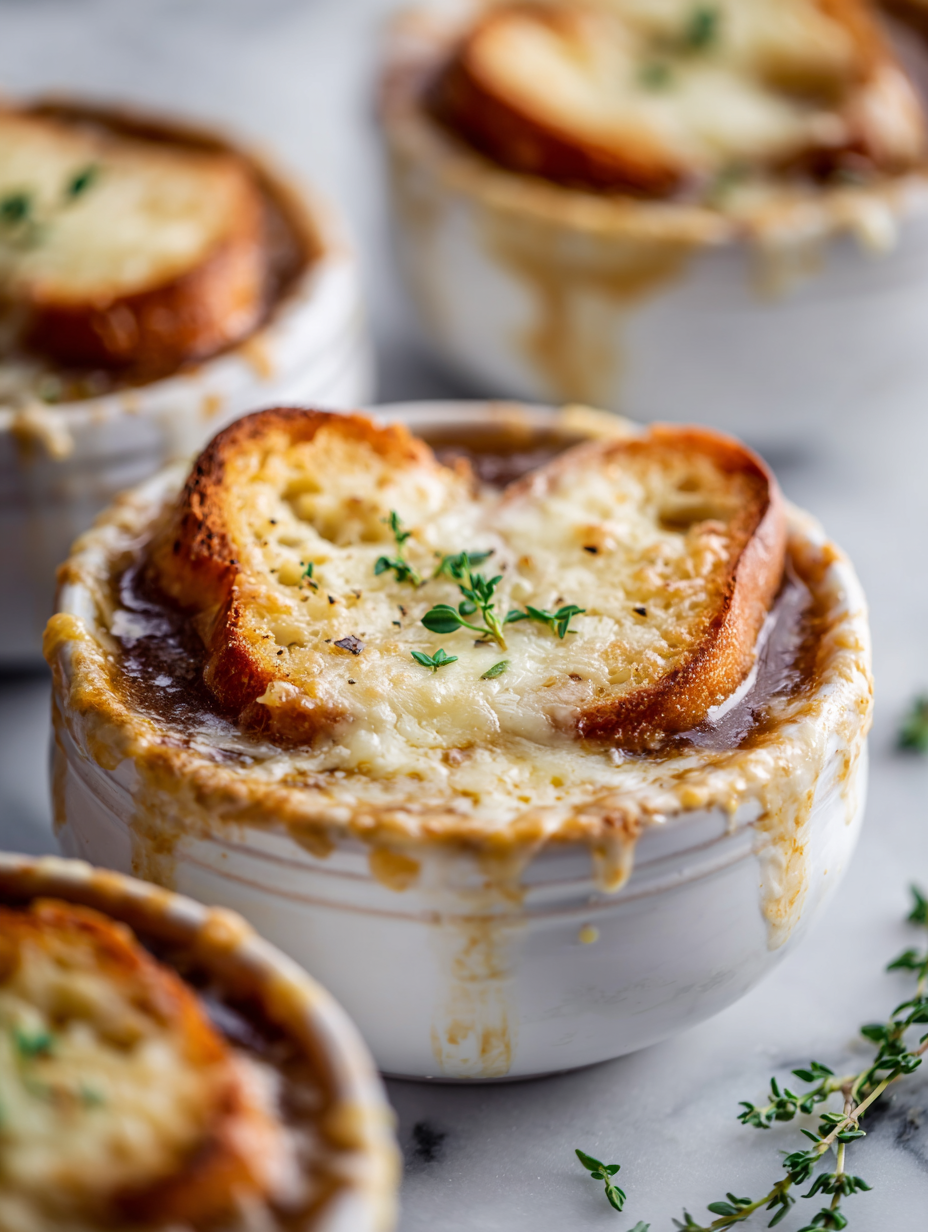
French Onion Soup
Ingredients
Equipment
Method
- Peel and thinly slice the onions uniformly, aiming for slices about ¼ inch thick. This helps them cook evenly and caramelize at the same rate.
- Place a heavy-bottomed pot or Dutch oven over medium heat and add the butter, allowing it to melt and foam gently.
- Add the sliced onions to the pot, stirring to coat them in the butter. Cook gently on medium-low heat, stirring every 8-10 minutes, until they soften and turn a deep golden amber—this can take about 45-60 minutes. The onions will smell sweet and smoky, and their texture will become sticky and glossy.
- Once the onions are richly caramelized, pour in the white wine and stir, scraping up any browned bits from the bottom of the pan. Let the wine reduce slightly for about 2-3 minutes, intensifying the flavor.
- Add the beef broth, thyme sprigs, and bay leaf to the pot. Bring the mixture to a gentle simmer, then reduce the heat to low. Let it simmer uncovered for 20-30 minutes, allowing the flavors to meld and the broth to thicken slightly.
- Preheat your oven to 200°C (390°F). Arrange the baguette slices on a baking sheet and toast them until golden and crispy, about 8-10 minutes.
- Remove the thyme sprigs and bay leaf from the soup. Ladle the hot soup into oven-safe bowls or a baking dish. Top each with a few slices of toasted baguette, then generously sprinkle grated Gruyère cheese over the bread.
- Place the bowls on a baking sheet and broil in the oven until the cheese is bubbly and golden, about 3-5 minutes. Keep a close eye to prevent burning. The cheese should be melted and slightly crispy on top.
- Carefully remove the bowls from the oven and let sit for 2 minutes to settle. Serve hot, enjoying the rich broth with the crispy, cheesy topping and toasted bread slices.
Tips & Tricks for Perfect French Onion Soup
- caramelization: Cook onions slowly over medium-low heat, stirring frequently until they turn a deep, golden amber—this develops their sweetness and complexity.
- deglazing: After onions are caramelized, splash in wine and scrape up the browned bits from the bottom of the pan—this adds richness and depth.
- cheese melting: Broil the topped soup until cheese is bubbly and golden—keep a close eye to prevent burning, about 3-5 minutes.
- onion prep: Slice onions uniformly to ensure even cooking and caramelization—thin slices help them soften and turn color faster.
- bread toasting: Toast baguette slices until crisp and golden—this prevents sogginess when they soak up the hot, flavorful broth.
- cheese topping: Generously sprinkle cheese for a gooey, crispy crust—use a fine grater for even melting and golden edges.
- patience: Resist rushing the caramelization process—slow cooking builds depth and transforms simple ingredients into something extraordinary.
Common mistakes and how to fix them
- FORGOT to deglaze properly? Use wine to lift caramelized bits for flavor.
- DUMPED onions too quickly? Lower heat and cook longer for deep caramelization.
- OVER-TORCHED cheese? Broil briefly and watch closely to prevent burning.
- MISSED the onion’s color? Aim for deep amber before adding broth for rich flavor.
Quick Fixes and Pantry Swaps
- When onions stick, splash in a bit more water and stir to loosen.
- If the broth is too salty, add a peeled potato to absorb excess salt.
- Splash a little lemon juice if the soup lacks brightness.
- Patch burnt cheese with fresh grated cheese and a quick broil.
- Shield the soup with foil if onions brown too fast, then lower heat.
Prep, store, and reheat tips
- Caramelized onions can be prepared up to 2 days ahead; store in an airtight container in the fridge, where they’ll develop a richer, slightly sweeter aroma over time.
- Soup can be made a day in advance; cool completely, then refrigerate for up to 24 hours. The flavors deepen, giving a more cohesive, savory profile—just give it a gentle stir before reheating.
- Reheat gently on the stovetop over low heat, stirring occasionally. The soup will thicken slightly overnight, so add a splash of warm broth or water to loosen it up and restore the silky texture.
- The toasted bread and cheese topping is best assembled fresh, but if necessary, prepare the bread slices ahead, store in an airtight bag, and broil just before serving for that crispy, cheesy finish.
Top questions about French Onion Soup
1. How do I know when the onions are caramelized enough?
Look for onions that are deeply caramelized, with a sweet, smoky aroma and a rich, golden-brown color. They should be soft and slightly sticky to the touch.
2. What’s the best broth to use for flavor?
Use a good quality beef broth for depth, or vegetable broth for a lighter, vegetarian version. The broth should be rich, savory, and aromatic, not too salty.
3. Can I skip the wine or use something else?
A splash of dry white wine adds brightness and acidity, balancing the sweetness of the onions. If you prefer, sherry or a dash of apple cider vinegar can work as substitutes.
4. How should I prepare the bread topping?
Look for a firm baguette with a crisp crust. Toast slices until golden and slightly crunchy—they should soak up the broth without turning soggy too quickly.
5. What cheese works best for the topping?
Gruyère cheese melts into a gooey, nutty crust that bubbles and turns golden when broiled. If dairy-free, try a smoky vegan cheese but expect less meltiness.
6. How long does caramelization take?
Cook the onions slowly over low to medium-low heat, stirring often, until they turn a deep amber and smell sweet and smoky—this can take up to an hour.
7. How do I get the cheese topping just right?
Broil the soup until the cheese is bubbly and golden, about 3–5 minutes. Keep a close eye to prevent burning the cheese or bread.
8. What if my soup tastes off or the cheese burns?
If the soup is too salty, add a peeled potato or a splash of lemon juice to balance the flavors. For burnt cheese, spoon off the burnt bits and add fresh cheese to broil again.
9. How do I reheat and store leftovers?
Reheat the soup gently on the stove over low heat, adding a little broth or water if it thickens overnight. Toast bread and broil cheese fresh for best texture.
10. Can I make this vegetarian or vegan?
For a vegetarian version, replace beef broth with mushroom or vegetable stock, and consider using a smoky vegan cheese for the topping. The flavor will be slightly different but still satisfying.
This soup is a slow, soulful project—one that rewards patience and attention. When the onions are deeply caramelized, each spoonful bursts with a smoky sweetness that feels like a quiet celebration.
Sharing a bowl of this brings back memories of cozy kitchens and simple joys. It’s a dish that reminds me why I love cooking—transforming humble ingredients into something truly satisfying, especially when the weather turns cool and crispy.

Hello, I’m Oliver James, the person behind Melting Into Flavors. Cooking is my greatest passion, and it’s been the driving force in my life for as long as I can remember.
It’s not just about food for me; it’s about creating experiences, connecting with others, and sharing the love I have for what’s on the plate. Through this blog and my café, I’m able to share my journey with all of you and hopefully inspire some of your own culinary adventures along the way.