Focusing on the tactile joy of perfect scallop texture—crisp outside, tender inside—by mastering the precise searing technique that transforms a simple seafood into a luxurious treat.
There’s something deeply satisfying about that initial crackle when the scallops hit a hot pan, followed by the fleeting moment they turn that perfect golden-brown. It’s a dance of timing and heat, but when done right, it’s pure magic.
This recipe is more than just a quick sear; it’s about understanding that delicate balance. Getting those scallops just right makes all the difference, turning what seems like a modest ingredient into a moment of pure texture bliss.
Focusing on the tactile joy of perfect scallop texture—crisp outside, tender inside—by mastering the precise searing technique that transforms a simple seafood into a luxurious treat.
The tactile joy of perfect searing
- Seared scallops remind me of summer evenings by the coast, where the scent of the ocean mingles with warm butter.
- I still get a thrill every time I hear that satisfying sizzle—like a tiny victory in my kitchen.
- There’s a nostalgic rush in flipping the scallops perfectly, a skill I’ve worked hard to master over the years.
- I feel a quiet pride when I serve these, knowing I’ve turned a simple ingredient into something special.
- Sometimes, I just crave that crispy exterior paired with the tender, sweet interior—pure comfort and elegance in one bite.
The story behind this recipe
- Seared scallops always remind me of a seafood market trip I took years ago. Watching the vendors expertly flip and sear those little treasures sparked something in me—this simple act of cooking something so delicate can feel almost meditative.
- I remember trying to replicate that perfect sear in my tiny apartment, fumbling with the heat and patience. It took a few burnt batches to get it right, but once I nailed that golden crust, I felt like I’d unlocked a secret of the kitchen.
- Now, searing scallops is my go-to for a quick, elegant meal. It’s about honoring how fragile and fleeting that crisp exterior is—once it’s gone, it’s gone. It’s a small, satisfying act of craftsmanship each time I do it.
Contextual origin, trivia, or history
- The technique of searing scallops gained popularity in French cuisine, where the focus on perfect texture became a hallmark.
- Scallops have been a delicacy for centuries, often reserved for special occasions in coastal cultures worldwide.
- In the 20th century, searing seafood in a hot pan became a modern culinary art, emphasizing texture and flavor contrast.
- The word ‘scallop’ comes from Old French ‘escalope,’ referring to the shell, which inspired the shape of the cut.
Ingredient breakdown
- Fresh scallops: I look for those that feel firm and smell like the ocean—avoid anything mushy or overly fishy. You want that sweet, briny aroma to be prominent.
- Salt: A light sprinkle just before searing helps draw out moisture and enhances flavor. Too much salt too early can make the scallops waterlogged, so keep it minimal.
- Oil: I prefer a high-smoke-point oil like grapeseed or clarified butter—these give a clean, neutral sear with that crisp exterior. Skip olive oil if it starts to smoke too much.
- Butter: Adding a pat of butter at the end gives a rich, nutty aroma and helps the scallops brown beautifully. Use it sparingly to avoid burning.
- Lemon: Bright, fresh lemon juice just before serving cuts through the richness and adds a lively zing. Don’t skip this—it’s the finishing touch that lifts the whole dish.
- Pepper: Freshly cracked black pepper adds a subtle heat and complexity. I usually add it after searing to keep that sharp bite intact.
- Optional herbs: A sprig of thyme or parsley can be added during the last seconds of searing for an herbal pop. Keep it delicate—overdoing herbs can overshadow the scallop’s natural sweetness.
Spotlight on key ingredients
Scallops:
- Fresh scallops: I look for those that feel firm and smell like the ocean—avoid anything mushy or overly fishy. You want that sweet, briny aroma to be prominent.
- Salt: A light sprinkle just before searing helps draw out moisture and enhances flavor. Too much salt too early can make the scallops waterlogged, so keep it minimal.
- Oil: I prefer a high-smoke-point oil like grapeseed or clarified butter—these give a clean, neutral sear with that crisp exterior. Skip olive oil if it starts to smoke too much.
Lemon:
- Butter: Adding a pat of butter at the end gives a rich, nutty aroma and helps the scallops brown beautifully. Use it sparingly to avoid burning.
- Bright, fresh lemon juice just before serving cuts through the richness and adds a lively zing. Don’t skip this—it’s the finishing touch that lifts the whole dish.
Notes for ingredient swaps
- Seafood Alternatives: Use firm fish fillets like halibut or cod if scallops aren’t available. They won’t sear as quickly but can still deliver a tender bite.
- Oil Swap: Grape seed or canola oil can replace vegetable oil. They have high smoke points and won’t interfere with that crispy exterior.
- Butter Options: Clarified butter or ghee can be used instead of regular butter for a richer, nutty flavor without burning as easily.
- Salt Adjustments: Kosher salt is ideal for control, but if you only have fine sea salt, use half the amount to prevent over-salting.
- Acid Brightener: Lemon juice is classic, but lime or a splash of white wine vinegar can add a different zing if you prefer a twist.
- Herb Variations: Fresh thyme or parsley work well, but a little tarragon or chives can bring a different herbal note without overpowering.
- Flavor Enhancers: A pinch of smoked paprika or a dash of hot sauce can add depth or heat—use sparingly to keep the delicate flavor intact.
Equipment & Tools
- Large skillet: Provides even heat for a thorough sear.
- Tongs: For flipping and handling scallops gently.
- Small spoon: To baste with melted butter for flavor and shine.
- Paper towels: For drying scallops thoroughly before searing.
Step-by-step guide to pan searing
- Equipment & Tools: Use a large heavy-bottomed skillet—preferably stainless steel or cast iron—for even heat and good sear. Tongs for flipping, a small spoon for butter, and paper towels for patting the scallops dry.
- Prep the scallops: Pat them dry thoroughly with paper towels—moisture is the enemy of sear. Season lightly with salt just before cooking.
- Heat the pan: Place it over medium-high heat until it’s hot—look for a faint shimmer of the oil. Aim for about 190°C (375°F).
- Add oil: Pour in a thin layer of high-smoke-point oil. Swirl to coat the bottom. Wait until it shimmers and starts to smoke slightly.
- Sear the scallops: Carefully place the scallops in the pan, leaving space between each. Don’t overcrowd. Sear for about 2 minutes without moving, until the edges turn opaque and golden-brown.
- Flip: Using tongs, gently turn each scallop. Sear the second side for another 1.5-2 minutes, until it’s equally golden and the center is just opaque.
- Add butter & aromatics: Reduce heat slightly. Add a small pat of butter and optional herbs like thyme. Baste the scallops with melted butter for flavor and shine.
- Check for doneness: The scallops should be firm yet tender, with a crisp exterior. The center will be just opaque—avoid overcooking to prevent rubberiness.
- Rest & plate: Transfer scallops to a plate and let them rest for a minute. Serve immediately, drizzled with pan juices or a squeeze of lemon.
Rest scallops briefly on a plate, then serve immediately, optionally garnished with lemon or herbs. Drizzle pan juices for extra flavor.
How to Know It’s Done
- Golden-brown crust with slight caramelization.
- Center of scallops just opaque and tender when pressed gently.
- A faint aroma of toasted butter and seafood during cooking.
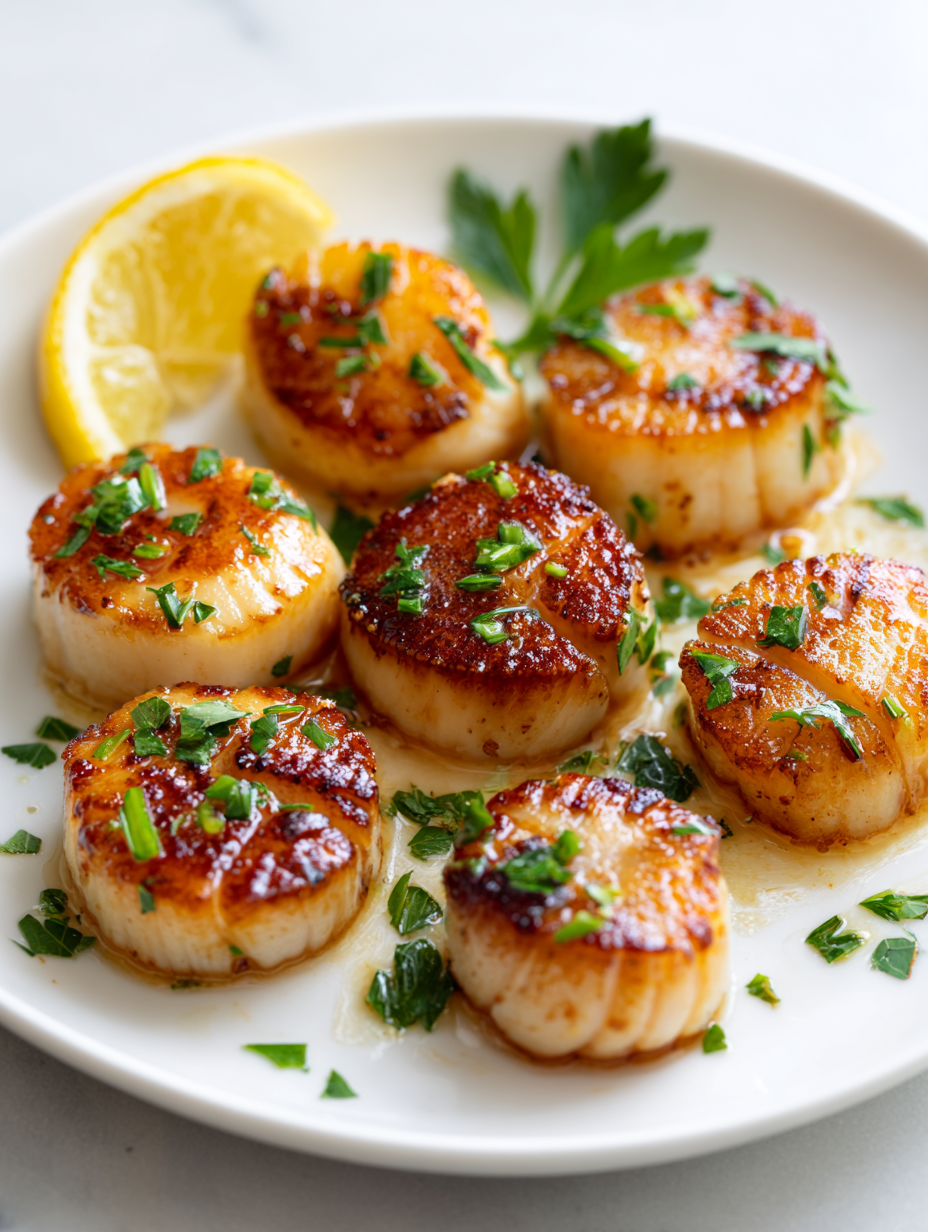
Perfect Pan-Seared Scallops
Ingredients
Equipment
Method
- Pat the scallops dry thoroughly with paper towels to remove excess moisture, which helps achieve a good sear. Lightly sprinkle with kosher salt just before cooking.
- Heat a large skillet over medium-high heat until it’s hot enough that a drop of water sizzles and evaporates quickly. Add the high-smoke-point oil and swirl to coat the bottom of the pan.
- Carefully place the scallops in the hot pan, making sure they are spaced apart. You should hear a lively sizzle as they touch the pan. Let them cook undisturbed for about 2 minutes until the edges turn opaque and develop a golden-brown crust.
- Using tongs, gently flip each scallop and sear the second side for another 1.5 to 2 minutes, until it’s just golden and the center is opaque when pressed lightly. The scallops should feel firm but tender.
- Reduce the heat slightly, then add a small pat of butter and optional fresh herbs like thyme or parsley to the pan. Spoon the melted butter over the scallops (basting) for about 30 seconds to enhance flavor and add shine.
- Squeeze fresh lemon juice over the scallops for a bright, zesty finish. Remove the scallops from the pan and transfer to a plate.
- Sprinkle freshly cracked black pepper on top and serve immediately, drizzled with any remaining pan juices or additional lemon if desired. Enjoy the crispy exterior and tender interior of these beautifully seared scallops.
Notes
Pro tips for perfect scallops
- Preheat thoroughly: Wait until the oil shimmers and just begins to smoke before adding scallops for that perfect sear.
- Pat dry generously: Moisture is the enemy of crispness; use paper towels to remove excess water from the scallops.
- Don’t overcrowd: Leave space between scallops; overcrowding causes steaming instead of searing and ruins that crust.
- Resist the urge to move: Let the scallops sit undisturbed for about 2 minutes on each side to develop a golden crust.
- Baste with butter: During the last minute, spoon melted butter over the scallops for rich flavor and an attractive sheen.
- Check for doneness: The scallops are ready when they’re opaque in the center, with a firm but tender texture.
- Finish with acid: A squeeze of lemon right before serving brightens the flavor and cuts through the richness.
Common mistakes and how to fix them
- FORGOT to dry scallops thoroughly → Pat dry to prevent steaming and ensure crisp sear.
- DUMPED oil into hot pan too quickly → Add oil gradually, wait for shimmer before searing.
- OVER-TORCHED the scallops → Reduce heat if oil smokes excessively or scallops brown too fast.
- MISSED resting time before serving → Rest briefly to let juices redistribute and avoid rubbery texture.
Quick fixes and pantry swaps
- If scallops release too much water, pat dry again to prevent steaming.
- When oil smokes excessively, lower the heat to avoid burning and bitterness.
- Splash a bit of water on the pan if scallops stick—gentle agitation helps release them.
- Patch a burnt pan surface with a baking soda paste to prevent residual flavors.
- Shield scallops with foil if they brown too quickly, giving you time to adjust heat.
Prep, store, and reheat tips
- Prep the scallops: Pat them thoroughly dry and season lightly with salt a few hours ahead; keep refrigerated to enhance flavor and reduce moisture for a better sear.
- Store seared scallops: If cooked in advance, keep in an airtight container in the fridge for up to 2 days. Reheat gently in a hot pan for 30 seconds per side until just warmed, watching for crispness.
- Shelf life: Raw scallops stay good in the fridge for 1-2 days max. Cooked scallops are best enjoyed within 48 hours for optimal texture and flavor.
- Reheating: To preserve texture, briefly sear reheated scallops over medium-high heat until warmed through and lightly crispy on the outside. Avoid overcooking to prevent rubberiness.
- Sensory note: Reheated scallops may lose some of their initial crispness; aim for a warm interior with a slightly crisp exterior for the best experience.
Top questions about pan seared scallops
1. How can I tell if scallops are fresh?
Look for scallops that feel firm and smell like the ocean—avoid anything mushy or overly fishy to ensure freshness.
2. Why is my scallop not crispy?
Pat the scallops completely dry with paper towels before searing to get that crispy exterior and prevent steaming.
3. What oil is best for searing scallops?
Use a high-smoke-point oil like grapeseed or vegetable oil. It withstands the heat and gives a clean sear without burning.
4. How long should I sear scallops?
Sear scallops for about 2 minutes per side over medium-high heat until golden and just opaque in the center.
5. When should I add butter?
Add a small pat of butter at the end for richness and a nutty aroma, but keep the heat moderate to avoid burning.
6. Should I add lemon during cooking or at the end?
A squeeze of lemon just before serving brightens the dish and balances the richness of the scallops.
7. My scallops are sticking to the pan, what do I do?
If scallops stick or don’t sear well, increase the heat slightly or make sure they are thoroughly dry before cooking.
8. How do I know when scallops are done?
Overcooked scallops turn rubbery and lose their delicate texture. Look for a firm, opaque center and a golden exterior.
9. Can I reheat cooked scallops?
Reheat scallops gently in a hot pan for about 30 seconds per side to preserve crispness and avoid rubberiness.
10. How do I prevent overcrowding when searing scallops?
Avoid overcrowding the pan to ensure each scallop gets enough heat for a proper sear and crispy crust.
There’s something about that perfect sear—the crackle, the gold, the fleeting crispness—that keeps me coming back to this simple dish. It’s a reminder that with a little attention, even the smallest ingredients can shine.
In the end, it’s not just about the technique but the quiet satisfaction of turning raw seafood into a tender, flavorful bite. No matter how many times I cook scallops, that moment of pulling them from the pan still feels a little special.

Hello, I’m Oliver James, the person behind Melting Into Flavors. Cooking is my greatest passion, and it’s been the driving force in my life for as long as I can remember.
It’s not just about food for me; it’s about creating experiences, connecting with others, and sharing the love I have for what’s on the plate. Through this blog and my café, I’m able to share my journey with all of you and hopefully inspire some of your own culinary adventures along the way.