
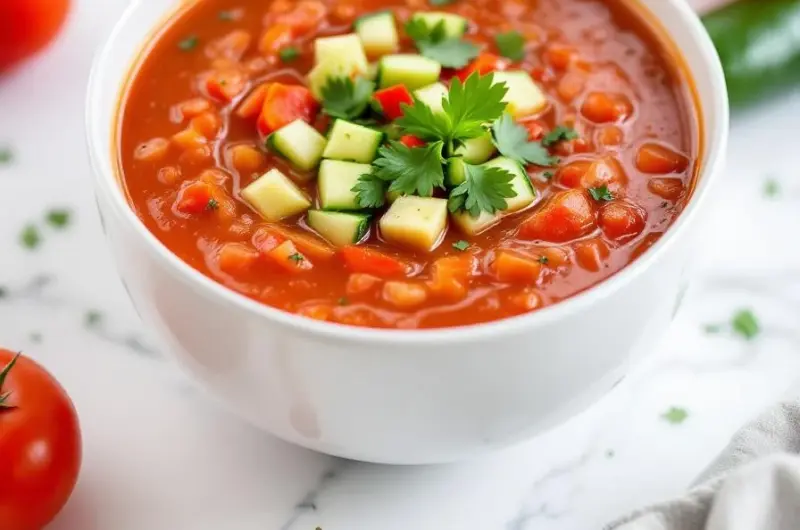
Making gazpacho means standing over a cutting board, chopping cucumbers, peppers, and tomatoes into uneven chunks that catch your knife’s edge. It’s a messy, noisy process—dull thuds, the scrape of the blade, and the splash of juice as ingredients get pushed around.
Blending everything into a soupy consistency feels like an act of patience—waiting for the blades to whir and the flavors to meld. You’ll taste the raw brightness of garlic and the tang of vinegar, with the texture still slightly chunky, not pureed into smoothness.
The rhythm of peeling ripe tomatoes—pressing, slipping, and the satisfying splash as their skins give way—sets the tone for making gazpacho. It’s a messy, tactile process that grounds you in the heat and freshness of summer produce.
Key ingredients and swaps
- Tomatoes: I use ripe, juicy heirlooms for sweetness and depth, but if you’re in a pinch, canned San Marzanos can work—just drain and chop well, the flavor is a bit more concentrated but still good.
- Cucumbers: Crunchy, cool, and a bit watery. If you hate peeling, skip it; just seed them well so the gazpacho doesn’t turn watery or bitter from the skin’s bitterness.
- Bell peppers: I prefer red or yellow for a sweeter punch, but green give a sharper edge—just deseed thoroughly to avoid extra bitterness and a gritty texture.
- Garlic: Use fresh cloves for punch. If you want milder, roast the garlic first for a smoky sweetness—skip raw if you’re sensitive to garlic’s raw punch.
- Vinegar: Sherry vinegar adds complexity, but red wine vinegar is a decent stand-in. Start small; it’s easy to overdo and turn the soup tangy instead of bright.
- Olive oil: Drizzle in good extra-virgin for richness, but if you want to skip it, a splash of cold-pressed sunflower oil can add a subtle fruitiness without overpowering.
- Salt & pepper: Essential for balancing acidity and sweetness. Taste as you go—too much salt dulls the fresh flavor, so keep it light until final seasoning.
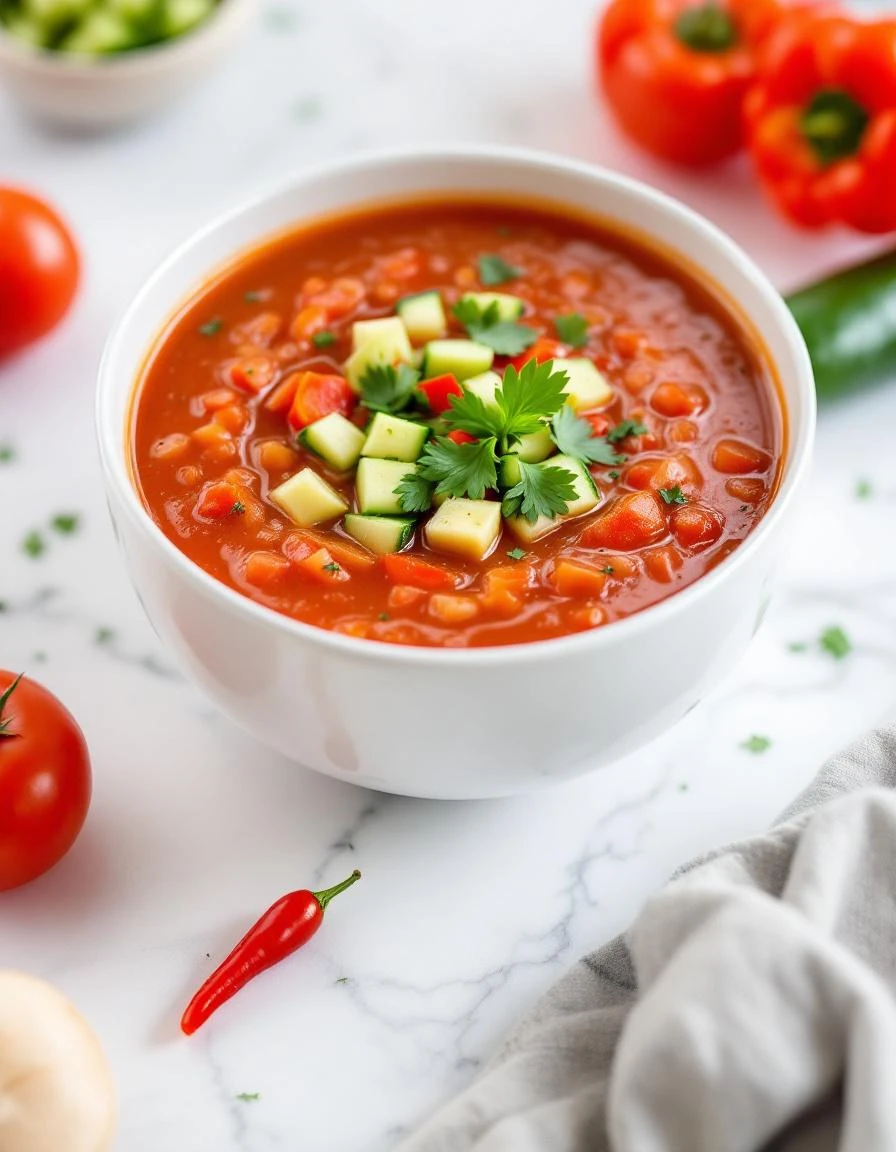
Classic Gazpacho
Ingredients
Equipment
Method
- Start by chopping the tomatoes into uneven chunks, releasing a fragrant, summery aroma as you cut. Transfer them to a large bowl.
- Next, peel the cucumber if desired, then dice it into small pieces, adding a crunch and coolness to the mix.
- Deseed and chop the bell pepper into rough chunks, their sweet aroma adding depth to the mixture.
- Add the minced garlic to the bowl, letting its pungent aroma fill the air.
- Pour in the sherry vinegar, giving the ingredients a tangy brightness that wakes up the flavors.
- Drizzle the olive oil over the chopped vegetables, which will add a lovely sheen and richness.
- Season with salt and black pepper, then gently toss everything together, coating the vegetables evenly.
- Transfer the mixture to a blender and blend until you reach a slightly chunky, textured consistency—stop blending when you see small vegetable bits remaining.
- Taste the gazpacho and adjust seasoning if needed—add a touch more vinegar or salt for balance.
- Pour the gazpacho into a bowl, then cover and refrigerate for at least 1 hour to let flavors meld and chill thoroughly.
- Serve the gazpacho cold, garnished with fresh herbs or a drizzle of olive oil if desired, and enjoy the refreshing burst of summer flavors.
Common mistakes and how to fix them
- FORGOT to taste and adjust seasoning before serving, fix by tasting and tweaking right after blending.
- DUMPED too much vinegar at once, fix by adding gradually and balancing with more tomatoes or oil.
- OVER-TORCHED the garlic while roasting, fix by roasting at lower heat or for less time.
- SKIPPED draining excess juice from ingredients, fix by salting or draining to prevent a watery soup.
Make-Ahead and Storage Tips
- Chop all the vegetables a day ahead; store in airtight containers in the fridge—flavors deepen overnight.
- Gazpacho can sit in the fridge for up to 24 hours before serving; flavors meld and intensify, but avoid longer to keep fresh brightness.
- Freezing is not recommended; texture and flavor suffer, especially the fresh tomato brightness.
- Refrigerate leftovers in an airtight container; consume within 1-2 days for best freshness and flavor clarity.
- Reheat gently if needed—best served cold but if warm, let it sit at room temp for 10 minutes, then stir and check for freshness.
- Taste before serving; the flavors may need a quick tweak of salt, vinegar, or olive oil after sitting.
FAQs
1. How cold should gazpacho be?
Gazpacho should be cold enough to make your glass sweat slightly when served. It’s meant to refresh, not warm your hands.
2. When is the best time to serve gazpacho?
It’s best served within a few hours of blending. The flavors are freshest and most vibrant then, especially if you want that raw tomato punch.
3. What tomatoes work best?
Use ripe, fragrant tomatoes that smell like summer. They’ll give you that deep, sweet, slightly tangy base you want.
4. How do I fix bland gazpacho?
If it tastes flat, add a splash more vinegar or a pinch of salt. Sometimes a squeeze of lemon brightens everything right up.
5. Can I make gazpacho ahead?
Store it in an airtight container in the fridge for up to 24 hours. Flavors intensify, but avoid longer—texture can break down.

Hello, I’m Oliver James, the person behind Melting Into Flavors. Cooking is my greatest passion, and it’s been the driving force in my life for as long as I can remember.
It’s not just about food for me; it’s about creating experiences, connecting with others, and sharing the love I have for what’s on the plate. Through this blog and my café, I’m able to share my journey with all of you and hopefully inspire some of your own culinary adventures along the way.