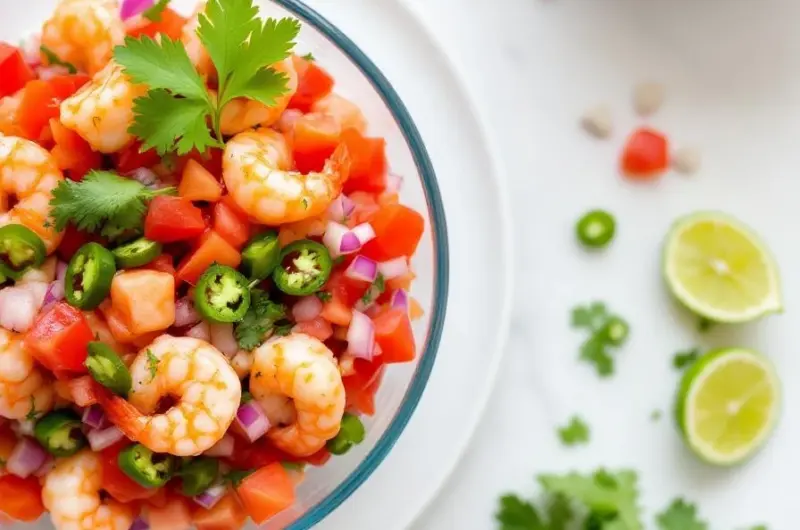
Making shrimp ceviche means standing over a cutting board, peeling shrimp, and listening to the snap of shells as they come apart. The citrus juice pools in the bowl, turning the raw shrimp opaque with a faintly fizzy sound as it marinates. It’s a messy, hands-on process, but the smell of lime and the coolness of the seafood keep me going.
You’ll chop tomatoes, onions, and herbs with quick, uneven motions, trying not to crush the delicate shrimp. The dish is all about textures—the firm bite of shrimp, the crispness of onions, the juiciness of tomatoes—all coming together in a bright, slightly tangy mix.
The sharp snap of the shrimp as you bite into the ceviche, the way the flesh yields with a slight resistance, then melts with a burst of briny juice.
What goes into this dish
- Shrimp: I prefer deveined, tail-on shrimp for easy eating and better presentation. If you only have peeled, that works too, just watch for a slightly softer texture. The snap of fresh shrimp is what makes this dish pop.
- Lime juice: Freshly squeezed lime is a must—brings that bright, zingy acidity that cures the shrimp. Bottled lime juice can work in a pinch, but it lacks that punch and fresh aroma, so squeeze fresh if possible.
- Red onion: Thinly sliced for crunch and sharpness. If you’re out, a mild shallot can substitute, though it’s a little sweeter. The onion gives a needed bite that balances the fishy seafood.
- Tomatoes: Diced and juicy, they add sweetness and color. Canned diced tomatoes drained well work, but fresh cherry tomatoes diced small are even better—more flavor, more snap.
- Cilantro: Fresh leaves, chopped coarsely. If you dislike cilantro, replace with chopped parsley for a cleaner, herbaceous note that won’t overpower. The cilantro adds a fresh, slightly citrusy aroma.
- Jalapeño: Minced for heat and a smoky kick. If you want milder, skip or use a small amount of bell pepper for color and crunch instead. The jalapeño’s heat should hit your nose first, then your palate.
- Olive oil: Just a drizzle, to round out the flavors and add a slight richness. If you don’t have olive oil, a neutral oil like avocado can work, but skip heavy or flavored oils—they’ll overshadow the bright citrus.
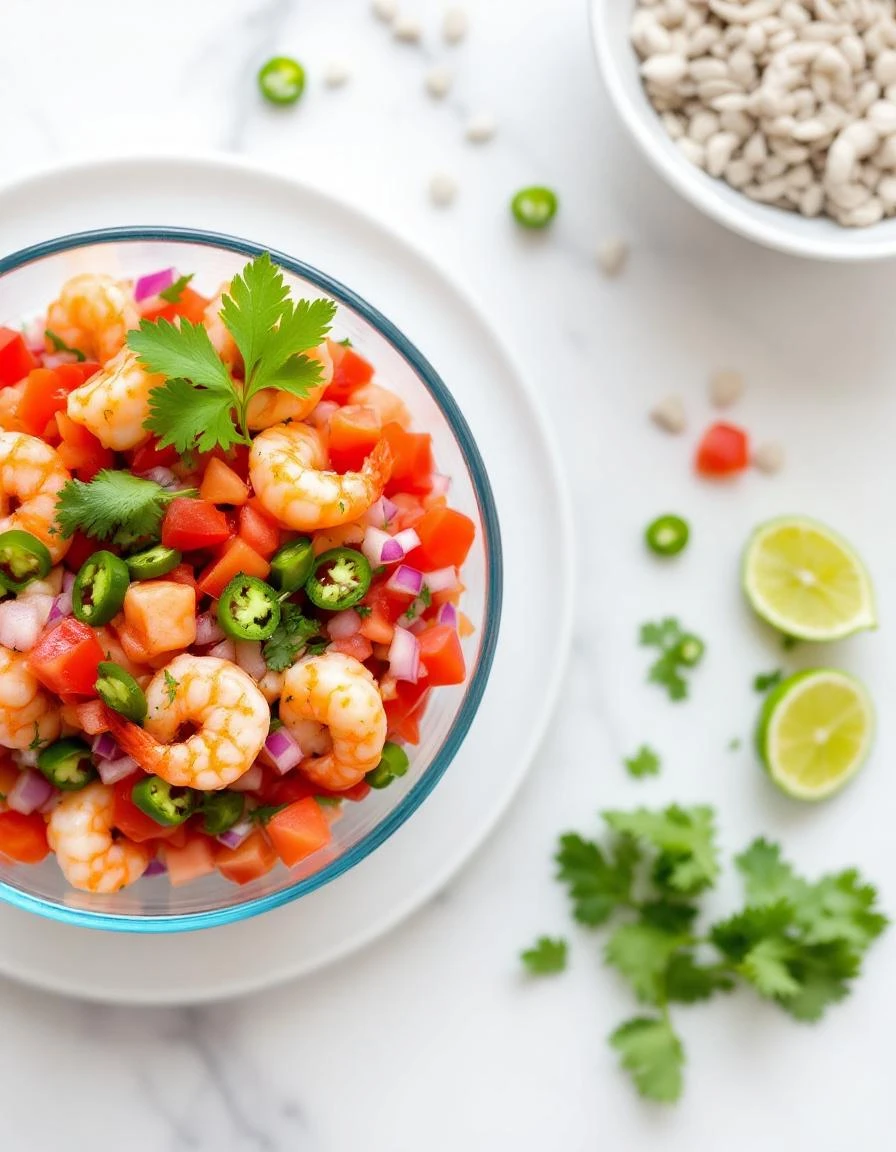
Shrimp Ceviche
Ingredients
Equipment
Method
- Peel and devein the shrimp, then rinse them under cold water and pat dry. Place them in a large bowl.
- Squeeze fresh lime juice over the shrimp until they are fully submerged. Toss gently to coat and set aside to marinate for 10-15 minutes until the shrimp turn opaque and firm.
- While the shrimp marinate, thinly slice the red onion and dice the tomatoes. Prepare the jalapeño by mincing it finely, removing seeds if you prefer less heat.
- Chop the cilantro coarsely and set it aside. Once the shrimp are opaque and firm, drain off excess lime juice if desired.
- Gently fold the diced tomatoes, sliced onions, chopped cilantro, and minced jalapeño into the marinated shrimp in the bowl. Drizzle with olive oil if using, and toss to combine all ingredients evenly.
- Taste the ceviche and adjust seasoning with more lime juice or salt if needed. Chill in the fridge for another 10 minutes to let flavors meld.
- Serve the shrimp ceviche cold, garnished with additional cilantro or lime wedges if desired. Enjoy the bright, fresh flavors and crisp textures in every bite!
Common Shrimp Ceviche Mistakes and Fixes
- FORGOT to rinse shrimp: Rinsing removes excess salt and any sliminess, improving texture.
- DUMPED the marinade: Always taste and adjust acidity before adding seafood, or it can overpower.
- OVER-TORCHED the shrimp: Cook just until opaque; overcooking makes them tough and rubbery.
- MISSED draining tomatoes: Excess moisture dilutes flavors; drain well or use less juicy varieties.
Make-Ahead and Storage Tips
- Prep the shrimp: Peel and devein ahead, keep cold in the fridge for up to 24 hours, for that fresh snap.
- Marinate the ceviche: Combine everything except shrimp, let sit in the fridge for at least 30 minutes to deepen flavors.
- Flavor shifts: The citrus will mellow slightly after a few hours, so taste again before serving for brightness.
- Freezing: Not recommended for long storage—shrimp can lose texture. Best eaten within 24 hours of prep.
- Reheating: Not necessary; serve cold. If it sits too long, the shrimp can become a tad rubbery—best fresh.
FAQs
1. How do I know if the shrimp is fresh?
The shrimp should smell briny and fresh, like the ocean, not fishy or sour. When biting, you’ll feel a firm, juicy snap, not rubbery or slimy.
2. Can I use bottled lime juice?
Use freshly squeezed lime juice for that sharp, citrusy aroma. It should smell bright and clean, not dull or musty. The acidity will turn the shrimp opaque and slightly firm.
3. What if I don’t like raw onion?
Red onions add crunch and sharpness with a slight sweetness. Slice them thinly until they crackle when you chew. If you dislike strong onion, soak slices in cold water first.
4. Can I skip the tomatoes?
Tomatoes should be juicy and burst with flavor, adding a slight sweetness. Fresh cherry or heirloom tomatoes diced small work best. Canned drained tomatoes can be used, but won’t have the same bright pop.
5. Is cilantro necessary?
Cilantro gives a fresh, citrusy aroma with a slight peppery kick. Chop leaves roughly until they release their fragrant oils. Parsley is a good substitute if you dislike cilantro, for a milder herbal note.

Hello, I’m Oliver James, the person behind Melting Into Flavors. Cooking is my greatest passion, and it’s been the driving force in my life for as long as I can remember.
It’s not just about food for me; it’s about creating experiences, connecting with others, and sharing the love I have for what’s on the plate. Through this blog and my café, I’m able to share my journey with all of you and hopefully inspire some of your own culinary adventures along the way.