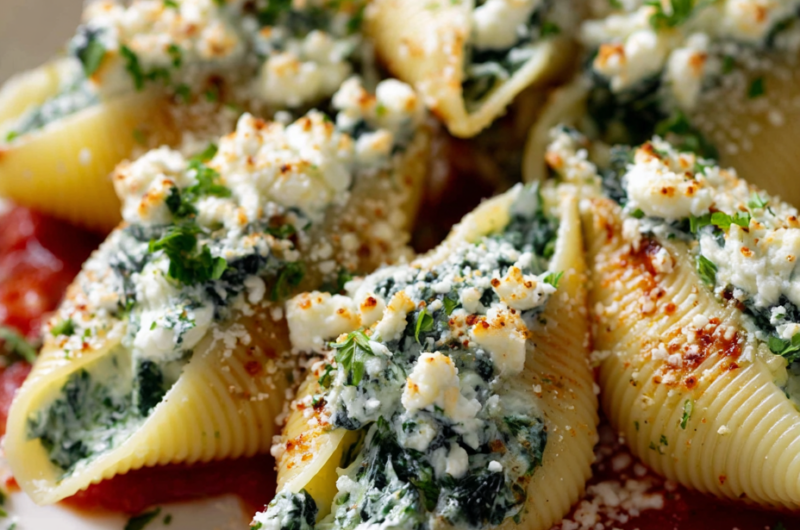
This spinach and ricotta stuffed shells recipe is a little nod to childhood comfort, but with a grown-up twist. I love using fresh herbs and creamy ricotta to make it feel more lively and sophisticated, even if it’s still rooted in nostalgia. It’s the kind of dish that feels like a warm hug, especially after a long day when you just want something familiar but better.
What really makes this dish stand out is the way the flavors meld into that oozy, cheesy, slightly herbaceous bite. The shells hold all that goodness perfectly, and the vibrant green of the spinach peeks through, reminding you of spring even in the dead of winter. It’s simple, honest food that’s almost impossible to resist, especially when served straight from the oven.
Focusing on the nostalgic comfort of a childhood favorite, but with a grown-up twist using fresh herbs and creamy ricotta, making it feel like a warm hug after a long day.
The story behind this recipe
This recipe came out of a quiet weekend in the kitchen, experimenting with what I had on hand. I wanted something comforting but not heavy, with a bit of a fresh twist. The idea of stuffing shells with spinach and ricotta felt like a cozy secret, almost like a small celebration of simple ingredients. It’s the kind of dish that feels familiar but always leaves me thinking I could do it better next time.
Ingredient breakdown: key components
- Spinach: I love using fresh baby spinach, its tender leaves wilt quickly and release a slightly earthy aroma. Skip freezing; fresh is best for vibrant color and flavor.
- Ricotta: Creamy and mild, I prefer whole-milk ricotta for richness. If you want it lighter, swap half with cottage cheese, but expect a slightly tangier bite.
- Shells: Large pasta shells are ideal—they cradle the filling perfectly. Cook until just al dente; overcooked shells turn mushy and tear easily.
- Cheese: Mozzarella adds gooeyness, and Parmesan delivers sharpness. Use freshly grated for better melting and flavor; pre-shredded can be a bit dry.
- Herbs: Fresh basil and parsley brighten the dish with a fragrant, green punch. Dried herbs work in a pinch but lack that lively freshness.
- Tomato sauce: I prefer a simple marinara with garlic and olive oil for depth. For a smoky twist, add a pinch of smoked paprika or a splash of balsamic vinegar.
Spotlight on key ingredients
Spinach and Ricotta:
- Spinach: I love using fresh baby spinach, its tender leaves wilt quickly and release a slightly earthy aroma. Skip freezing; fresh is best for vibrant color and flavor.
- Ricotta: Creamy and mild, I prefer whole-milk ricotta for richness. If you want it lighter, swap half with cottage cheese, but expect a slightly tangier bite.
Notes for ingredient swaps
- Fresh Spinach: I prefer baby spinach, it wilts quickly and has a tender bite. Frozen spinach works but needs thorough draining and squeezing to avoid excess moisture.
- Ricotta: Whole-milk ricotta gives a rich, creamy texture, but part-skim can cut calories with slightly firmer results. Cottage cheese can replace it for a tangier, lighter filling.
- Pasta Shells: Large, ridged shells hold the filling best. If unavailable, use manicotti tubes or even large zucchini boats for a low-carb twist.
- Cheese: Mozzarella creates gooeyness, Parmesan adds sharpness. Freshly grated melts better and tastes brighter than pre-shredded options. For a dairy-free version, try shredded vegan cheese, though the melt won’t be quite the same.
- Herbs: Fresh basil and parsley brighten everything up. Dried herbs are fine in a pinch but lack that vibrant, fresh flavor. Add dried herbs earlier in cooking for more flavor infusion.
- Tomato Sauce: Use your favorite marinara, or jazz it up with a splash of balsamic or smoked paprika for depth. For a creamy variation, blend in a bit of heavy cream or béchamel sauce.
Equipment & Tools
- Large pot: To cook the pasta shells.
- Mixing bowl: To prepare the ricotta filling.
- Spoon or piping bag: To stuff the shells neatly.
- 9×13 inch baking dish: To assemble and bake the stuffed shells.
- Aluminum foil: To cover the dish during baking.
Step-by-step guide to stuffed shells
- Preheat your oven to 180°C (350°F). Bring a large pot of salted water to a boil. Cook the pasta shells for 8-10 minutes until just al dente; they should be tender but still hold shape. Drain and lay flat on a clean towel to prevent sticking.
- While the shells cook, prepare the filling. In a mixing bowl, combine 1 cup ricotta, 1 cup chopped fresh spinach (squeezed dry), 1/2 cup grated Parmesan, 1 clove minced garlic, 1 tablespoon chopped fresh basil, and a pinch of salt and pepper. Mix until well combined, breaking up the ricotta for a creamy texture.
- Spread a thin layer of tomato sauce in the bottom of a 9×13 inch baking dish. Using a spoon or piping bag, carefully stuff each shell with the ricotta mixture. Place the filled shells seam-side down into the baking dish, fitting snugly.
- Pour the remaining tomato sauce evenly over the filled shells, making sure each shell is covered. Sprinkle 1 cup shredded mozzarella evenly across the top. Cover with foil loosely to prevent the cheese from drying out.
- Bake in the preheated oven for 25-30 minutes. The cheese should be bubbly and slightly golden at the edges. If you like a more browned top, remove the foil in the last 5 minutes and broil briefly—watch carefully to prevent burning.
- Remove from the oven and let rest for 5 minutes. This allows the filling to set slightly, making serving neater. Garnish with a few fresh basil leaves if desired. Serve warm, with extra sauce on the side if you like.
Let the dish rest for 5 minutes after baking. Serve with additional fresh basil or grated Parmesan. Scoop carefully to keep the shells intact and enjoy the creamy, cheesy bites.
How to Know It’s Done
- Cheese is bubbly and golden in spots.
- Shells are tender but not falling apart.
- Filling is firm enough to hold shape when served.
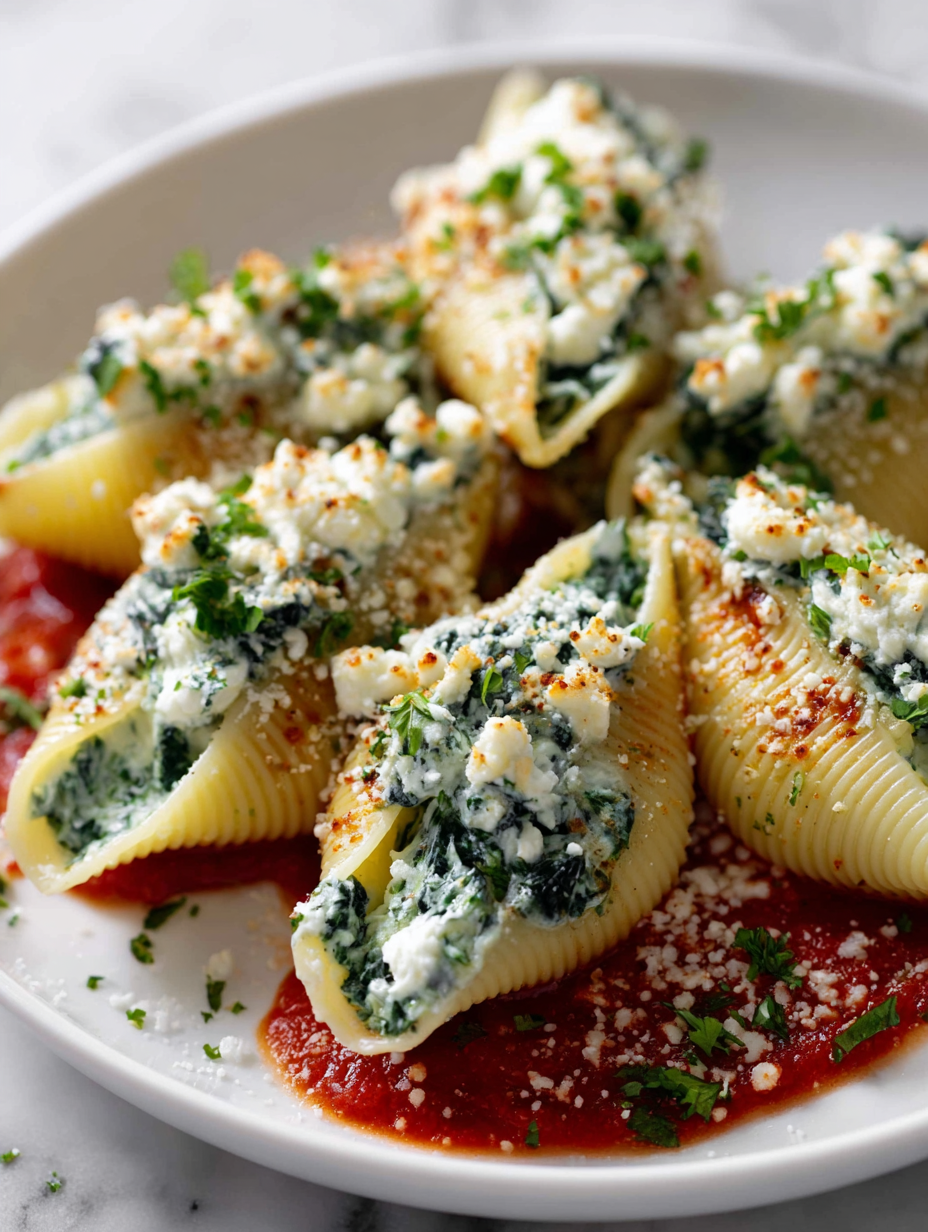
Spinach and Ricotta Stuffed Shells
Ingredients
Equipment
Method
- Bring a large pot of salted water to a boil, then cook the pasta shells for 8-10 minutes until just al dente. Drain and lay flat on a towel to prevent sticking.
- While the pasta cooks, combine ricotta, chopped spinach, grated Parmesan, minced garlic, chopped basil, salt, and pepper in a mixing bowl. Mix until smooth and well blended, with the spinach evenly distributed.
- Spread a thin layer of marinara sauce in the bottom of a 9x13 inch baking dish. This helps prevent the shells from sticking and adds flavor.
- Using a spoon or piping bag, carefully stuff each shell with the ricotta mixture, filling it generously but neatly. Place the filled shells seam-side down into the prepared baking dish.
- Once all shells are filled and arranged, pour the remaining marinara sauce evenly over the top, ensuring each shell is covered.
- Sprinkle shredded mozzarella evenly over the sauce-topped shells. Cover the dish loosely with aluminum foil.
- Bake in a preheated oven at 180°C (350°F) for 25-30 minutes, until the cheese is bubbly and golden around the edges. Remove the foil in the last 5 minutes if you'd like a more browned top.
- Take the dish out of the oven and let it rest for 5 minutes. This helps the filling set, making it easier to serve neat slices.
- Garnish with additional chopped basil if desired, then serve warm with extra sauce on the side. Enjoy the creamy, cheesy bites with a hint of fresh herbs in every forkful.
Tips and tricks for best results
- Bolded mini-head: Use room temperature ricotta to ensure it blends smoothly without clumping.
- Bolded mini-head: Slightly undercook the shells — they’ll finish cooking in the oven and stay firm, not mushy.
- Bolded mini-head: Squeeze out excess water from spinach to keep the filling creamy and prevent sogginess.
- Bolded mini-head: When stuffing shells, use a piping bag or a small spoon for cleaner, more precise filling.
- Bolded mini-head: Cover the dish loosely with foil during baking to prevent the cheese from browning too quickly.
- Bolded mini-head: Broil for 1-2 minutes at the end for a bubbly, golden top — watch carefully to avoid burning.
- Bolded mini-head: Rest the baked shells for 5 minutes before serving to let the filling set and make slicing easier.
Common mistakes and how to fix them
- FORGOT to drain excess moisture from spinach → Squeeze out water for less soggy filling.
- DUMPED the cheese mixture directly into the shells → Fill shells carefully to prevent spilling.
- OVER-TORCHED the dish → Broil just until bubbly, watch to avoid burning cheese.
- MISSED checking the pasta’s doneness → Test shells for tender, firm bite before draining.
Quick fixes and pantry swaps
- When sauce shimmers, it’s ready—don’t rush the simmer for deeper flavor.
- Splash a bit of pasta water when filling shells for extra creaminess.
- Patch over a burnt top with foil and a sprinkle of cheese—quick rescue!
- Dumped extra salt? Rinse shells briefly before stuffing to tone down saltiness.
- When shells stick, soak in hot water 5 minutes then gently loosen with a spoon.
Prep, store, and reheat tips
- Prepare the ricotta and spinach filling a day ahead; keep chilled in an airtight container for up to 24 hours, the fresh herbs will lose some vibrancy but the flavors meld overnight.
- Cook the pasta shells until just al dente, then rinse with cold water to halt the cooking; store in an airtight container for up to 2 days, separated slightly so they don’t stick together.
- Assemble the stuffed shells with sauce and cheese, then cover tightly with foil. This can be refrigerated for up to 24 hours before baking—just add a few extra minutes to the bake time if cold.
- Reheat leftovers in the oven at 180°C (350°F) covered with foil for about 20 minutes, until heated through and bubbly. The cheese may brown slightly more, so keep an eye on it for that perfect gooey finish.
- For freezing, assemble and double wrap the dish in plastic wrap and foil. It keeps well for up to 3 months. Thaw overnight in the fridge before baking, adding a few minutes to ensure it’s heated evenly. Expect the shells to be slightly softer after freezing.
Top questions about stuffed shells
1. Can I use frozen spinach instead of fresh?
Use fresh spinach for vibrant color and tender texture. Frozen works but needs thorough draining and squeezing to avoid sogginess.
2. What kind of ricotta is best for filling?
Ricotta should be at room temperature for easy mixing. Whole-milk ricotta gives creaminess, but part-skim is lighter if preferred.
3. How long should I cook the pasta shells?
Cook shells until just al dente, about 8-10 minutes. They should be tender but still firm enough to hold shape.
4. How do I stuff the shells neatly?
Stuff shells carefully with a spoon or piping bag to prevent spilling and ensure even filling.
5. What’s the best baking method?
Bake covered with foil at 180°C (350°F) for 25-30 minutes. Remove foil in last 5 minutes for a golden top.
6. Can I substitute other cheeses?
Use shredded mozzarella for gooeyness and Parmesan for sharpness. Freshly grated melts better and tastes more vibrant.
7. Can I use dried herbs instead of fresh?
Add fresh basil and parsley for bright flavor. Dried herbs can be used but won’t provide the same fresh punch.
8. How long should I let it rest?
Let the dish rest for 5 minutes after baking to let the filling set before serving.
9. Can I prepare this in advance?
Refrigerate assembled shells for up to 24 hours before baking. Reheat in oven at 180°C (350°F) for about 20 minutes.
10. What are good substitutions for dairy ingredients?
For a dairy-free version, try shredded vegan cheese, but expect less gooeyness. Use olive oil or coconut milk for richness.
This dish is a reminder that simple ingredients can create something truly comforting. It’s a meal that feels like a small celebration in your own kitchen, especially when the cheese is bubbling and the herbs release their fresh aroma. No matter the season, it’s a cozy, honest plate that’s hard to beat.
In the end, it’s about those imperfect, satisfying moments—slicing into a shell and seeing that cheesy steam rise up. It’s a dish that’s real, unpolished, and made to be enjoyed with family or alone, whenever you need a little something warm and familiar.

Hello, I’m Oliver James, the person behind Melting Into Flavors. Cooking is my greatest passion, and it’s been the driving force in my life for as long as I can remember.
It’s not just about food for me; it’s about creating experiences, connecting with others, and sharing the love I have for what’s on the plate. Through this blog and my café, I’m able to share my journey with all of you and hopefully inspire some of your own culinary adventures along the way.