
This carrot and potato curry is my go-to when I need something honest and warm but not overly fussy. There’s something about chopping those sturdy roots—peeling, dicing—that feels grounding, like a small act of care amid a hectic day. It’s a simple dish that invites you to slow down and enjoy the process, knowing that the end result will be hearty and satisfying.
What I love most is how these humble ingredients can become something rich and flavorful just by simmering with a few spices. It’s a reminder that you don’t need fancy or rare to make comfort food. Sometimes, the simplest foods, prepared with a bit of patience, are the ones that stick with you longest.
This recipe is inspired by the idea of turning everyday humble ingredients into a comforting, soul-warming dish that feels like a small act of care, especially when life feels chaotic. It’s about the quiet joy of peeling and chopping carrots and potatoes, knowing these simple roots can transform into something rich and satisfying with just a few spices and patience.
The story behind this recipe
- This curry comes from a moment of wanting to make something nourishing with just what I had in the fridge. I remember peeling those earthy carrots and starchy potatoes after a long day, feeling a quiet sense of accomplishment. It’s funny how simple ingredients can become a little ritual, a way to reset when everything else feels chaotic.
- I first made this for a friend who was feeling under the weather. The warmth and gentle spice seemed to soothe more than just the stomach. Over time, it’s become my comfort food—something I turn to when I need a reminder that simple can be enough, that honest flavors are often the most satisfying.
- heading: The story behind this recipe
Ingredient breakdown
- Carrots: I choose firm, bright-orange carrots that feel weighty in hand; their sweetness deepens as they cook, so skip the limp ones if possible.
- Potatoes: I prefer starchy potatoes like Russets for a fluffier texture, but if you want creaminess, go for waxy types like Yukon Gold—watch them turn mushy if overcooked.
- Onion: I go for yellow onions; their mellow sweetness becomes punchy once sautéed, adding a foundational depth to the curry. Don’t rush the caramelization.
- Coconut milk: I use full-fat for richness—its velvety texture makes the curry feel indulgent. Light versions will thin out and lose some of that lushness.
- Spices: I toast cumin and coriander seeds first—they release a warm, nutty aroma that’s essential. Store your spices in a cool, dark place to keep them vibrant.
- Tomatoes: I toss in chopped fresh or canned tomatoes—brings a bright, tangy contrast. Remember to cook out the acidity to let the sweetness shine.
- Fresh herbs: I finish with chopped cilantro—adds a fresh, lemon-bright note. If you’re out, a squeeze of lemon juice works wonders to lift the dish.
Spotlight on key ingredients
Carrot and Potato:
- Carrots: I pick firm, bright-orange carrots that feel heavy; their sweetness intensifies as they cook, so skip limp ones.
- Potatoes: I prefer starchy varieties like Russets for fluffiness, but waxy potatoes like Yukon Gold give a creamier texture—mind they overcook easily.
Notes for ingredient swaps
- Dairy-Free: Use coconut cream instead of yogurt for creaminess, which adds a richer, slightly sweeter coconut flavor.
- Vegetarian: Replace chicken stock with vegetable stock to keep it plant-based without losing depth.
- Low-Sodium: Opt for unsalted butter and reduce added salt; boost flavor with extra spices or a squeeze of lemon.
- Spice Level: Add more chili or cayenne if you like it fiery; reduce for milder heat, but keep the aroma bright.
- Sweetness: A touch of honey or maple syrup can balance acidity—use sparingly to avoid overpowering the natural sweetness.
- Herbs: Fresh coriander can be swapped with parsley if unavailable; it changes the flavor profile but keeps freshness.
- Tomatoes: Use roasted or sun-dried tomatoes for a smoky, concentrated tomato flavor that deepens the curry.
Equipment & Tools
- Large heavy-bottomed pot: Ensure even heat and prevent scorching.
- Chef’s knife: Cleanly dice vegetables and chop herbs.
- Wooden spoon: Gentle stirring and avoiding scratching the pot.
- Measuring cup: Accurate liquids measurement for consistent results.
Step-by-step guide to carrot and potato curry
- Equipment & Tools: Gather a large heavy-bottomed pot for even heat, a sharp chef’s knife for clean cuts, a wooden spoon for gentle stirring, and a measuring cup for liquids.
- Peel and dice 3 carrots and 2 medium potatoes into roughly 1-inch pieces. Keep the pieces similar in size for uniform cooking. Set aside.
- Heat 2 tablespoons of oil over medium heat (about 160°C/320°F). Add 1 diced onion and sauté until translucent, about 5 minutes. The smell should deepen and the onion become slightly golden.
- Add 1 teaspoon cumin seeds and 1 teaspoon coriander seeds. Toast for about 30 seconds until fragrant. Watch for a nutty aroma and slightly crackling seeds.
- Pour in the diced carrots and potatoes. Stir well to coat with spices. Cook for 3-4 minutes until the vegetables start to soften and develop faintly browned edges.
- Add 1 can (400ml) coconut milk and 1 cup chopped tomatoes. Stir together. Bring to a gentle simmer over medium-low heat (around 85°C/185°F). Cover and cook for 20-25 minutes, stirring occasionally.
- Check the vegetables; they should be tender but not mushy. The sauce should thicken slightly and turn a warm, golden hue. If too thin, simmer uncovered for a few more minutes. If too thick, add a splash of water.
- Taste and adjust salt, add a pinch of chili if you like heat. Finish with chopped cilantro for a fresh, lemon-bright note. Let sit for 5 minutes before serving.
- Resting & Finishing: Serve hot, garnished with extra herbs if desired. Let the curry rest off the heat for 5 minutes to deepen flavors. Pair with rice or bread.
Let the curry sit off heat for 5 minutes to allow flavors to meld. Serve hot, garnished with fresh herbs. Pair with rice or flatbread for a complete meal.
How to Know It’s Done
- Vegetables are tender with a slight bite (fork test).
- Sauce is creamy, thickened, and coats the vegetables evenly.
- Onion and spices are fragrant and slightly caramelized, not burnt.
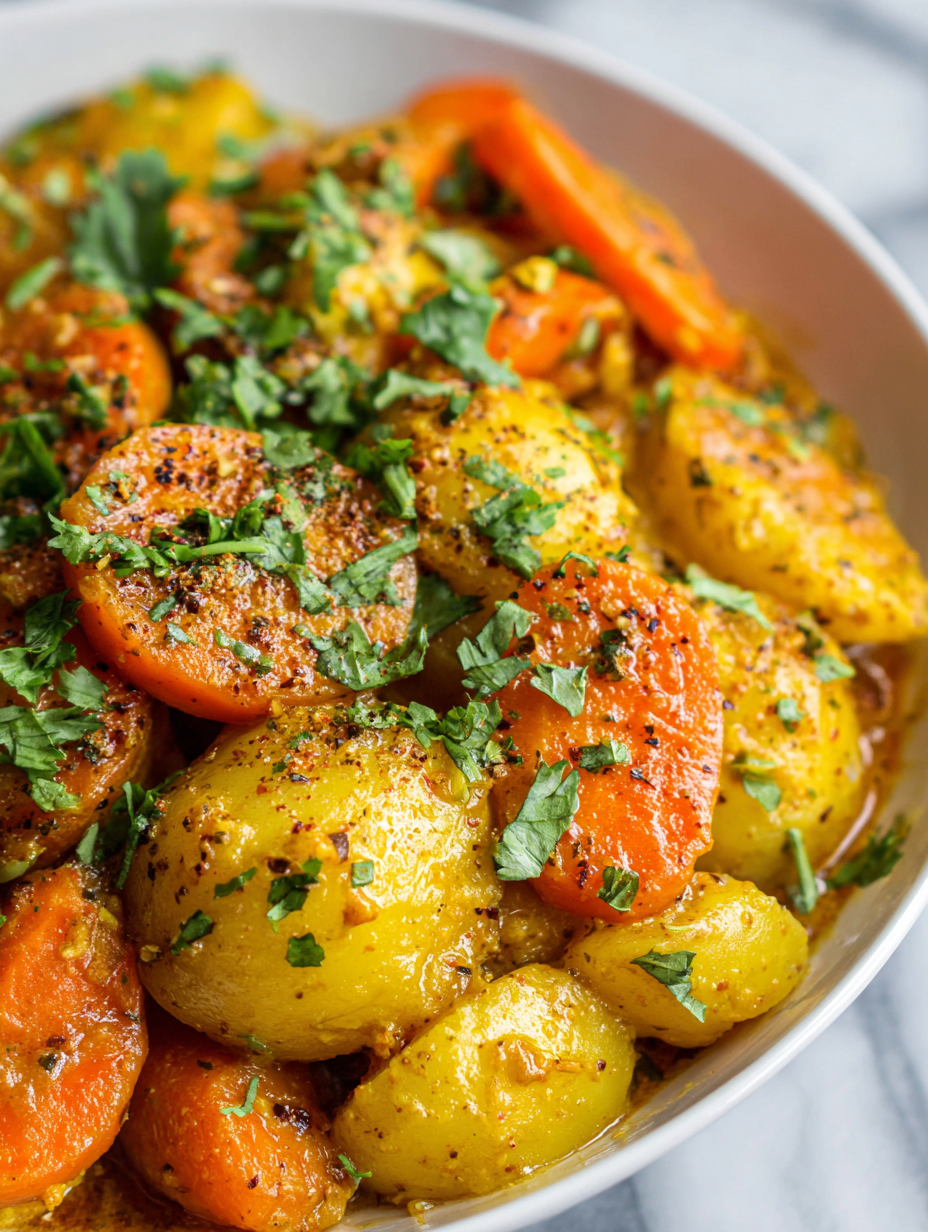
Carrot and Potato Curry
Ingredients
Equipment
Method
- Peel and dice the carrots and potatoes into roughly 1-inch pieces, keeping the sizes consistent for even cooking.
- Heat the oil in a large heavy-bottomed pot over medium heat until shimmering and fragrant. Add the diced onion and sauté for about 5 minutes until translucent and slightly golden, filling your kitchen with a sweet aroma.
- Drop in the cumin and coriander seeds, letting them toast for about 30 seconds until they crackle and release a warm, nutty smell. This helps deepen the flavor of the spices in the dish.
- Add the chopped carrots and potatoes to the pot, stirring well to coat them with the fragrant spices and oil. Cook for 3-4 minutes until the vegetables start to soften and their edges turn faintly browned.
- Pour in the coconut milk along with the chopped tomatoes, stirring gently to combine everything evenly. Bring the mixture to a gentle simmer, then cover the pot and reduce the heat to low.
- Let the curry simmer uncovered for about 20-25 minutes, stirring occasionally. The vegetables should become tender, and the sauce will thicken and develop a warm, golden hue. Adjust the heat as needed to maintain a gentle simmer.
- Taste the curry and add salt and chili or cayenne pepper if you like some heat. Stir in the chopped cilantro just before serving to add a fresh, lemony brightness that complements the rich flavors.
- Let the curry rest off the heat for about 5 minutes, allowing the flavors to meld and deepen. Serve hot with rice or bread, and enjoy the comforting, hearty texture of this simple yet soulful dish.
Pro tips for carrot and potato curry
- Bolded mini-head: Toast spices first → Releases essential oils, boosting aroma and flavor depth.
- Bolded mini-head: Use a heavy-bottomed pot → Ensures even heat distribution, preventing scorching.
- Bolded mini-head: Simmer uncovered at the end → Thickens the sauce, concentrates flavors, and enhances richness.
- Bolded mini-head: Stir gently but often → Prevents sticking, helps vegetables cook evenly, and avoids mushiness.
- Bolded mini-head: Add herbs at the end → Keeps fresh brightness; if overcooked, herbs lose vibrancy.
- Bolded mini-head: Adjust heat as needed → Maintain gentle simmer; too high can burn spices, too low prolongs cooking.
- Bolded mini-head: Let curry rest briefly → Allows flavors to meld and deepen, making each bite more satisfying.
Common mistakes and how to fix them
- FORGOT to preheat the pan → Always preheat to avoid sticking and uneven cooking.
- DUMPED the spices too early → Toast spices first for maximum aroma and flavor.
- OVER-TORCHED the onions → Cook on medium-low heat until golden, not burnt.
- SKIPPED the resting step → Let curry sit for 5 minutes for richer flavor melding.
Quick fixes and pantry swaps
- If sauce is too thin → Splash in a bit more coconut milk and simmer to thicken.
- When vegetables are undercooked → Cover and cook longer, testing tenderness with a fork.
- If spices taste dull → Toast them longer or add a pinch more to boost aroma.
- When curry is too spicy → Stir in a squeeze of lemon or a spoonful of yogurt to mellow heat.
- Splash cold water on a scorched pot → 5-second rescue to stop burning and prevent bitterness.
Prep, store, and reheat tips
- Peel and dice carrots and potatoes a day ahead; store in an airtight container in the fridge for up to 24 hours. The vegetables stay firm and fresh, ready to be cooked when you are.
- The curry can be made a day in advance; keep it in a sealed container in the fridge for up to 2 days. The flavors deepen overnight, the sauce thickens slightly, and it gains a richer, more integrated taste.
- Reheat gently on the stove over low heat, stirring occasionally. Expect the sauce to shimmer and thicken further, with vegetables soft but intact. Add a splash of water if it thickens too much during reheating.
- For longer storage, freeze the cooled curry in portions for up to 3 months. Thaw overnight in the fridge, then reheat slowly, watching for a gentle simmer and a fragrant aroma as it warms.
Top questions about carrot and potato curry
1. How do I prepare the vegetables properly?
Peel and chop the carrots and potatoes into uniform pieces for even cooking. Smaller pieces cook faster and become tender more easily.
2. Can I substitute coconut milk?
Use full-fat coconut milk if you want a rich, creamy curry. Light coconut milk makes it lighter but less velvety.
3. When should I add the spices?
Cook the spices until fragrant and slightly toasted—about 30 seconds. This releases essential oils and deepens flavor.
4. How long should I cook the curry?
Simmer the curry uncovered for about 20-25 minutes until the sauce thickens and vegetables are tender. Stir occasionally.
5. How do I know when the curry is done?
Taste and adjust salt and spice levels at the end. Finish with fresh herbs or a squeeze of lemon for brightness.
6. Can I make this ahead?
Store the cooked curry in an airtight container in the fridge for up to 2 days. Reheat gently on the stove, stirring occasionally.
7. What if the curry gets too thick?
If the sauce thickens too much when reheating, add a splash of water or coconut milk and stir until smooth.
8. Which potatoes are best for this curry?
Use starchy potatoes like Russets for fluffiness or waxy potatoes like Yukon Gold for creaminess. Adjust cooking time accordingly.
9. How can I make it spicier?
Add chili or cayenne for heat, but be cautious—taste as you go to avoid overpowering the gentle sweetness.
10. How do I avoid overcooking the vegetables?
Overcooking can make vegetables mushy. Keep an eye on tenderness and remove from heat once they are just cooked through.
This simple curry feels like a quiet act of kindness—something you can turn to when the day has been too much. The earthy sweetness of carrots and potatoes, softened into tender bites, wrapped in a cozy, fragrant sauce—it’s honest food that sticks around long after the bowl is empty.
Making it reminds me that sometimes, the best comfort comes from humble ingredients and a bit of patience. It’s not flashy, but it’s real, and right now, that’s exactly what I need.

Hello, I’m Oliver James, the person behind Melting Into Flavors. Cooking is my greatest passion, and it’s been the driving force in my life for as long as I can remember.
It’s not just about food for me; it’s about creating experiences, connecting with others, and sharing the love I have for what’s on the plate. Through this blog and my café, I’m able to share my journey with all of you and hopefully inspire some of your own culinary adventures along the way.