Sometimes, I find myself returning to the simplest ideas in the kitchen, and roasted carrots with thyme and olive oil is one of those. It’s almost silly how much flavor a humble carrot can hold when roasted just right, kissed by herbal freshness and a drizzle of good oil. No fuss, just honest ingredients doing their thing, and that’s enough for me.
There’s a quiet joy in watching these carrots turn from pale and firm to caramelized and tender—like tiny, sweet sunbursts on a plate. It’s a dish that feels like a small act of gratitude for each vegetable’s natural sweetness and the earthy aroma of thyme. Sometimes, the simplest dishes remind me why I cook in the first place—pure, unpretentious, and deeply satisfying.
Focusing on the overlooked beauty of simple ingredients, this recipe emphasizes the balance of caramelized sweetness and herbal brightness, showcasing how humble carrots can shine with just thyme and olive oil.
The story behind this recipe
One evening, I was experimenting with what I had on hand—just some carrots from the farmers’ market and a bunch of thyme that was about to wilt. Roasting them seemed simple enough, but I was struck by how the aroma of thyme and the slight caramelization transformed the humble carrots into something unexpectedly rich. That moment made me realize how often I overlook the power of a few good ingredients and a straightforward technique. This dish is my reminder to keep it simple, but with intention and care.
Ingredient breakdown
- Carrots: I love the natural sweetness they develop when roasted until golden and tender; if yours are too small, cut them in half for even caramelization.
- Thyme: The fresh leaves release a fragrant, lemony aroma during roasting—if you’re short on thyme, a pinch of oregano works, but it won’t have that bright herbal punch.
- Olive Oil: I drizzle a generous amount to help the carrots roast evenly and develop a slight smoky note; for a richer flavor, try a robust extra virgin variety.
- Salt: A sprinkle enhances all the natural flavors—don’t skimp, but avoid oversalting, especially if your oil is already salty.
- Black Pepper: Freshly cracked adds a subtle kick—if you prefer milder, skip it, but a touch of pepper really brightens the dish.
- Optional Honey: Just a drizzle can boost caramelization and add a hint of floral sweetness—use sparingly so it doesn’t overpower the thyme.
- Lemon Zest: A tiny sprinkle after roasting can add a zing that cuts through the richness—skip if you prefer a more earthy profile.
Spotlight on key ingredients
Carrots:
- I love how their natural sweetness intensifies and deepens when roasted until caramelized; smaller carrots benefit from halving for even cooking.
- Thyme: Fresh thyme releases a lemony, fragrant aroma during roasting, adding a bright herbal lift that lingers; dried thyme can be used but loses some vibrancy.
Thyme:
- Olive Oil: Its fruity, slightly peppery flavor coats the carrots beautifully, helping them crisp and brown; opting for a good extra virgin makes a noticeable difference.
- The fresh leaves crackle and release a fragrant, slightly lemony aroma as they roast, transforming simple carrots into something lively and herbal.
Notes for ingredient swaps
- Dairy-Free: Olive oil works perfectly here, but if you want a richer finish, a splash of avocado oil adds a buttery note without dairy.
- Herb Variations: Fresh thyme is ideal, but rosemary or marjoram can bring a different herbal brightness—just use sparingly to avoid overpowering.
- Sweetener Swap: Honey is classic, but maple syrup or agave nectar can be used for a different, slightly smokier sweetness—adjust to taste.
- Salt Options: Regular sea salt is fine, but flaky sea salt sprinkled after roasting adds a lovely crunch and subtle mineral flavor.
- Pepper Substitute: Freshly cracked black pepper is best, but a pinch of smoked paprika can add a warm, smoky depth—use with care.
- Oil Alternatives: If olive oil isn’t available, try a neutral oil like vegetable or grapeseed—just be aware they won’t add as much flavor.
- Additional Flavor: A splash of balsamic vinegar after roasting can add a tangy, sweet complexity—use sparingly to enhance, not overpower.
Equipment & Tools
- Baking sheet: To hold and roast the carrots evenly.
- Mixing bowl: To toss carrots with oil and seasonings.
- Sharp knife: To cut carrots into uniform pieces.
- Oven: To roast the carrots at high heat.
- Tongs or spatula: To flip or turn the carrots during roasting.
Step-by-step guide to roasting carrots
- Preheat your oven to 200°C (400°F). Gather a baking sheet, a mixing bowl, and a sharp knife. Aim for a hot oven that will caramelize the carrots nicely.
- Wash and peel the carrots if needed. Cut them into uniform pieces, about 2-3 inches long, to ensure even cooking.
- In the mixing bowl, toss the carrots with 3 tablespoons of good-quality olive oil, a teaspoon of salt, and a few sprigs of fresh thyme leaves. Make sure each piece is well coated.
- Spread the carrots out in a single layer on the baking sheet. Give them space—crowding leads to steaming, not roasting.
- Roast in the oven for 25-30 minutes. Halfway through, shake the pan or flip the carrots to promote even caramelization. They should turn a deep golden, with some edges slightly charred.
- Check for doneness: the carrots should be tender when pierced with a skewer, and smell sweet and herbal. If not, roast for another 5 minutes.
- Remove from oven and let rest for 5 minutes. Drizzle with a little more olive oil or a squeeze of lemon if you like. Serve warm, garnished with a few fresh thyme leaves.
Let the carrots rest for 5 minutes after roasting to allow flavors to settle. Finish with a drizzle of olive oil or lemon zest, then serve directly on a platter, garnished with fresh thyme if desired.
How to Know It’s Done
- Carrots are golden and caramelized around edges.
- Piercing with a skewer yields tender, not mushy, results.
- A fragrant aroma of thyme and roasted carrots fills the kitchen.
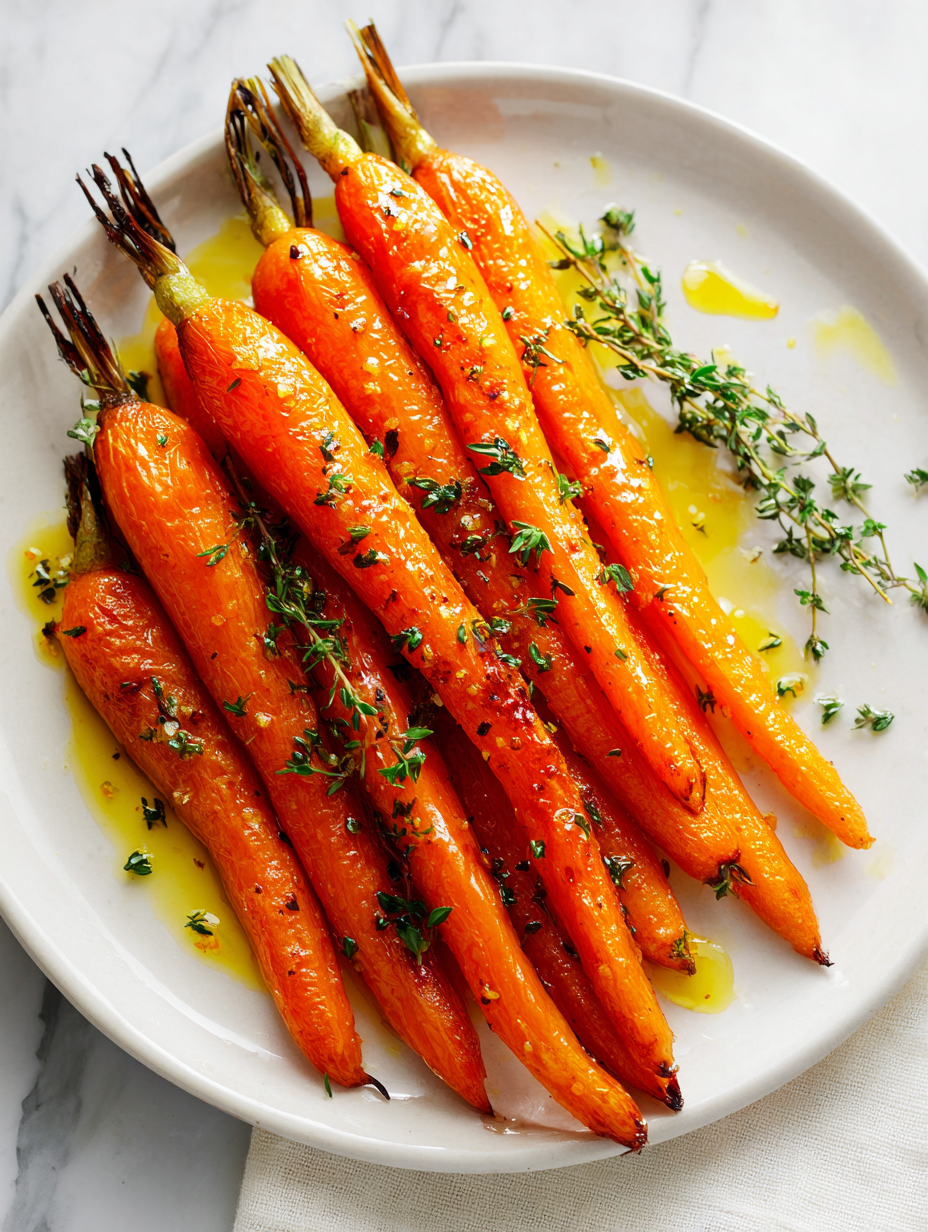
Roasted Carrots with Thyme and Olive Oil
Ingredients
Equipment
Method
- Preheat your oven to 200°C (400°F). Gather your baking sheet and mixing bowl to prepare for roasting.
- Wash and peel the carrots, then cut them into 2-3 inch long pieces that are similar in size for even roasting.
- Pick the thyme leaves from the stems and add them to a mixing bowl along with the carrots, olive oil, salt, and freshly cracked black pepper. Toss everything together until the carrots are evenly coated and fragrant.
- Spread the coated carrots out in a single layer on your baking sheet, leaving space between pieces to promote browning.
- Place the baking sheet in the oven and roast for 25-30 minutes. Shake or flip the carrots halfway through to ensure even caramelization and browning.
- Check the carrots at around 25 minutes; they should be tender, with caramelized edges and a fragrant herbal aroma. If needed, roast a few more minutes until perfectly golden.
- Remove from the oven and, if desired, drizzle with a little honey and sprinkle with lemon zest for brightness. Toss gently to combine.
- Transfer the carrots to a serving dish and garnish with fresh thyme leaves if you like. Serve warm and enjoy the tender, caramelized texture with herbal brightness.
Pro tips for perfect roasted carrots
- Bold Carrots: Use a high heat to encourage deep caramelization and a slight char for smoky sweetness.
- Herb Timing: Add thyme halfway through roasting to prevent it from burning and losing its vibrant aroma.
- Oil Coating: Toss carrots thoroughly with oil to ensure even browning and prevent sticking—use enough to glossy coat each piece.
- Spacing Matters: Spread carrots in a single layer without crowding—this promotes crisp edges and uniform color.
- Check for Tenderness: Pierce with a skewer at 25 minutes—if it slides in easily, they’re ready, no mushy texture.
- Finish with Zest: A quick sprinkle of lemon zest after roasting adds a fresh, bright contrast to the sweet carrots.
Common mistakes and how to fix them
- FORGOT to check oven temperature → Use an oven thermometer for accuracy.
- DUMPED carrots too close → Spread carrots out to prevent steaming and promote caramelization.
- OVER-TORCHED edges → Reduce roasting time or lower oven temperature slightly.
- MISSED seasoning adjustments → Taste and adjust salt and herbs before serving for balanced flavor.
Quick fixes and pantry swaps
- WHEN carrots burn too quickly → Splash with a splash of water and reduce oven heat.
- IF carrots are too soft → Patch with a quick blast under high heat for a crisp exterior.
- WHEN thyme smell turns bitter → Shield with foil and lower oven temperature slightly.
- DUMPED too much oil → Wipe excess with a paper towel before roasting again.
- WHEN carrots lack flavor → Swap in a pinch of smoked paprika for smoky depth.
Prep, store, and reheat tips
- You can peel and cut the carrots a day in advance; store in an airtight container in the fridge for up to 24 hours. They stay crisp and fresh, but will soften slightly if left too long.
- Roasted carrots can be made ahead and kept in the fridge for up to 3 days. Let them cool completely, then store in a sealed container. Reheat in the oven at 180°C (350°F) until warmed through, about 10 minutes, until they crackle slightly and smell fragrant.
- For the best flavor, serve freshly roasted. Reheated carrots may lose some of their caramelized texture and herbal brightness, but still taste good with a quick reheat.
- If you want to freeze roasted carrots, do so within 24 hours of roasting. Freeze in a single layer on a baking sheet, then transfer to a freezer bag. Reheat directly from frozen in the oven at 180°C (350°F), watching for slight extra moisture and softening.
Frequently Asked Questions
1. What does this dish taste like?
Roasted carrots with thyme and olive oil develop a sweet, smoky aroma with a slight herbal brightness. The caramelized edges are tender and juicy, with a hint of earthiness from the thyme.
2. Can I substitute dried thyme?
Use fresh thyme for the brightest herbal flavor and a more fragrant aroma. Dried thyme can work in a pinch but won’t be as vibrant.
3. Which carrots are best for roasting?
Choose carrots that are firm and bright in color. Smaller, uniform carrots roast more evenly, but larger ones can be halved or sliced.
4. How do I know when the carrots are done?
Roast at 200°C (400°F) until carrots are deeply golden and tender, about 25-30 minutes. They should caramelize around the edges and smell sweet and herbal.
5. Can I use a different oil?
Use good-quality extra virgin olive oil for rich flavor and better caramelization. Light or neutral oils won’t add the same depth.
6. Can I make this dish ahead?
You can prepare peeled and cut carrots a day ahead, store them in the fridge in an airtight container. Reheat in the oven before serving.
7. What if the carrots burn?
If the carrots are burning quickly, lower the oven temperature slightly or toss them halfway through roasting. Shield with foil if edges darken too fast.
8. How can I enhance the flavor after roasting?
Add a squeeze of lemon or a sprinkle of lemon zest after roasting to brighten the flavors and balance the sweetness.
9. Why are my carrots not crispy?
Overcrowding the pan causes steaming instead of roasting. Spread carrots in a single layer and give them space for even caramelization.
10. My carrots are mushy, what did I do wrong?
If the carrots are too soft or mushy, reduce the roasting time slightly or cut them into smaller pieces for quicker cooking.
In the end, roasted carrots with thyme and olive oil are a reminder that simplicity can be striking. The aroma alone—sweet, herbal, and slightly smoky—makes the effort worth it, even when you’re just looking for a humble side. There’s a quiet satisfaction in knowing that the best ingredients often need nothing more than a hot oven and a little patience.
This dish feels like a small act of mindfulness—focusing on what’s right in front of you, letting natural flavors shine. It’s perfect for a busy weeknight or a casual dinner with friends, offering comfort without fuss. Sometimes, it’s the simplest bites that leave the biggest impression.

Hello, I’m Oliver James, the person behind Melting Into Flavors. Cooking is my greatest passion, and it’s been the driving force in my life for as long as I can remember.
It’s not just about food for me; it’s about creating experiences, connecting with others, and sharing the love I have for what’s on the plate. Through this blog and my café, I’m able to share my journey with all of you and hopefully inspire some of your own culinary adventures along the way.