There’s something about a humble pea and potato curry that feels like a warm hug on a rainy day. It’s the kind of dish that takes me straight back to my childhood, sitting at my grandmother’s kitchen table, waiting for that fragrant steam to rise from the pot. The simple, earthy ingredients—peas bursting with sweetness and potatoes melting into a buttery softness—bring a quiet comfort that’s hard to find elsewhere.
This recipe isn’t just about nostalgia, though. It’s honest food, made with pantry staples and a bit of patience. It’s perfect for when you want something nourishing, without fuss, and with flavors that deepen the more it sits. It’s my go-to for a cozy weekend lunch or a quick weeknight dinner that feels like a small celebration of everyday ingredients.
Sometimes, I tweak the spices or add a splash of coconut milk just to keep it interesting, but the core remains the same—simple, honest, and deeply satisfying. It’s the kind of dish that tastes like home, whether you’re cooking it for yourself or sharing it with someone special. And honestly, it tastes even better after a little rest, when all those flavors have had a chance to settle and mingle.
Focusing on the comforting nostalgia of a humble, home-cooked dish that reminds me of rainy afternoons spent in my grandmother’s kitchen, where simple ingredients like fresh peas and earthy potatoes come together in a slow, fragrant simmer.
The story behind this recipe
- This recipe was born out of a lazy Sunday afternoon, when I rummaged through my pantry and found some frozen peas and a few stubborn potatoes. The idea of turning simple, humble ingredients into something warm and satisfying always appeals to me, especially when I want comfort without fuss. It’s a dish that reminds me of my early cooking days—messy, improvisational, but full of love.
- One rainy evening, I threw together this curry just to see if it could turn a dull day around. The gentle simmer, the aroma of spices mingling with the sweet peas, and the soft potatoes melting into a silky sauce — it became an instant favorite. Now, whenever I need a quick, honest meal, I make this, and somehow, it always tastes like a quiet victory.
- heading:
Key ingredients and tips
- Frozen peas: I love the sweet, bright pop they add; if fresh isn’t available, frozen works just fine. Keep them in the freezer until the last minute for best color and flavor.
- Potatoes: I prefer starchy varieties like Russets—they break down into a silky sauce as they cook. If you want more bite, choose a waxy type like Yukon Gold and cut smaller for quicker cooking.
- Onion: I use yellow onion for its mellow sweetness; sauté until golden and fragrant. Skip if you’re short on time, but don’t skip the base—they build flavor.
- Spices: Garam masala, turmeric, cumin—these are the backbone. Toast them briefly in oil to unlock their aroma, then add liquids. If you like it milder, cut back on the garam masala.
- Tomatoes: Fresh or canned, they give the curry tang and body. I prefer canned diced for convenience, but if using fresh, chop and cook until they soften and the sauce thickens.
- Oil: A neutral oil like vegetable or canola helps the spices bloom. If you want more depth, a splash of mustard oil or ghee can add a smoky, rich note.
- Salt & pepper: Season as you go, tasting to balance the sweet peas and earthy potatoes. Remember, a pinch of salt really makes the flavors pop.
Spotlight on key ingredients
Peas:
- Frozen peas: I love the bright, sweet burst they add; if fresh isn’t available, frozen works just fine. Keep them in the freezer until the last minute for best color and flavor.
- Potatoes: I prefer starchy varieties like Russets—they break down into a silky sauce as they cook. If you want more bite, choose a waxy type like Yukon Gold and cut smaller for quicker cooking.
Potatoes:
- I go for starchy kinds like Russets—they become soft and almost creamy, melting into the curry. If you like a firmer bite, opt for Yukon Gold and cut smaller for quicker cooking.
- ingredient”:
Notes for ingredient swaps
- Frozen peas: I love their bright, sweet burst—if fresh peas are in season, use them for a firmer bite.
- Potatoes: Starchy types like Russets melt into a creamy sauce; waxy potatoes like Yukon Gold hold shape better, but may need longer cooking.
- Onion: Yellow onion adds a mellow sweetness; shallots or leeks can work if you want a subtler, more delicate flavor.
- Spices: Garam masala, turmeric, cumin—toast them to unlock aroma. If you want a milder curry, reduce the garam masala or skip it entirely.
- Tomatoes: Canned diced give richness and convenience; fresh tomatoes work well if they’re ripe and juicy, but cook longer to break down.
- Oil: Neutral oils like vegetable or canola are reliable; for a richer, smoky flavor, try ghee or a splash of mustard oil.
- Salt & pepper: Adjust seasonings carefully; a pinch at a time, tasting as you go, to balance sweetness and earthiness.
Equipment & Tools
- Large pan or skillet: To cook all ingredients evenly in one pot.
- Knife: For chopping potatoes and onions.
- Chopping board: To prepare vegetables safely.
- Spatula or wooden spoon: To stir ingredients and prevent sticking.
Step-by-step guide to pea and potato curry
- Gather your equipment: a large heavy-bottomed pan or skillet, a sharp knife, a chopping board, and a spatula or wooden spoon.
- Peel and cube the potatoes into roughly 1.5cm (half-inch) pieces. Rinse and set aside.
- Finely chop the onion. Heat 2 tablespoons of oil over medium heat (about 160°C/320°F).
- Add the onion to the pan. Sauté until golden and fragrant, about 5-7 minutes, stirring regularly.
- Stir in 1 teaspoon of cumin and 1 teaspoon of turmeric. Cook for 30 seconds until aromatic.
- Add the potatoes. Toss to coat with spices. Cook for 5 minutes, until slightly golden around edges.
- Pour in 400g (14oz) of diced tomatoes or tomato sauce. Stir well and bring to a simmer.
- Reduce heat to low (about 90°C/194°F). Cover and simmer for 15 minutes, stirring occasionally.
- Add 150g (5oz) of frozen peas directly from the freezer. Stir and cook uncovered for another 5 minutes.
- Check the curry’s consistency; if too thick, add a splash of water. If too thin, simmer a few more minutes.
- Taste and adjust salt and pepper. If you like more warmth, sprinkle extra garam masala and stir.
- Remove from heat. Let it rest for 5 minutes so flavors meld. Serve with rice or flatbread.
Let the curry sit off heat for 5 minutes, then taste and adjust seasoning. Serve hot with rice or bread, garnished with fresh herbs if desired.
How to Know It’s Done
- Potatoes should be tender and easily pierced with a fork.
- Peas should be bright green and heated through.
- Sauce should be thick enough to coat the back of a spoon.
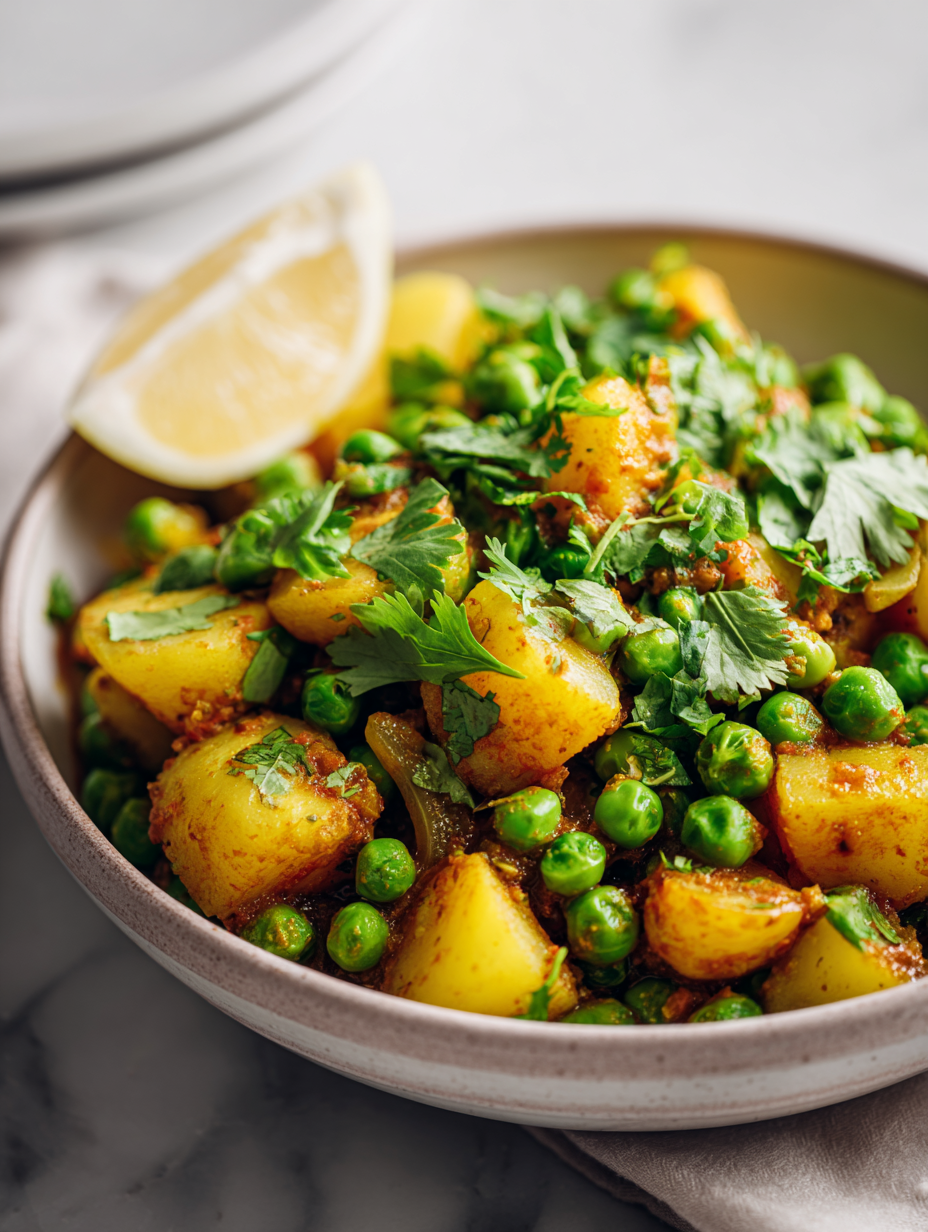
Pea and Potato Curry
Ingredients
Equipment
Method
- Heat the oil in a large pan over medium heat until it shimmers and begins to ripple.
- Add the chopped onion and cook, stirring occasionally, until it turns golden and fragrant, about 5-7 minutes.
- Stir in the cumin seeds and toast for about 30 seconds until they release their aroma.
- Add the turmeric and garam masala, stirring quickly to coat the onions and toast the spices for about 30 seconds, enhancing their fragrance.
- Pour in the diced tomatoes and stir to combine, then reduce the heat to low and simmer, uncovered, for 10 minutes until the sauce thickens slightly and the oil begins to separate from the tomato base.
- Meanwhile, peel and cube the potatoes into roughly 1.5cm pieces, then add them to the sauce, stirring well to coat with spices.
- Cover the pan and let the curry simmer gently for about 15 minutes, stirring occasionally, until the potatoes are tender and starting to break down, creating a silky sauce.
- Stir in the frozen peas directly from the freezer, mixing well, and cook uncovered for another 5 minutes until the peas are heated through and vibrant green.
- Taste the curry and season with salt and pepper as needed, stirring to incorporate the flavors.
- Remove the pan from heat and let the curry sit for 5 minutes to allow flavors to meld and deepen.
- Serve hot, spooned over rice or with flatbread, garnished with fresh herbs if desired.
Pro tips for perfect curry
- Bolded mini-head: Toast spices briefly until fragrant—this unlocks their full aroma and deepens flavor.
- Bolded mini-head: Sauté onions over medium heat until golden—this develops sweetness and adds richness to the curry.
- Bolded mini-head: Add peas at the end to keep their vibrant color and fresh sweetness intact.
- Bolded mini-head: Use a wide pan to ensure even cooking and prevent overcrowding, which can steam rather than fry.
- Bolded mini-head: Adjust simmering time based on potato size—test tenderness with a fork for perfect softness.
- Bolded mini-head: If sauce thickens too much, splash in a little water and stir gently to loosen it up.
- Bolded mini-head: Rest the curry for 5 minutes off heat—this allows flavors to meld and enhances taste.
Common mistakes and how to fix them
- FORGOT to adjust heat after adding potatoes → Lower heat immediately to prevent burning.
- DUMPED all ingredients at once → Add spices gradually for layered flavor.
- OVER-TORCHED spices → Toast spices just until fragrant, about 30 seconds, to avoid bitterness.
- MISSED stirring after adding peas → Stir gently to keep peas bright and prevent sticking.
Quick fixes and pantry swaps
- If peas look dull, splash them with a little lemon juice to brighten their color and flavor.
- When sauce is too thick, add a splash of water or broth to loosen it without diluting flavor.
- Splash a teaspoon of vinegar if the curry tastes flat or dull—brightens everything up.
- Patch over burnt spices by adding a fresh pinch and briefly toasting to revive aroma.
- Shield delicate peas from overcooking by stirring gently and removing from heat promptly.
Prep, store, and reheat tips
- Peas: Blanch fresh peas for 1-2 minutes, then cool in ice water; store in an airtight container for up to 2 days. They’ll lose some of their bright snap but still add sweetness when reheated.
- Potatoes: Parboil peeled potatoes until just tender, about 5-7 minutes, then cool and refrigerate for up to 24 hours. They’ll soften further during reheating, blending seamlessly into the sauce.
- Cooking the base: Prepare the onion and spice sauté up to a day ahead; store in a sealed container in the fridge. Reheat gently, stirring to revive the fragrant aroma.
- Reheating: Gently warm the curry in a skillet over low heat or in the microwave, stirring occasionally. Expect the flavors to deepen, and the sauce to thicken slightly during storage.
- Shelf life: Stored properly, the curry tastes best within 2 days. After that, the potato texture may become mealy, and the peas may lose some vibrancy. Reheat until steaming hot and fragrant again.
- Sensory notes: During reheating, the aroma of spices should revive with a hint of earthiness. The sauce will become silkier, and the peas and potatoes will be softer but still flavorful if heated gently.
Top questions about pea and potato curry
1. Can I use fresh peas instead of frozen?
Use frozen peas straight from the freezer to keep their bright color and sweetness intact. Fresh peas work well if in season, but frozen is more reliable for that vibrant pop.
2. When do I add peas to the curry?
Peas should be added in the last 5 minutes of cooking. They only need to heat through to stay bright and sweet.
3. What if the sauce is too thick?
If the curry turns out too thick, stir in a splash of water or broth and simmer for a few minutes to loosen it up.
4. Which potatoes work best for this curry?
Choose starchy potatoes like Russets for a creamy, melting texture. Waxy potatoes like Yukon Gold hold shape but may need longer cooking.
5. What equipment is best for cooking this curry?
Use a wide, heavy-bottomed pan to ensure even heat distribution and prevent sticking or burning.
6. How do I get the most flavor from spices?
Toast your spices briefly until fragrant—about 30 seconds—this enhances their aroma and deepens the flavor of the curry.
7. Should I rest the curry before serving?
Let the curry rest off heat for about 5 minutes after cooking. This helps flavors meld and improves taste.
8. How should I store and reheat leftover curry?
Store leftovers in an airtight container in the fridge for up to 2 days. Reheat gently on the stove or in the microwave until steaming hot.
9. How do I know when the potatoes are done?
If the potatoes seem too firm, simmer a few more minutes until easily pierced with a fork. For softer potatoes, cook longer during the simmer step.
10. How do I fix bland curry?
Adjust seasonings gradually, tasting as you go. A pinch more salt or a squeeze of lemon can brighten the dish right before serving.
This humble curry, with its gentle sweetness and earthy warmth, feels like a quiet embrace on a busy day. It’s a reminder that some of the best comfort food comes from simple ingredients and a bit of patience in the kitchen.
Whenever I make it, I think about those rainy afternoons and the slow simmering pot that filled the house with a cozy, fragrant aroma. It’s not flashy, but it’s honest, filling, and a little piece of home in every bite.

Hello, I’m Oliver James, the person behind Melting Into Flavors. Cooking is my greatest passion, and it’s been the driving force in my life for as long as I can remember.
It’s not just about food for me; it’s about creating experiences, connecting with others, and sharing the love I have for what’s on the plate. Through this blog and my café, I’m able to share my journey with all of you and hopefully inspire some of your own culinary adventures along the way.