This creamy pea pasta is a little celebration of spring, even if it’s made in the middle of winter. I love how those bright green peas, raw and sweet, get a gentle boost from the silky sauce, making every bite feel fresh and vibrant. It’s kind of an unspoken art—balancing that raw sweetness with just enough richness to make it feel satisfying without overpowering it.
Honestly, I didn’t think much about peas until I realized how overlooked they are in their raw, natural state. Sautéing them lightly or blending them into a creamy sauce transforms their grassy notes into something creamy and comforting. It’s simple, honest cooking—nothing fancy, just a dish that celebrates the humble pea in a way that surprises and delights.
Focusing on the overlooked art of balancing fresh, raw peas with a simple, silky pasta sauce that highlights their sweet, grassy notes.
The story behind this recipe
- This recipe came together one rainy afternoon when I had a handful of fresh peas and a craving for something bright and simple. I remembered how my grandma used to toss peas into everything—she believed their sweetness was an instant lift for any dish. I wanted to capture that unpretentious joy in a pasta sauce, something you can throw together without fuss but still feel like a treat.
- Sometimes, I think about how peas get overshadowed by more glamorous vegetables. But when you blend their grassy, slightly sweet flavor into a creamy sauce, they become something unexpectedly comforting. It’s a reminder that the simplest ingredients, treated honestly, often make the best meals.
- heading: ‘The story behind this recipe’
Ingredient breakdown: key components
- Fresh peas: I love the pop of sweetness they bring, especially when bright green and just blanched. You can swap in frozen if fresh aren’t available, but aim for peas that still taste sweet and fresh out of the freezer.
- Heavy cream: It gives that rich, velvety texture I crave—think smooth, almost silky in your mouth. For a lighter version, try Greek yogurt, but note it’ll be tangier and less lush.
- Pasta: I prefer a short, sturdy shape like fusilli or cavatappi that holds onto the sauce well. Whole wheat works, but it’s a bit nuttier—adjust cooking time accordingly.
- Garlic: I add lots of garlic because it cuts through the richness and boosts the green flavor. Roasted garlic? Adds a sweet, mellow depth, just experiment and see what you like best.
- Lemon zest: Brightens everything instantly—I love how the zing lifts the creamy richness. Skip or reduce if you want less tang, but it’s key for that fresh contrast.
- Parmigiano-Reggiano: I grate it fresh for that umami punch and slightly salty kick. Pecorino works in a pinch, but avoid pre-grated cheese, it’s less flavorful and melts unevenly.
- Olive oil: I finish with a drizzle of good-quality extra virgin olive oil—think fruity, fragrant, with a peppery note that ties the whole dish together.
Spotlight on key ingredients
Peas:
- Fresh peas: Bright, sweet, and slightly grassy, they burst with flavor when cooked lightly. Frozen peas work well too, just aim for vibrant, sweet ones.
- Olive oil: Fragrant and fruity, it adds a peppery finish. Use high-quality extra virgin for the best aroma and depth.
Lemon zest:
- Parmigiano-Reggiano: Sharp, nutty, and slightly salty, it melts into the sauce, adding umami richness. Freshly grated makes a big difference.
- Bright and zesty, it lifts the creamy sauce with a fresh, citrusy punch. The aroma alone keeps you coming back for more.
Notes for ingredient swaps
- Fresh peas: I love the pop of sweetness they bring, especially when bright green and just blanched. You can swap in frozen if fresh aren’t available, but aim for peas that still taste sweet and fresh out of the freezer.
- Heavy cream: It gives that rich, velvety texture I crave—think smooth, almost silky in your mouth. For a lighter version, try Greek yogurt, but note it’ll be tangier and less lush.
- Pasta: I prefer a short, sturdy shape like fusilli or cavatappi that holds onto the sauce well. Whole wheat works, but it’s a bit nuttier—adjust cooking time accordingly.
- Garlic: I add lots of garlic because it cuts through the richness and boosts the green flavor. Roasted garlic? Adds a sweet, mellow depth, just experiment and see what you like best.
- Lemon zest: Brightens everything instantly—I love how the zing lifts the creamy richness. Skip or reduce if you want less tang, but it’s key for that fresh contrast.
- Parmigiano-Reggiano: I grate it fresh for that umami punch and slightly salty kick. Pecorino works in a pinch, but avoid pre-grated cheese, it’s less flavorful and melts unevenly.
- Olive oil: I finish with a drizzle of good-quality extra virgin olive oil—think fruity, fragrant, with a peppery note that ties the whole dish together.
Equipment & Tools
- Large pot: Boil pasta efficiently
- Large skillet or sauté pan: Cook peas and make sauce
- Blender or immersion blender: Create smooth, creamy sauce
- Colander: Drain pasta
- Spatula or tongs: Toss and mix pasta with sauce
Step-by-step guide to creamy pea pasta
- Equipment & Tools: Use a large, deep skillet or sauté pan with a lid for even cooking and easy stirring. Have a colander ready for boiling pasta, a blender or immersion tool for blending, and a spatula for mixing.
- Bring a large pot of water to a rolling boil—salt generously. Cook the pasta until just al dente, about 1 minute less than package instructions, usually 8–10 minutes. Drain and set aside, reserving a cup of pasta water.
- While pasta cooks, heat the skillet over medium. Add a tablespoon of olive oil. When shimmering, toss in 2 cups of fresh or frozen peas. Sauté for about 2–3 minutes until they turn bright green and slightly tender. Smell should be grassy and fresh.
- Add 3 cloves of minced garlic to the peas. Cook for another minute until fragrant—be careful not to burn. If garlic starts to brown too quickly, reduce heat. The garlic should smell sweet and slightly nutty.
- Pour in 1 cup of heavy cream and bring to a gentle simmer—about 2 minutes. The mixture should thicken slightly and become creamy, with a pale green hue. If it looks too thick, add a splash of reserved pasta water to loosen.
- Transfer the pea and cream mixture to a blender. Add ½ cup grated Parmigiano-Reggiano, zest of 1 lemon, and a pinch of salt. Blend until smooth and velvety—sharp, fresh lemon aroma should be noticeable. If too thick, add more pasta water in small amounts.
- Return the sauce to the skillet over low heat. Stir in the cooked pasta, tossing gently to coat. Heat for 1–2 minutes until pasta is evenly coated and heated through. Check for seasoning—add salt or pepper as needed.
- Finish with a drizzle of extra virgin olive oil and a squeeze of lemon juice. Rest for 2 minutes off heat to let flavors meld. Plate immediately, garnished with extra cheese and herbs if desired.
Rest the pasta off heat for 2 minutes. Finish with a drizzle of olive oil, a squeeze of lemon, and grated cheese. Serve immediately for best texture and flavor.
How to Know It’s Done
- Pasta is al dente, with a slight bite when tested.
- Sauce is smooth, velvety, and bright green, not watery.
- Peas are tender but still vibrant and slightly crisp.
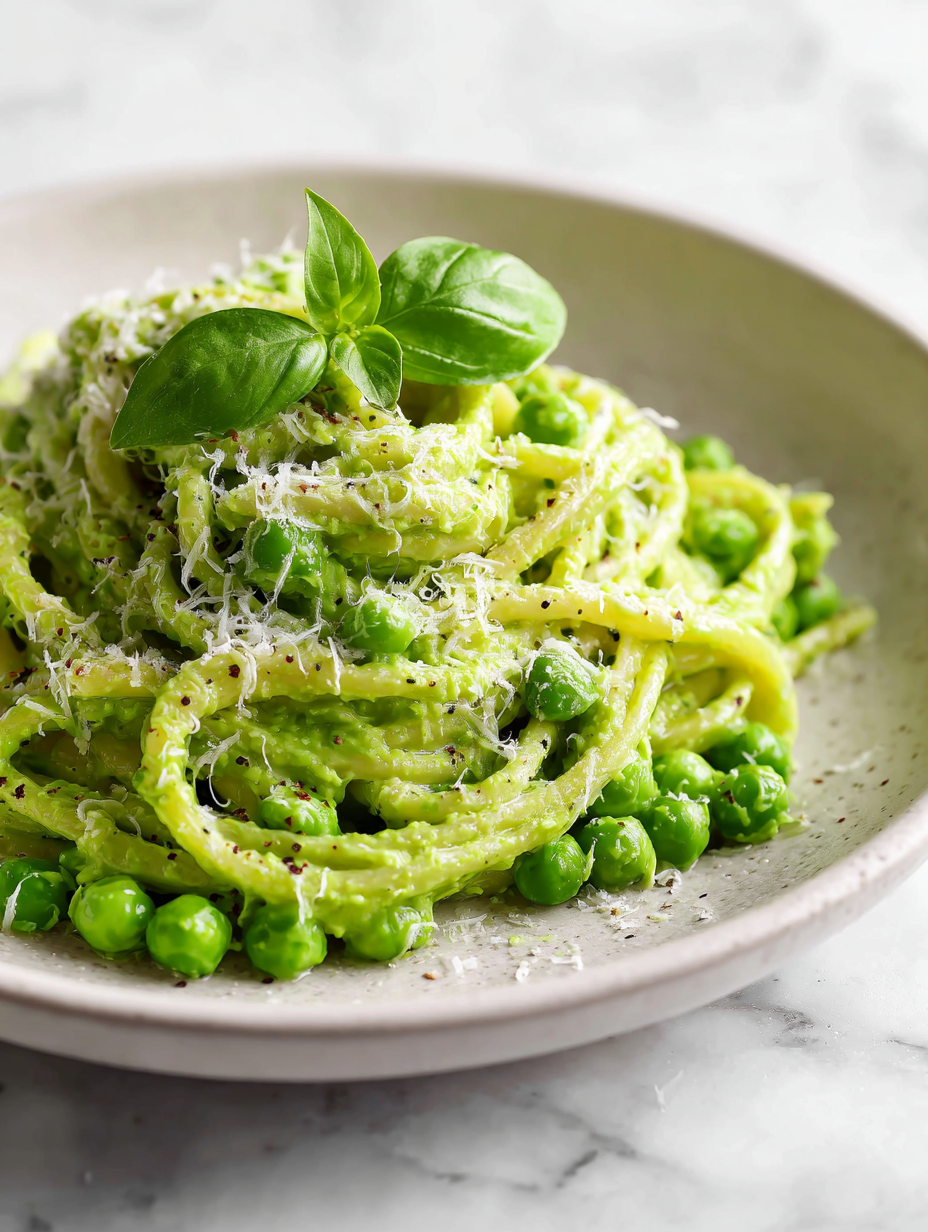
Creamy Pea Pasta
Ingredients
Equipment
Method
- Bring a large pot of salted water to a rolling boil. Add the pasta and cook until just al dente, about 8–10 minutes. Drain and set aside, reserving a cup of pasta water.
- While the pasta cooks, heat a large skillet over medium. Add a tablespoon of olive oil, then toss in the peas. Sauté for 2–3 minutes until they turn bright green and slightly tender, releasing a grassy aroma.
- Add the minced garlic to the peas and cook for another minute, stirring constantly until fragrant and sweet-smelling, careful not to burn.
- Pour in the heavy cream and bring to a gentle simmer. Let it thicken slightly for about 2 minutes, creating a pale green, velvety sauce.
- Transfer the mixture to a blender, add the grated Parmigiano, lemon zest, and a pinch of salt. Blend until smooth and velvety, tasting and adjusting seasoning if needed. Add a splash of reserved pasta water if the sauce is too thick.
- Return the sauce to the skillet over low heat. Add the cooked pasta and toss gently to coat evenly with the vibrant, creamy sauce. Warm through for 1–2 minutes, ensuring the pasta is heated and coated.
- Finish the dish by drizzling with the remaining olive oil and squeezing fresh lemon juice over the top. Toss once more, then serve immediately, garnished with extra cheese or herbs if desired.
Notes
Tips for perfect creamy pea pasta
- Bolded mini-head: Use a high-quality blender to achieve a silky, even sauce without lumps.
- Bolded mini-head: Sauté peas just until vibrant green and slightly tender—overcooking dulls their brightness.
- Bolded mini-head: Add pasta water a little at a time to loosen the sauce, ensuring it coats smoothly.
- Bolded mini-head: Toast garlic gently over medium heat; it should smell sweet, not burnt, to avoid bitterness.
- Bolded mini-head: Finish with a drizzle of good olive oil right before serving to enhance flavor and shine.
- Bolded mini-head: For extra depth, add a pinch of red pepper flakes during sauté for subtle heat.
- Bolded mini-head: Taste and adjust seasoning after combining pasta and sauce; salt and lemon should pop.
Common mistakes and how to fix them
- FORGOT to taste and adjust salt before serving—always taste the sauce first.
- DUMPED all pasta water at once—reserve small amounts to loosen sauce as needed.
- OVER-TORCHED the garlic—cook on medium to avoid bitterness and burnt bits.
- SKIPPED the lemon zest—adding it last brightens the whole dish instantly.
Quick fixes and pantry swaps
- When sauce looks grainy, splash in more hot pasta water and blend briefly.
- If the peas are dull, blitz with lemon zest and a drizzle of olive oil for brightness.
- Splash extra olive oil if the sauce is too thick or dull in flavor.
- Patch overcooked peas with a squeeze of lemon and fresh herbs for extra vibrancy.
- Shield delicate garlic from burning by lowering heat and stirring constantly.
Prep, store, and reheat tips
- Prep the sauce ingredients—blend and season—up to a day ahead; it keeps the flavors fresh and bright.
- Store the cooked pasta and the creamy pea sauce separately in airtight containers in the fridge for up to 2 days.
- Reheat gently on the stove over low heat, stirring constantly, until warmed through and the sauce shimmers again.
- The sauce may thicken upon refrigeration—add a splash of hot pasta water during reheating to restore silky texture.
- Sensory note: reheated, the sauce should smell fresh and bright, with a smooth, velvety texture that coats the pasta evenly.
Top questions about creamy pea pasta
1. Can I use frozen peas instead of fresh?
Fresh peas taste sweeter and more vibrant, but frozen peas are a good shortcut if needed. Just choose bright green, firm peas for the best flavor.
2. How do I get the sauce to coat the pasta evenly?
Yes, a splash of pasta water helps loosen the sauce and makes it cling better. Add gradually to get the right consistency.
3. Should I use regular or extra virgin olive oil?
Use good-quality extra virgin olive oil for finishing; it adds aroma and depth. A drizzle right before serving really lifts the dish.
4. How do I reheat and keep the sauce creamy?
If the sauce thickens too much after refrigerating, stir in hot pasta water or a little cream to revive its silky texture.
5. Can I skip the lemon zest?
Adding lemon zest brightens the creamy sauce and balances the richness. Freshly grated zest is best for a lively flavor.
6. Can I make this dairy-free?
Yes, you can substitute Greek yogurt for cream for a lighter, tangier sauce. Keep in mind it will be less velvety and slightly more tart.
7. What pasta shape works best?
Choose pasta shapes like fusilli or cavatappi that hold onto the sauce well. Whole wheat adds nuttiness but may alter cooking time slightly.
8. Can I use Parmesan cheese from a jar?
Use freshly grated Parmigiano-Reggiano for maximum flavor. Pre-grated cheese tends to be less flavorful and melts unevenly.
9. How do I cook the peas properly?
Lightly sauté the peas just until bright green and slightly tender. Overcooking dulls their grassy, sweet flavor.
10. When should I season the sauce?
Taste the sauce before serving and adjust salt and lemon to enhance brightness and balance. It’s the secret to vibrant flavor.
This creamy pea pasta is a little reminder that simplicity can be extraordinary. The fresh burst of peas paired with that velvety sauce makes it feel like spring on your plate, even in the dead of winter. It’s honest, unpretentious food—something you can turn to when you want comfort with a little sparkle. And honestly, that’s what I need right now: a dish that’s quick, bright, and just a bit surprising.
So, next time you want something straightforward but satisfying, give this recipe a try. It’s a small act of celebrating what’s fresh and in season, even if you’re just making it in your own kitchen on a regular Tuesday. Somehow, that makes all the difference in how it tastes and feels.

Hello, I’m Oliver James, the person behind Melting Into Flavors. Cooking is my greatest passion, and it’s been the driving force in my life for as long as I can remember.
It’s not just about food for me; it’s about creating experiences, connecting with others, and sharing the love I have for what’s on the plate. Through this blog and my café, I’m able to share my journey with all of you and hopefully inspire some of your own culinary adventures along the way.