There’s something quietly magical about how fresh herbs can lift even the simplest pasta. I’ve always adored adding a handful of chopped basil or mint, but lately, I’ve been leaning into the bright, almost grassy note of parsley and the fragrant punch of thyme. It’s like capturing a little slice of a garden in each bite, especially when combined with sweet peas and tender spinach.
This dish isn’t about precision or fancy ingredients; it’s about the joy of quick, fresh flavors. I like to think of it as a way to make everyday pasta feel special, almost like a little celebration of spring, even in the dead of winter. The herbs, the vibrant green vegetables, the gentle creaminess—everything comes together in a way that’s honest, unpolished, and deeply satisfying.
And honestly, it’s a reminder that sometimes the simplest ingredients, when treated right, can turn into something memorable. No need for heavy sauces or complicated techniques—just fresh herbs, good pasta, and a little love. It’s my go-to for a quick weeknight dinner that feels like a little garden party on a plate.
Focusing on the overlooked magic of fresh herbs and their role in transforming simple pea and spinach pasta into a vibrant, fragrant dish that feels like a garden in your bowl.
The story behind this recipe
- This recipe was born out of a lazy Sunday afternoon when I had a bag of fresh peas and a handful of spinach sitting in the fridge. I wanted something quick, bright, and satisfying—something that reminded me of spring even if it’s mid-winter outside.
- I remember a moment in my early cooking days when I’d try to sneak greens into everything, often disguising them in sauces or heavy toppings. But with this dish, I learned that simplicity is enough—just fresh, honest ingredients, lightly cooked, can be enough to make your taste buds sing.
- Now, I keep this pasta in my weekly rotation, especially when I need a quick uplift. It’s become a little ritual—boil, toss, sprinkle herbs, and enjoy. It’s honest food that captures the joy of fresh produce without fuss.
Key ingredients in my pea and spinach pasta
- Peas: I love the pop of sweetness and the bright green color they bring. If yours are frozen, defrost in warm water first to keep them plump and lively.
- Spinach: Fresh spinach wilts quickly and adds a tender, slightly earthy note. If you’re using baby spinach, toss it in the last minute to keep some of that vibrant green and fresh flavor.
- Pasta: I prefer a sturdy shape like orecchiette or farfalle that holds onto the sauce. Cook until just al dente, as they’ll soften a bit more when mixed in.
- Garlic: I crush mine to release a fragrant, slightly nutty aroma. If you’re sensitive to raw garlic, sauté it gently until golden—less bite, more warmth.
- Olive oil: Use a good quality, fruity oil for richness. It coats everything beautifully and gives a subtle, smoky undertone—don’t skimp here.
- Lemon zest: Adds a zesty brightness that cuts through the greens’ earthiness. Use a microplane for the finest, most aromatic zest—skip if you prefer a softer citrus note.
- Herbs: I love a mix of parsley and mint—fresh, herbal, and slightly cool. Chop just before adding to keep their brightness alive, and don’t overdo it—less is more.
Spotlight on key ingredients
Peas and Spinach:
- Peas: I love the pop of sweetness and the bright green color they bring. If yours are frozen, defrost in warm water first to keep them plump and lively.
- Spinach: Fresh spinach wilts quickly and adds a tender, slightly earthy note. If you’re using baby spinach, toss it in the last minute to keep some of that vibrant green and fresh flavor.
Notes for ingredient swaps
- Dairy-Free: Use a splash of coconut milk or a dollop of cashew cream instead of Parmesan. It’ll add creaminess without dairy, but the flavor will be a bit sweeter and more tropical.
- Vegan: Swap out Parmesan for nutritional yeast or a vegan cheese. The umami will be milder, and the texture slightly different, but still satisfying.
- Fresh Peas: If fresh aren’t available, frozen peas work just fine. Defrost before adding so they stay plump and vibrant during cooking.
- Spinach: Baby kale or chard can replace spinach. They’ll add a slightly stronger, more earthy flavor and need a quick wilt in the skillet.
- Herbs: Instead of parsley and mint, try basil and chives for a different fresh punch. Adjust amounts to keep the balance bright and not overpowering.
- Olive Oil: A lightly smoked or chili-infused olive oil can add depth. If you want a neutral flavor, avocado oil works, too, with a milder profile.
- Lemon Zest: Lime zest can swap in for a slightly different citrus note—less sharp, more tropical. Use microplane for maximum fragrance.
Equipment & Tools
- Large pot: Boil pasta efficiently
- Skillet: Sauté garlic and greens
- Tongs or slotted spoon: Transfer and toss pasta
- Microplane: Zest lemon for bright flavor
Step-by-step guide to pea and spinach pasta
- Gather your equipment: a large pot for boiling pasta, a skillet for sautéing, tongs or a slotted spoon, and a microplane for zesting.
- Bring a generous amount of salted water to a boil in the large pot, aiming for about 4 liters (quarts) of water. When it bubbles vigorously, add your pasta and cook until just al dente, about 8-10 minutes. Taste for firmness—should have a slight bite.
- While pasta cooks, heat 2 tablespoons of good olive oil in the skillet over medium heat (~160°C/320°F). Add 2 minced garlic cloves. Cook, stirring often, until fragrant and lightly golden, about 1 minute. Watch for a nutty aroma and slight shimmer in the oil.
- Add 1 cup of frozen peas directly to the skillet with garlic. Stir and cook for 2-3 minutes until peas are tender and bright green, smelling sweet and fresh. If they start to brown or dry out, splash a little hot water or broth to loosen.
- Drain the pasta, reserving about half a cup of pasta water. Toss the hot pasta into the skillet with peas and garlic. Mix well, letting the pasta absorb the flavors for 1 minute. Adjust with reserved water if needed for a silky sauce.
- Add 2 cups of chopped fresh spinach to the skillet. Toss gently and cook for 30 seconds to 1 minute until just wilted. The spinach should look vibrant and tender, with edges slightly shriveled but still bright green.
- Finish with a zest of half a lemon, a handful of chopped parsley, and a pinch of salt and pepper. Toss everything together, letting the herbs and citrus brighten the dish. Taste and adjust seasoning as needed.
- Plate the pasta immediately. Optional: drizzle with a little more olive oil and sprinkle with grated Parmesan or pecorino if desired. Serve hot, with a fresh herb garnish if you like.
Serve immediately while hot. No resting needed; enjoy the fresh, vibrant flavors right away.
How to Know It’s Done
- Pasta is just tender with a slight bite.
- Peas are bright green and tender, not mushy.
- Spinach is wilted but still vibrant, not overcooked.
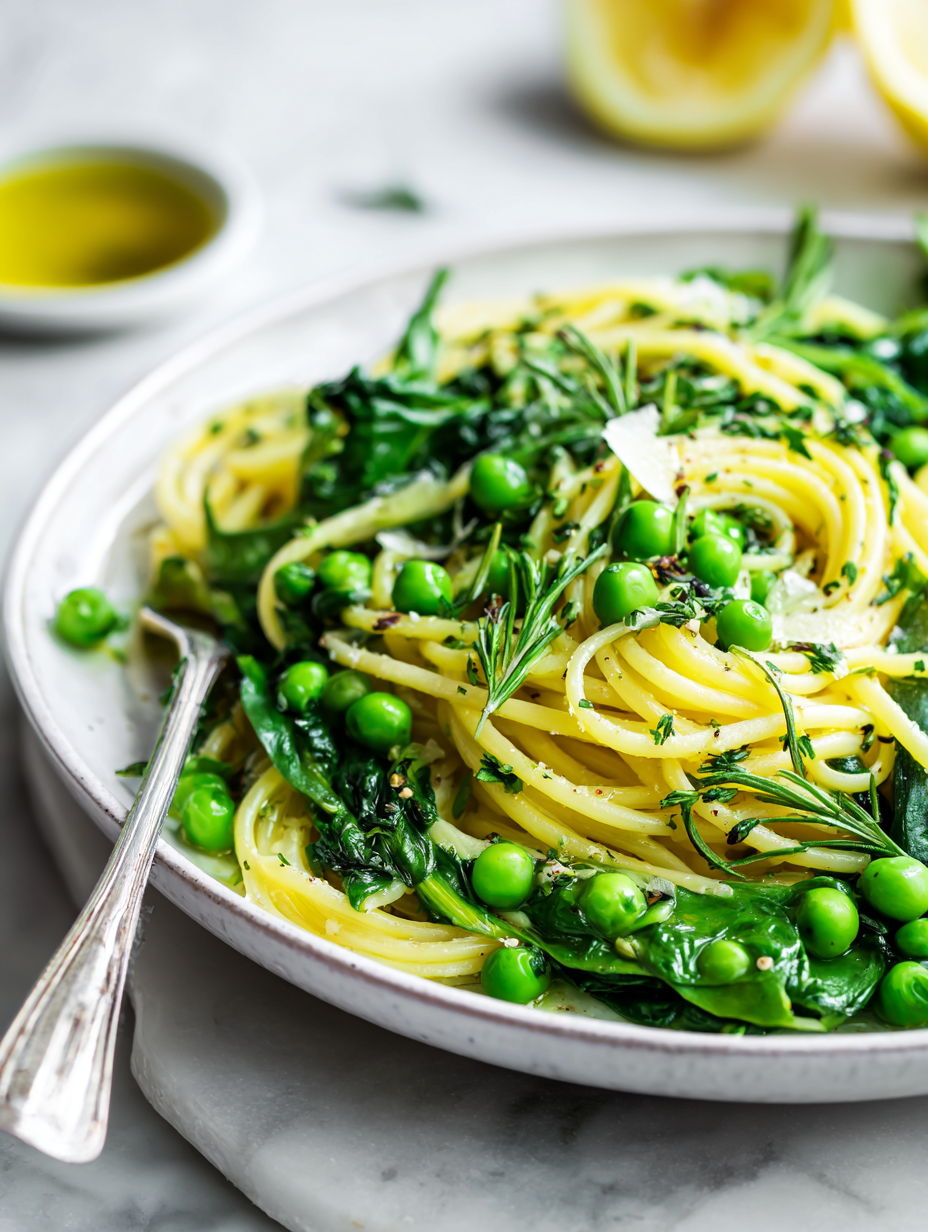
Fresh Herb and Pea Spinach Pasta
Ingredients
Equipment
Method
- Bring a large pot of salted water to a rolling boil, then add your pasta and cook until just al dente, about 8-10 minutes. Drain, reserving a small cup of pasta water, and set aside.
- While the pasta cooks, heat 2 tablespoons of olive oil in a skillet over medium heat. Add the crushed garlic and sauté gently, stirring, until fragrant and golden, about 1 minute. The garlic should smell nutty and aromatic.
- Add the defrosted peas directly to the skillet with garlic. Stir and cook for 2-3 minutes until peas are tender, bright green, and slightly sweet-smelling. If they start to stick, splash in a little hot water.
- Transfer the drained pasta into the skillet with the peas and garlic. Toss everything together thoroughly, allowing the pasta to soak up the fragrant oil and flavors for about a minute. Use a splash of reserved pasta water to loosen the mixture if needed, creating a silky sauce.
- Add the chopped spinach to the skillet and toss gently. Cook for 30 seconds to 1 minute until just wilted, keeping the greens vibrant and tender.
- Sprinkle over the lemon zest, chopped parsley, and mint. Gently toss again, ensuring the herbs and citrus brighten the dish. Season with salt and pepper to taste.
- Serve immediately, optionally grated with Parmesan or Pecorino for extra richness. Enjoy the fresh, garden-inspired flavors that come together in this simple but vibrant dish.
Pro tips for perfect pea and spinach pasta
- Bold garlic: Crush and sauté until fragrant, don’t rush to brown—aromatic and nutty is perfect.
- Bright peas: Add frozen peas directly to the skillet, cook until just tender for a sweet, poppy burst.
- Herbal freshness: Chop herbs just before adding to keep their vibrant aroma and flavor lively.
- Pasta water: Reserve a splash of starchy water before draining; it’s your secret to a silky sauce.
- Timing greens: Toss in spinach at the last moment, just until wilted—vibrant and tender, not soggy.
- Lemon zest: Microplane the lemon zest finely for maximum brightness and aroma—don’t skip this step.
- Taste as you go: Adjust seasoning after mixing, especially salt and herbs, to keep flavors balanced.
Common mistakes and how to fix them
- FORGOT to add salt to pasta water → Always salt generously for flavor.
- DUMPED greens in all at once → Add greens gradually to prevent sogginess.
- OVER-TORCHED garlic → Sauté on medium-low, watch for golden aroma, not brown.
- SKIPPED reserving pasta water → Use reserved water to loosen sauce and adjust consistency.
Quick fixes and pantry swaps
- When sauce looks dull, splash in hot pasta water for shimmer and looseness.
- If peas are mushy, quickly rinse with cold water to stop cooking and preserve pop.
- Splash olive oil if greens wilt too fast or stick to the pan—keeps everything vibrant.
- Patch overcooked pasta with a spoonful of reserved starchy water for silkiness.
- Shield garlic from burning by lowering heat and stirring constantly, releasing fragrant aroma.
Prep, store, and reheat tips
- Prepare the pasta and chop herbs ahead; store separately in airtight containers for up to 24 hours. Fresh herbs will lose some brightness over time.
- Blanch and shock the peas in boiling water, then store in a sealed container for up to 2 days. Keep them vibrant and sweet by refrigerating promptly.
- Assemble the garlic and olive oil mixture in advance, keeping it in the fridge for up to 1 day. Let it come to room temperature before tossing with pasta for best flavor.
- Reheat leftovers gently in a skillet over low heat, adding a splash of water or broth. The greens may wilt further, and flavors will mellow, but they stay fresh if not overcooked.
- Store cooked pasta in an airtight container in the fridge for up to 2 days. Reheat with a bit of reserved pasta water for a silky finish, and watch for the greens to wilt further.
Top questions about pea and spinach pasta
1. Can I use frozen peas instead of fresh?
Frozen peas work perfectly; just defrost in warm water to keep them lively and bright green.
2. Can I swap spinach for other greens?
Yes, you can substitute kale or chard for spinach, but cook them slightly longer until tender.
3. What kind of olive oil should I use?
Use a good quality olive oil for richness; a fruity, slightly smoky oil enhances the flavor.
4. How important is lemon zest in this recipe?
Lemon zest adds a bright, zesty note that cuts through the greens’ earthiness. Microplane works best.
5. Why should I save pasta water?
Reserve some pasta water before draining; it helps loosen the sauce and make it silky.
6. How long should I cook the spinach and peas?
Cooking the greens briefly preserves their vibrant color and fresh flavor, avoiding sogginess.
7. When should I add herbs?
Add herbs like parsley and mint just before serving to keep their fresh aroma and flavor lively.
8. How do I avoid burning the garlic?
Overcooking garlic turns bitter; sauté on medium-low until fragrant and golden, not brown.
9. Can I make this ahead and reheat?
Serve immediately for maximum freshness—pasta is best hot, with greens vibrant and herbs bright.
10. What if the sauce looks dull or thick?
If the sauce dulls, splash in hot pasta water to shimmer and loosen the mixture.
This dish is a reminder that simple, fresh ingredients can really shine with minimal fuss. It’s perfect for those busy nights when you want something nourishing without a lot of prep. Plus, the bright green color and fresh aroma make every bite feel like a little escape to a garden.
In a world that’s often noisy, sometimes the best comfort comes from a plate of vibrant greens and tender pasta. It’s quick, honest, and genuinely satisfying—just what I need right now to keep things simple and real.

Hello, I’m Oliver James, the person behind Melting Into Flavors. Cooking is my greatest passion, and it’s been the driving force in my life for as long as I can remember.
It’s not just about food for me; it’s about creating experiences, connecting with others, and sharing the love I have for what’s on the plate. Through this blog and my café, I’m able to share my journey with all of you and hopefully inspire some of your own culinary adventures along the way.