
This asparagus potato soup is my go-to when I want something nourishing but not heavy, especially in early spring. There’s a quiet magic in how the earthiness of potatoes balances the bright, grassy flavor of fresh asparagus. It’s a simple dish, but one that feels like a little secret—something humble yet elegant enough to serve to friends.
I love how this soup comes together with just a handful of ingredients, most of which you probably have kicking around. It’s a reminder that sometimes, the best meals are the simplest—focused on the pure, unadulterated taste of seasonal produce. The gentle simmer and the bright green splash at the end make it feel like a little celebration of spring’s quiet arrival.
Focusing on the overlooked harmony between tender asparagus and hearty potatoes, this soup celebrates the quiet elegance of seasonal simplicity, transforming humble ingredients into a comforting bowl that feels like a warm secret shared among friends.
The story behind this recipe
- This soup was born out of a late spring kitchen experiment, where I was trying to use up a bunch of asparagus that was just about to go past peak. I remembered how my grandma used to toss potatoes into almost everything—she believed they made any dish feel more grounded and satisfying. One rainy afternoon, I threw them together, and it turned into this unexpectedly bright, velvety bowl that felt like a hug in a mug.
- Every time I make it, I think of those quiet Sunday afternoons in her old kitchen, where simple ingredients felt like treasures. It’s kind of a nod to those moments—when humble, seasonal vegetables come together in a way that’s honest and a little bit celebratory. Now, it’s become my little ritual, especially when I need a reminder that good things don’t always need fuss.
- heading
Ingredient breakdown
- Asparagus: The tender, bright-green spears are the star here. I like to pick the firmest, freshest ones—look for a slight snap when bent, and a vivid hue. Skip the woody ends—they’re tough and bitter, so trim them generously.
- Potatoes: I use starchy potatoes like Russets for creaminess, but you could swap in Yukon Gold for a slightly sweeter note. Make sure they’re peeled and chopped evenly—this helps them cook uniformly and blend into that velvety texture I love.
- Vegetable stock: I prefer homemade or a good-quality store-bought veggie broth. It adds depth without overpowering the delicate asparagus. If yours is a bit salty, adjust the seasoning at the end—no one wants a soup that’s too briny.
- Garlic: Fresh garlic cloves, minced, give a subtle kick. I toast it slightly with onions before adding the liquid—just enough to smell nutty and sweet. If you want more punch, add an extra clove, but beware of overpowering the asparagus’s grassy notes.
- Onion: Yellow onion, sliced thin, cooks down to add sweetness. I sauté it until translucent—watch for a slight golden hue—that’s when its natural sugars shine. If you’re in a hurry, skip this step, but the flavor won’t be quite the same.
- Cream or dairy: I usually swirl in a splash of heavy cream or a dollop of Greek yogurt at the end for richness. For dairy-free, coconut milk works, though it adds a faint coconut aroma that can be quite nice. Just adjust the quantity to keep the soup smooth and luscious.
- Lemon juice: A squeeze of fresh lemon brightens everything up. I add it right before serving; it’s like a little burst of spring freshness that lifts the whole bowl. Use good-quality lemons—they make all the difference in that vibrant, zingy finish.
Spotlight on key ingredients
Asparagus:
- The tender, bright-green spears are the star here. I like to pick the firmest, freshest ones—look for a slight snap when bent, and a vivid hue. Skip the woody ends—they’re tough and bitter, so trim them generously.
- Potatoes: I use starchy potatoes like Russets for creaminess, but you could swap in Yukon Gold for a slightly sweeter note. Make sure they’re peeled and chopped evenly—this helps them cook uniformly and blend into that velvety texture I love.
Potatoes:
- I prefer starchy varieties for their creaminess, but Yukon Gold adds a subtle sweetness that’s nice. Peel and cut into uniform chunks so they cook evenly and blend smoothly.
- Lemon juice: Freshly squeezed lemon brightens every spoonful. Add it just before serving—its zing lifts the earthy flavors and adds a fresh, spring-like finish.
Notes for ingredient swaps
- Dairy-Free: Swap heavy cream for coconut milk or cashew cream. It adds richness, but the coconut flavor is more pronounced.
- Vegan: Use vegetable broth instead of chicken stock, and substitute dairy with plant-based cream or omitted altogether for a lighter finish.
- Potatoes: Sweet potatoes can be a sweet, earthy alternative. They soften well and lend a slightly sweeter, velvety texture.
- Asparagus: Green beans or peas can mimic some of the grassy freshness, though they lack the distinct asparagus aroma.
- Lemon Juice: Lime juice offers a similar bright, citrusy note with a slightly different zing; good for a twist.
- Onion: Leeks or shallots can replace yellow onion for a subtler, sweeter flavor profile. Use the same quantity.
- Herbs: Fresh tarragon or basil can add a different herbal brightness, replacing parsley or dill if desired.
Equipment & Tools
- Large saucepan: For simmering the soup and cooking vegetables.
- Immersion blender or regular blender: To blend the soup until smooth.
- Ladle: For serving the hot soup.
- Chef’s knife: To chop vegetables evenly.
- Cutting board: To prepare ingredients safely.
Step-by-step guide to asparagus potato soup
- Gather your equipment: a large saucepan for simmering, a blender or immersion blender for pureeing, and a ladle for serving. Ensure all tools are clean before starting.
- Prep the vegetables: snap off the woody ends of the asparagus, then chop into 2-inch pieces. Peel and dice the potatoes into uniform cubes, about 1 cm thick, so they cook evenly.
- Sauté aromatics: heat 2 tbsp olive oil over medium heat (about 160°C / 320°F). Add 1 sliced onion and 2 minced garlic cloves. Cook until fragrant and translucent, about 5 minutes, stirring occasionally.
- Add potatoes: toss in the diced potatoes, stir to coat with oil and aromatics. Cook for 2 minutes, allowing them to get slightly golden around the edges, about 180°C / 350°F.
- Pour in stock: add 4 cups vegetable broth or homemade stock. Bring to a gentle simmer over medium heat (around 85°C / 185°F). Cover partially and cook for 15 minutes, until potatoes are tender. Check occasionally for foam or scum, skim if necessary.
- Add asparagus: stir in the asparagus pieces. Continue simmering uncovered for another 4-5 minutes, until the asparagus turns bright green and is just tender when pierced with a fork. The smell should be fresh and grassy.
- Blend the soup: remove from heat. Use an immersion blender directly in the pot, or transfer in batches to a blender. Puree until smooth and velvety, about 30 seconds. If too thick, add a splash more broth to loosen.
- Finish and season: stir in a tablespoon of lemon juice and a splash of cream or coconut milk for richness. Taste and adjust salt, pepper, and acidity as needed. The soup should smell bright and taste balanced—earthy with a citrusy zing.
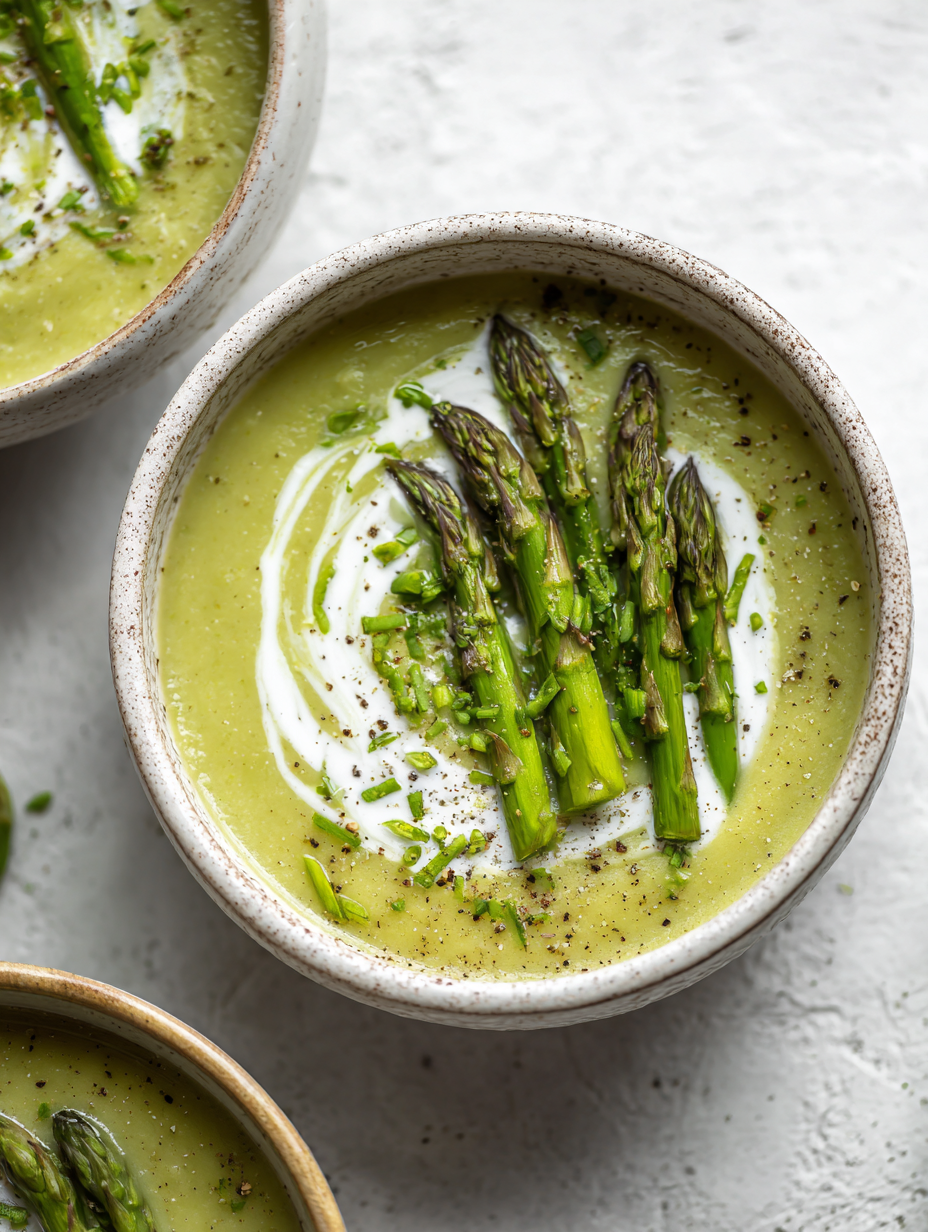
- Rest and serve: pour into bowls, garnish with a few trimmed asparagus tips or a drizzle of olive oil. Let sit for 2 minutes to settle flavors, then serve hot. The soup should be smooth, vibrant, and warm to the touch.
Serve the soup immediately after blending, garnished with asparagus tips or a drizzle of good olive oil. Let it sit for a couple of minutes to settle, then enjoy the warm, fragrant bowl with fresh bread or a simple salad.
How to Know It’s Done
- Potatoes are fully tender and easily pierced with a fork.
- The soup is smooth, velvety, with no visible chunks or graininess.
- Bright green asparagus tips retain their color and a slight crunch.
Asparagus Potato Soup
Ingredients
Equipment
Method
- Trim the woody ends from the asparagus and chop the tender parts into 2-inch pieces. Peel and dice the potatoes into even chunks.
- Heat olive oil in a large saucepan over medium heat until shimmering. Add the sliced onion and minced garlic, cooking until fragrant and translucent, about 5 minutes, with the onion turning slightly golden.
- Add the diced potatoes to the saucepan, stirring to coat them with the aromatic oil. Cook for about 2 minutes, allowing the edges to turn a light golden.
- Pour in the vegetable stock and bring the mixture to a gentle simmer. Cover partially and cook for 15 minutes, or until the potatoes are tender when pierced with a fork.
- Stir in the chopped asparagus and continue simmering uncovered for another 4-5 minutes, until the asparagus is bright green and just tender.
- Remove the saucepan from heat. Using an immersion blender, blend the soup directly until smooth and velvety. Alternatively, transfer in batches to a blender and blend until smooth.
- Stir in the lemon juice and heavy cream or coconut milk, then season with salt and pepper to taste. Blend again briefly to combine everything smoothly.
- Taste the soup and adjust seasoning as needed. Serve hot, garnished with a few asparagus tips or a drizzle of olive oil for a beautiful finish.
Pro tips for perfect asparagus potato soup
- Start with bright green asparagus; firm, snap when bent, flavorful aroma. Trim woody ends generously.
- Use starchy potatoes like Russets for creaminess. Keep chunks uniform for even blending.
- Sauté garlic gently until fragrant, about 1 minute; avoid browning to prevent bitterness.
- Add asparagus in the last 4-5 minutes; bright green and tender when pierced, not mushy.
- Puree soup until velvety smooth; if too thick, stir in a splash hot broth for a silky finish.
- Finish with lemon juice right before serving; brightens the soup and enhances flavors.
- For a richer texture, swirl in cream or coconut milk just before serving; avoid boiling after adding.
Common mistakes and how to fix them
- FORGOT to trim woody ends → Trim asparagus generously for a tender bite.
- DUMPED in too much stock → Adjust broth for desired soup thickness.
- OVER-TORCHED the garlic → Sauté garlic gently until fragrant, not browned.
- FAILED to check for foam → Skim foam during simmering for a clean flavor.
Quick fixes and pantry swaps
- When soup is too thick, splash in hot broth and blend briefly for a smoother texture.
- If asparagus spears are limp, splash with lemon juice to revive their brightness.
- DUMPED in too much salt? Rinse the soup with a little water, then re-season carefully.
- When garlic burns and turns bitter, splash with a bit of water and restart sautéing over lower heat.
- Splash a pinch of sugar when the soup tastes too earthy; it balances the flavors instantly.
Prep, store, and reheat tips
- Chop the asparagus ends and potatoes ahead of time; store in airtight containers in the fridge for up to 24 hours. The vibrant green of the asparagus dulls slightly over time.
- Prepare and keep the vegetable broth in the fridge for up to 2 days; reheat gently before adding to the soup base to preserve depth of flavor.
- Pureed soup can be made a day in advance; store in a sealed container in the fridge for up to 24 hours. The soup may thicken slightly, so whisk in a splash of hot broth when reheating.
- Reheat the soup slowly over low heat, stirring occasionally. Expect the aroma to become richer and the texture to mellow as flavors meld. Add a squeeze of lemon juice after reheating to brighten it up.
- For longer storage, freeze the cooled soup in portions for up to 2 months. Thaw in the fridge overnight, then reheat gently, checking for even warmth and smooth consistency.
Top questions about asparagus potato soup
1. How do I choose the best asparagus?
Look for firm, bright green asparagus with a slight snap when bent. Trim the woody ends generously to avoid bitterness.
2. What type of potatoes work best?
Use starchy potatoes like Russets for a creamy texture. Peel and chop evenly so they cook uniformly and blend smoothly.
3. When should I add lemon juice?
Add lemon juice just before serving to brighten the flavors. It gives the soup a fresh, zingy finish that enhances the earthiness.
4. How do I get a velvety texture?
Puree the soup until smooth, about 30 seconds with an immersion blender or in batches. If too thick, stir in a little hot broth to loosen.
5. Can I make it dairy-free?
Stir in a splash of cream or coconut milk at the end for richness. For dairy-free options, coconut milk adds a subtle sweetness.
6. How do I know when it’s done?
Simmer the soup gently, avoiding boil-over. Check tenderness with a fork—potatoes should be soft, asparagus tender but not mushy.
7. Can I make this ahead?
Refrigerate leftovers in an airtight container for up to 24 hours. Reheat gently over low heat, stirring, until steaming hot.
8. What if the soup is too thick?
If the soup is too thick after blending, stir in a little hot broth until it reaches your desired consistency.
9. How should I prepare the asparagus?
Use a sharp knife to trim asparagus for clean cuts. Keep the asparagus tips intact for garnish and vibrant color.
10. How do I prevent burning garlic?
Avoid burning garlic; sauté over medium-low heat until fragrant, about 1 minute. Burnt garlic turns bitter quickly.
This soup feels like a quiet toast to spring, with its fresh green and gentle earthiness. It’s simple, honest, and just enough to make a regular day feel a little more special.
Whenever I make it, I think of those early mornings and the smell of fresh-cut asparagus—nothing fancy, just good, seasonal ingredients coming together in a bowl. It’s not about fuss, but about appreciating what’s fleeting and beautiful in the moment.

Hello, I’m Oliver James, the person behind Melting Into Flavors. Cooking is my greatest passion, and it’s been the driving force in my life for as long as I can remember.
It’s not just about food for me; it’s about creating experiences, connecting with others, and sharing the love I have for what’s on the plate. Through this blog and my café, I’m able to share my journey with all of you and hopefully inspire some of your own culinary adventures along the way.