Sautéed asparagus with garlic butter feels like the kind of simple pleasure that turns a regular dinner into something a little more special. It’s that warm, fragrant aroma of melting butter mingling with garlic that gets me every time, making even the most straightforward greens seem luxurious. This recipe is about celebrating those tiny moments—how a handful of ingredients can come together to create something comforting and crave-worthy.
What I love about this dish is how versatile it is. It’s perfect as a quick side, yet it somehow feels indulgent, almost like a treat. The garlic butter transforms the asparagus into silky, aromatic bites that have both crunch and tenderness—a little chaos of textures that keeps each forkful interesting. Plus, it’s a reminder that sometimes, simplicity is the best way to highlight fresh, seasonal produce.
Focusing on how the garlic butter transforms the asparagus into a silky, aromatic experience that elevates simple greens into a comforting, crave-worthy side.
The story behind this recipe
- This recipe harks back to summer evenings at my grandmother’s place, where the simple act of sautéing asparagus in garlic butter felt like a quiet celebration. I remember the way the kitchen filled with a buttery, garlicky aroma that seemed to make everything feel more special, even in the chaos of family dinners. It’s a dish that reminds me how humble ingredients can turn into something memorable with just a little heat and patience.
- I started making this for myself when I needed a quick, comforting side that still felt indulgent. Over the years, it’s become my go-to for those nights when I want something familiar but with a little extra love. It’s also a reminder to slow down, focus on the aroma, and enjoy the simple act of cooking—no fuss, just good ingredients and a little attention.
- heading: ‘The story behind this recipe’
Key ingredients breakdown
- Asparagus: I love choosing bright green, firm spears that snap crisply when bent. Skip over limp ones—they won’t hold up during sautéing.
- Garlic: Fresh garlic cloves are key—pungent and juicy. If yours is sprouted or soft, it loses some punch. Mince it finely for even flavor.
- Butter: I prefer unsalted for control, but you could use ghee for a richer, slightly nuttier aroma that shimmers when melting.
- Olive oil: Just a splash helps prevent sticking and adds a subtle fruitiness. Skip it if you want a more pronounced garlic butter flavor.
- Lemon (optional): A squeeze brightens everything—wait until the very end to preserve that zing. Skip if you prefer a more mellow, buttery profile.
- Salt & pepper: Simple, but crucial. I season generously—don’t be shy—until the butter and garlic shine through with each bite.
Spotlight on key ingredients
Asparagus:
- I look for bright green, firm spears that snap easily; limp ones won’t hold up to sautéing.
- Their slightly woody ends are best trimmed just enough to keep the tender tips intact, ensuring perfect bite and texture.
- When cooked right, they develop a slight char and a sweet, smoky aroma that’s hard to resist.
Garlic:
- Fresh garlic cloves are essential—pungent, juicy, and punchy. If yours is sprouted or soft, it loses potency.
- Mince it finely so it disperses evenly in the butter, releasing a fragrant aroma that fills the kitchen without burning quickly.
- During sautéing, it becomes golden and slightly crispy, adding a savory crunch that elevates every bite.
Notes for ingredient swaps
- Dairy-Free: Use coconut oil or vegan butter. They won’t melt quite the same way but still add richness.
- Vegan: Swap butter for a good quality plant-based margarine or olive oil for a lighter, fruitier flavor.
- Nutty Twist: Add a sprinkle of toasted almond or hazelnut oil for depth and aroma, just a drizzle at the end.
- Citrus Variations: Lemon is classic, but lime or orange zest can add a different, bright note to the dish.
- Herb Boost: Toss in chopped fresh herbs like parsley, chives, or tarragon for added freshness and color.
- Salt Alternatives: Use flaky sea salt or Himalayan pink salt for a different texture and mineral note.**
- Garlic Variations: Roasted garlic can be substituted for raw for a sweeter, mellow garlic flavor.
Equipment & Tools
- Wide skillet: Provides even heat for quick sautéing and browning.
- Tongs or slotted spoon: Turns and transfers asparagus easily without breaking them.
- Small bowl: Holds minced garlic for quick addition.
- Sharp knife: Ensures clean, quick trimming of asparagus ends.
- Cutting board: Prepares asparagus and garlic comfortably.
Step-by-step guide to sautéed asparagus
- Gather your equipment: a wide skillet (preferably stainless steel or cast iron), tongs or a slotted spoon, a small bowl for garlic, and a cutting board with a sharp knife.
- Trim the asparagus: snap off the woody ends with your hands or cut about 2 inches from the bottom. Rinse and pat dry.
- Mince the garlic finely: about 2-3 cloves, so it releases maximum aroma without burning too quickly.
- Heat the skillet over medium-high heat: aim for about 190°C (375°F). Add 1-2 tablespoons of unsalted butter and a splash of olive oil to prevent burning.
- Once the butter melts and starts to foam, add the minced garlic: sauté for about 30 seconds until fragrant, but be careful not to brown it.
- Add the asparagus spears in a single layer: cook without moving for about 2-3 minutes until they start to turn vibrant green and the bottoms develop a slight char.
- Toss or turn the spears: cook for another 3-4 minutes, shaking the pan or stirring gently, until the asparagus is tender-crisp and evenly coated in garlic butter.
- Check the texture: the asparagus should be bright green with a slight crunch when pierced, and the garlic fragrant and lightly golden.
- Remove from heat: transfer to a serving plate immediately to prevent overcooking and preserve color and crunch.
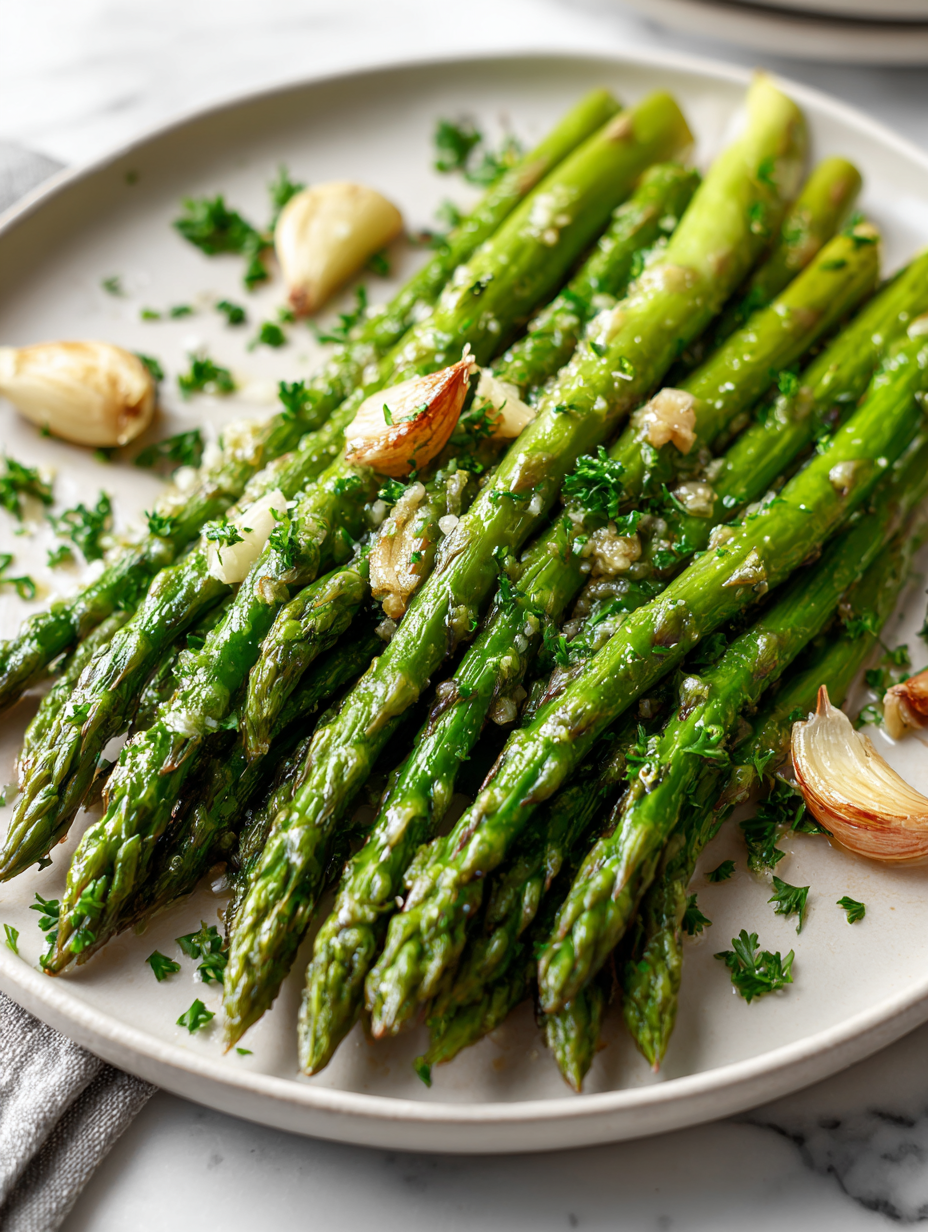
- Finish with a squeeze of lemon (if using) and a pinch of flaky sea salt: serve hot, drizzled with any remaining garlic butter from the pan.
Serve immediately on a warm plate, garnished with a squeeze of lemon or additional sea salt if desired. Let it rest for a minute to settle the flavors before digging in.
How to Know It’s Done
- Asparagus is vibrant green with slight char marks.
- Garlic is fragrant and lightly golden, not burnt.
- Spears yield slightly when pierced but hold their shape, indicating tender-crisp texture.
Sautéed Asparagus with Garlic Butter
Ingredients
Equipment
Method
- Trim the woody ends off the asparagus by snapping or cutting about 2 inches from the bottom of each spear. Rinse thoroughly and pat dry.
- Mince the garlic cloves finely to ensure even dispersal and quick release of aroma during sautéing.
- Heat a wide skillet over medium-high heat until hot, about 190°C (375°F). Add the butter and olive oil, allowing the butter to melt and foam.
- Add the minced garlic to the skillet and sauté for about 30 seconds, stirring constantly, until fragrant and just beginning to turn golden.
- Place the asparagus spears in a single layer in the skillet. Let them cook undisturbed for 2-3 minutes until they develop a bright green color and a slight char on the bottom.
- Use tongs or a slotted spoon to turn the spears, cooking for another 3-4 minutes until tender-crisp and evenly coated in garlic butter. Shake the pan gently to promote even browning.
- Squeeze a little lemon juice over the asparagus if desired, and season generously with salt and freshly ground pepper to taste. Toss gently to combine.
- Transfer the sautéed asparagus to a serving plate immediately to preserve its vibrant color and crisp texture. Drizzle with any remaining garlic butter from the pan.
- Serve hot as a luxurious side dish, enjoying the fragrant aroma and perfect balance of crunch and tenderness.
Pro tips for perfect sautéed asparagus
- Bolded tip: Use high heat to sear the asparagus quickly, locking in flavor and color.
- Bolded tip: Add garlic after the butter melts—this prevents burning and keeps the aroma sweet.
- Bolded tip: Shake the pan gently during cooking to promote even browning without overcooking.
- Bolded tip: Check for doneness by piercing a spear; it should be tender yet still hold a slight crunch.
- Bolded tip: Finish with a squeeze of lemon to brighten the flavors and cut through the richness of the butter.
- Bolded tip: Don’t overcrowd the pan—cook in batches if needed to maintain a hot, even surface.
- Bolded tip: Use a wide skillet for maximum contact and quicker cooking, ensuring vibrant green spears.
Common mistakes and how to fix them
- FORGOT to trim asparagus ends → Use fresh, firm spears with snapped ends for best texture.
- DUMPED garlic too early → Add garlic after butter melts to prevent burning and bitterness.
- OVER-TORCHED butter → Keep heat medium and stir constantly to prevent burning and smoky flavor.
- MISSED salt at the end → Finish with flaky sea salt for enhanced flavor and texture contrast.
Quick fixes and pantry swaps
- When asparagus is slimy, splash with cold water to refresh and crisp up.
- If garlic burns quickly, patch with a splash of water and lower heat immediately.
- Overcooked spears turn dull; shield with a quick splash of lemon juice to brighten.
- DUMPED too much oil? Wipe pan and start fresh to prevent greasy bites.
- When in doubt, pantry swap: use frozen asparagus—just adjust cooking time for tenderness.
Prep, store, and reheat tips
- Trim and wash the asparagus a few hours before cooking; keep it dry and refrigerated to maintain freshness.
- Prepare the garlic by mincing it in advance; store in an airtight container, but add to the pan just before cooking.
- Garlic butter can be made ahead and kept in the fridge for up to 2 days; reheat gently to preserve flavor.
- Cooked asparagus is best enjoyed fresh, but can be stored in an airtight container in the fridge for up to 1 day, retaining some crispness.
- Reheat gently in a skillet over low heat, adding a small pat of butter to revive the aroma and avoid sogginess; expect a slightly softer texture.
Frequently Asked Questions
1. How do I choose the best asparagus?
Look for bright green, firm spears that snap when bent. Wilted or limp asparagus won’t hold up well.
2. What kind of garlic works best?
Use fresh garlic cloves—pungent and juicy. Avoid sprouted or soft garlic, which can be milder and less aromatic.
3. Can I use different fats instead of butter?
Unsalted butter provides control over saltiness. If you prefer, ghee adds a nutty aroma and richness, melting smoothly.
4. Is olive oil necessary?
A splash of olive oil helps prevent sticking and adds a subtle fruitiness. Skip it if you want a more intense garlic butter flavor.
5. Should I add lemon juice during cooking?
Adding a squeeze of lemon brightens the dish. Wait until the end to keep that fresh, zesty flavor intact.
6. How much seasoning should I use?
Season generously with salt and pepper. The seasoning enhances the natural flavors and balances the garlic butter.
7. When should I trim the asparagus?
Trim or snap off the woody ends just before cooking. They can be tough and fibrous, affecting texture.
8. What temperature is best for sautéing asparagus?
Cook on medium-high heat around 190°C (375°F). This sears the asparagus quickly, giving a slight char and locking in flavor.
9. How do I know when the asparagus is done?
Check for doneness by piercing a spear; it should be tender yet still have a slight crunch and vibrant color.
10. What are signs I overcooked the asparagus?
Overcooking makes asparagus mushy and dull in color. Remove from heat promptly to preserve texture and flavor.
This simple dish has a way of making me pause and appreciate the small, fragrant moments in cooking. The aroma of garlic and butter filling the kitchen feels like a quiet celebration of seasonal produce. It’s a reminder that even the simplest ingredients can turn into a comforting, memorable side.
Whenever I make sautéed asparagus like this, I’m struck by how a few honest steps can create something so satisfying. It’s perfect for those busy nights when you want flavor without fuss, and it always feels like a little treat. Sometimes, all you need is good butter, fresh garlic, and a little patience to turn ordinary into something special.

Hello, I’m Oliver James, the person behind Melting Into Flavors. Cooking is my greatest passion, and it’s been the driving force in my life for as long as I can remember.
It’s not just about food for me; it’s about creating experiences, connecting with others, and sharing the love I have for what’s on the plate. Through this blog and my café, I’m able to share my journey with all of you and hopefully inspire some of your own culinary adventures along the way.