Oven roasting asparagus might seem basic, but it’s the way that high heat transforms these tender stalks into something smoky and deeply flavorful. It’s a simple trick that elevates the everyday veggie into a satisfying side with minimal fuss and maximum impact.
There’s something almost nostalgic about this method—those first bites remind me of rustic dinners and summer cookouts, where the focus is on simple ingredients kissed by heat. It’s honest cooking that celebrates the natural sweetness and every crunchy, charred bit.
This dish is the kind of thing I turn to when I want a quick, flavorful vegetable that feels a little more special. The garlic and olive oil make it feel indulgent, even though the process is straightforward—and honestly, it’s a reminder that sometimes, less is so much more.
Focusing on how oven roasting transforms the humble asparagus into a smoky, tender bite, highlighting the transformative power of heat and simple ingredients.
The story behind this recipe
- This recipe came together on a hectic weeknight when I needed something fast but satisfying. I remembered how my grandmother used to roast asparagus over an open flame, infusing it with a smoky depth I couldn’t quite replicate. One evening, I threw these stalks into the oven with just olive oil and garlic, expecting simplicity, but what I got was a revelation—a tender, caramelized bite that felt like a little celebration in every forkful.
- It’s funny how a simple technique can spark nostalgia and creativity at once. Roasting transforms the humble asparagus into something deeply flavorful—those charred bits, the fragrant garlic, the glossy oil—they all come together in a way that feels both rustic and elegant. It’s a reminder that sometimes, the best ideas are born from just tossing ingredients into the oven and letting heat do the magic.
- heading: The story behind this recipe
Ingredient breakdown: key components
- Asparagus: I love how fresh, green, and slightly earthy these stalks smell before roasting. If yours are limp, pick firmer ones for a better bite.
- Olive Oil: I prefer a good extra-virgin for that fruity aroma and rich mouthfeel. If you want a lighter touch, try avocado oil, but skip the depth of flavor.
- Garlic: Smashed and minced, it releases that pungent, spicy aroma that deepens as it roasts. For a milder flavor, slice it thin instead of mincing.
- Salt: A pinch of flaky sea salt at the end highlights the natural sweetness and adds crunch. Too much can overpower the subtle flavors.
- Lemon (optional): A squeeze brightens everything up with a zesty pop—perfect if you want a fresh, tangy twist after roasting.
- Black Pepper: Freshly cracked, it adds a hint of spice and complexity. If you prefer milder, reduce or omit for a softer finish.
- Red Pepper Flakes (optional): Just a pinch adds a smoky heat that contrasts beautifully with the sweet, charred asparagus.
Spotlight on key ingredients
Asparagus:
- I love how fresh, green, and slightly earthy these stalks smell before roasting. If yours are limp, pick firmer ones for a better bite.
- Olive Oil: I prefer a good extra-virgin for that fruity aroma and rich mouthfeel. If you want a lighter touch, try avocado oil, but skip the depth of flavor.
Garlic:
- Smashed and minced, it releases that pungent, spicy aroma that deepens as it roasts. For a milder flavor, slice it thin instead of mincing.
- Salt: A pinch of flaky sea salt at the end highlights the natural sweetness and adds crunch. Too much can overpower the subtle flavors.
Notes for ingredient swaps
- Dairy-Free: Skip butter and use extra olive oil. Slightly less rich but keeps the focus on pure, grassy flavors.
- Vegan: Swap out any butter-based seasoning for a splash of lemon juice and a pinch of smoked paprika for depth.
- Low-Sodium: Use less salt or opt for a salt substitute; the roasting will still bring out natural sweetness.
- Extra-Virgin Olive Oil: Go for a robust, peppery oil if you love bold flavors, or a milder one if you prefer subtlety.
- Garlic Variations: Roast whole garlic cloves alongside asparagus for a mellow, caramelized sweetness—less pungent bite.
- Herb Additions: Toss in thyme or rosemary before roasting for an aromatic, earthy lift that complements the garlic.
- Lemon: Use lime or vinegar if citrus isn’t your thing; both add brightness but with a different zing.
Equipment & Tools
- Baking sheet: To hold and roast the asparagus evenly.
- Parchment paper (optional): For easier cleanup and preventing sticking.
- Mixing bowl: To toss and coat the asparagus with oil and garlic.
- Sharp knife: To trim the woody ends cleanly.
- Measuring spoons: To measure olive oil and seasonings accurately.
Guide to oven roasted asparagus
- Preheat your oven to 220°C (430°F). Get a rimmed baking sheet ready—lined with parchment if you like for easy cleanup.
- Trim the woody ends off the asparagus—about 1-2 cm. Keep the spears uniform in size for even cooking.
- In a large bowl, toss the asparagus with 2-3 tablespoons of good quality olive oil, making sure they’re well coated.
- Add 3-4 minced garlic cloves—press or finely chop—distributing evenly over the spears. Season with a generous pinch of salt.
- Lay the asparagus in a single layer on the baking sheet. Avoid crowding—some space helps with char and crispness.
- Slide into the oven and roast for 12-15 minutes. Shake the pan halfway through for even browning.
- Watch for a deep green color with some charred spots. The garlic should smell fragrant and slightly toasted.
- Remove from the oven when the tips are crispy and the stalks are tender but still hold a gentle jiggle. The garlic will be golden.
- Let sit for a minute or two—this helps the flavors settle—then squeeze fresh lemon over if desired.
- Plate immediately, drizzling with a little extra olive oil if you like. Serve hot, with a sprinkle of flaky sea salt.
Let the asparagus rest for 2 minutes on the plate to settle. Finish with a squeeze of lemon and a drizzle of olive oil for extra brightness. Serve immediately for the best flavor and texture.
How to Know It’s Done
- Color: Deep green with some charred spots, not burnt.
- Texture: Tender but with some crunch, especially at tips.
- Aromas: Fragrant garlic, roasted with smoky undertones.
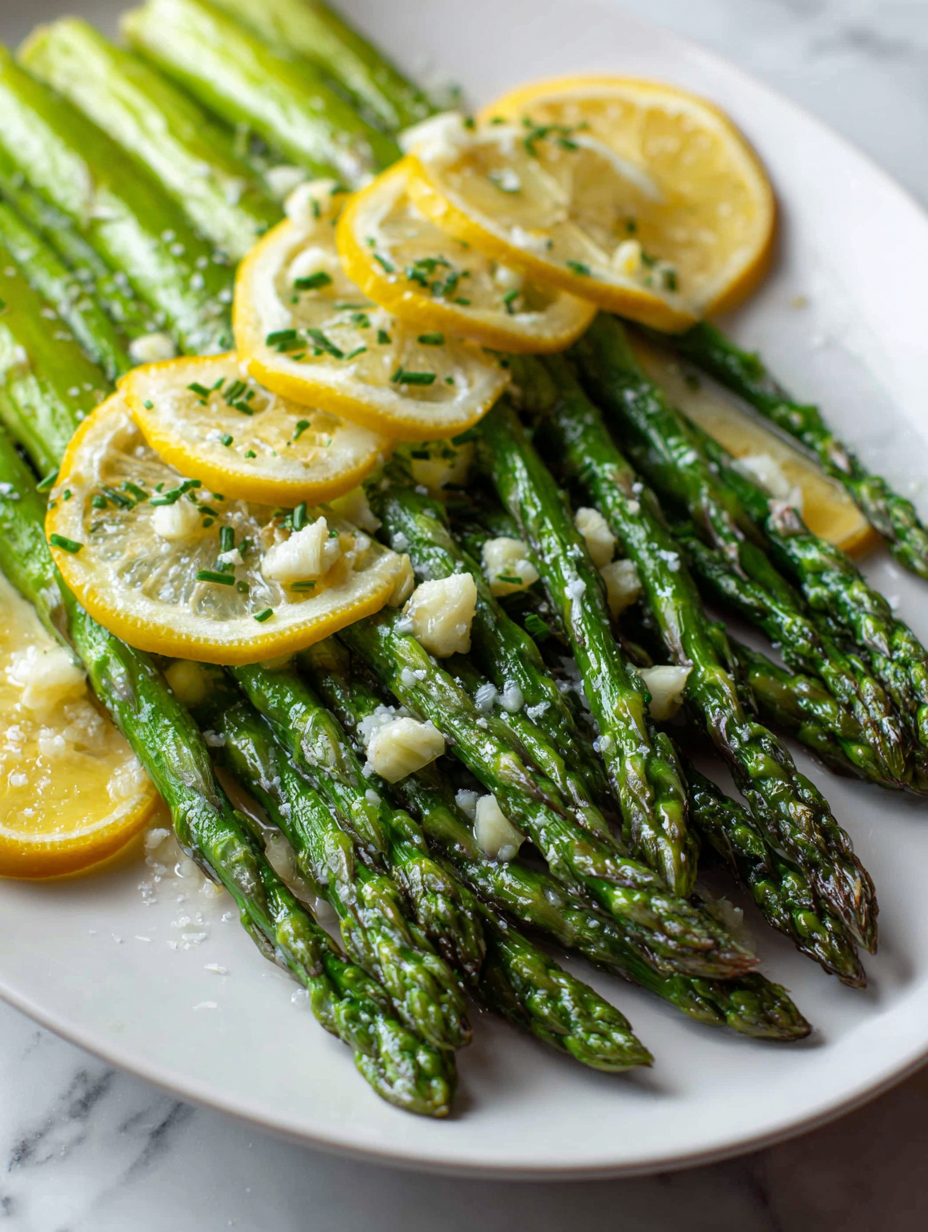
Oven-Roasted Asparagus with Garlic and Lemon
Ingredients
Equipment
Method
- Preheat your oven to 220°C (430°F). Line a baking sheet with parchment paper for easy cleanup.
- Trim the woody ends off the asparagus, about 1-2 centimeters from the bottom, ensuring all stalks are uniform in size for even roasting.
- Place the trimmed asparagus in a large mixing bowl and drizzle with 2 tablespoons of olive oil. Toss gently to coat each stalk evenly, feeling the stalks become glossy and well-covered.
- Add the minced or smashed garlic to the bowl, distributing it evenly among the spears. Toss again to coat everything thoroughly, releasing fragrant garlic aroma.
- Arrange the coated asparagus in a single layer on the prepared baking sheet, spreading them out so they aren’t crowded, which helps them get crispy and charred.
- Roast in the oven for 12-15 minutes, shaking the pan halfway through. The asparagus will turn a vibrant green with some charred, crispy tips and fragrant garlic.
- Once done, remove from the oven and transfer to a serving dish. Squeeze fresh lemon juice over the hot asparagus for a bright, zesty finish.
- Finish with a pinch of flaky sea salt and a sprinkle of black pepper or red pepper flakes for an extra flavor boost. Serve immediately while still warm and fragrant.
Tips and tricks for perfect roasting
- High heat: Ensure your oven hits 220°C (430°F) for that perfect char and caramelization.
- Even coating: Toss asparagus thoroughly with oil and garlic to prevent burnt patches and uneven flavor.
- Watch the garlic: Add minced garlic early, but keep an eye—if it turns dark, remove to avoid bitterness.
- Proper spacing: Lay the stalks in a single layer with space; overcrowding causes steaming instead of roasting.
- Timing: Roast for 12-15 minutes until tips are crispy and stalks are tender—set a timer to avoid overdone spears.
- Finish with brightness: A squeeze of lemon brightens the roasted flavor and adds a fresh zing.
- Use fresh ingredients: Choose firm, bright green asparagus and good-quality olive oil for best flavor and texture.
Common mistakes and how to fix them
- FORGOT to check asparagus size → cut into uniform pieces for even roasting.
- DUMPED olive oil all at once → toss thoroughly to coat evenly, preventing burnt spots.
- OVER-TORCHED garlic → remove early if it starts to turn dark and bitter.
- MISSED the oven temp → ensure 220°C (430°F) for proper caramelization.
Quick fixes and pantry swaps
- When asparagus is limp, splash with ice water to revive firmness and snap.
- If garlic burns quickly, patch with a squeeze of lemon to mask bitterness.
- DUMPED too much oil? Shield with a paper towel to absorb excess and prevent sogginess.
- When spears are uneven in size, rescue by trimming larger ones for uniform roasting.
- Splash a little vinegar if asparagus tastes dull after roasting, for a bright finish.
Prep, store, and reheat tips
- Trim the woody ends of the asparagus a day ahead; keep them in an airtight container in the fridge to maintain freshness and crispness.
- You can mince or smash garlic the night before, storing it in a small airtight container—this intensifies the aroma but use fresh garlic for the best punch.
- Roast the asparagus and let it cool completely; store in an airtight container in the fridge for up to 2 days. Reheat in a hot oven or skillet until warmed through, watching for crispness and aroma revival.
- Reheating will soften the asparagus slightly, but a quick blast at 200°C (392°F) for 3-4 minutes will restore some of the original char and aroma. Expect a slightly muted flavor and softer texture after storage.
Top questions about oven roasted asparagus
1. How do I choose the best asparagus?
Look for firm, bright green stalks with tightly closed tips for the freshest flavor and best texture.
2. How do I prepare asparagus properly?
Trim the woody ends about 1-2 cm from the bottom, where the stalks feel tough and fibrous.
3. How long should I roast asparagus?
Roast until the tips are crispy and slightly charred, about 12-15 minutes at 220°C (430°F).
4. Can I use other oils?
Use good quality extra-virgin olive oil for richness and aroma. It makes a noticeable difference.
5. Should I add lemon?
Yes, you can add lemon juice or zest after roasting for a fresh, bright flavor contrast.
6. How should I arrange asparagus for roasting?
Keep the asparagus in a single layer on the baking sheet to ensure even roasting and crisp edges.
7. When do I add garlic?
Add garlic early for a toasted, fragrant aroma, but watch it closely to prevent burning.
8. Can I make this ahead?
Store leftovers in an airtight container in the fridge for up to 2 days. Reheat in a hot oven for best texture.
9. What if my asparagus overcooks?
If asparagus turns soggy or too charred, reduce roasting time or lower oven temperature slightly.
10. How do I adjust texture?
For a softer texture, roast a few extra minutes; for more crunch, remove earlier and serve immediately.
This simple technique of roasting asparagus with garlic and olive oil captures the essence of good, honest cooking. The smoky edges and tender stalks make it feel like a special treat, even on a weekday dinner. It’s one of those dishes that reminds me how powerful a handful of ingredients can be when heat does the work.
And honestly, once you get the timing down, it’s the kind of recipe you turn to again and again—no fuss, just flavor. It’s perfect for those moments when you want something nourishing but uncomplicated, with a little char and a lot of aroma. That’s the magic of the oven’s heat, really.

Hello, I’m Oliver James, the person behind Melting Into Flavors. Cooking is my greatest passion, and it’s been the driving force in my life for as long as I can remember.
It’s not just about food for me; it’s about creating experiences, connecting with others, and sharing the love I have for what’s on the plate. Through this blog and my café, I’m able to share my journey with all of you and hopefully inspire some of your own culinary adventures along the way.