
Focusing on the often overlooked technique of gently sweating asparagus to unlock its sweetest, most vibrant flavor before adding it to risotto. There’s something about that slow, tender heat that transforms the vegetable from green to gold, a subtle magic that can get lost in more aggressive cooking methods. This dish is about honoring that delicate process and letting the asparagus shine in every bite.
Risotto sometimes gets a bad rap for being rich and heavy, but when you treat it with patience and care—especially with fresh, bright asparagus—it becomes a celebration of simple, honest ingredients. I love the quiet rhythm of stirring, feeling the rice release its starch, creating that creamy, velvety texture that’s almost hypnotic. It’s a dish that demands attention, but rewards you with every spoonful.
Making this creamy asparagus risotto with parmesan is like a small act of culinary mindfulness. It’s not about rushing through; it’s about respecting each step, from sweating the asparagus to slowly coaxing the rice into silky perfection. In a season where fresh, tender greens are abundant, this dish feels like a gentle, flavorful reminder to savor what’s fleeting and beautiful.
Focusing on the often overlooked technique of gently sweating asparagus to unlock its sweetest, most vibrant flavor before adding it to risotto.
The story behind this recipe
- This recipe was born out of a summer picnic where I realized how much I loved the simple act of gently sweating asparagus. That slow, tender process unlocks a sweetness that’s almost floral, and I wanted to capture that in a comforting, creamy risotto. It’s about respecting the vegetable’s delicate nature and letting it do the talking.
- I remember the first time I tried adding Parmesan to a risotto early on—how that salty, umami bite balanced out the richness. Over the years, I’ve tweaked the technique, focusing on the asparagus prep and the timing of adding cheese, to make every bite feel like a fresh green burst wrapped in silky rice. It’s a humble dish, but one that feels like a small celebration of season and technique.
- heading: ‘The inspiration behind this dish’
Key ingredients and tips
- Asparagus: I love the bright green snap and earthy aroma when I toss it into the pan. For a sweeter flavor, try peeling the lower stalks before sweating; it’s a tiny step that makes a difference.
- Arborio rice: That starchy, creamy core is what makes risotto feel indulgent. Rinsing it isn’t necessary—just toast it lightly to release nutty scents before adding broth.
- Parmesan: The salty, umami punch of freshly grated cheese lifts the entire dish. If you’re out, Pecorino works but adds a sharper, tangier note that’s worth trying.
- Vegetable broth: I prefer a homemade or store-bought veggie stock with a deep, savory backbone. Keep it warm on the side so the rice absorbs easily without cooling down the pan.
- Butter: I add a splash at the end for richness, giving the risotto a glossy sheen. If you want a lighter version, just use a bit less—though it won’t be quite as velvety.
- Olive oil: A good drizzle helps sweat the asparagus gently and builds flavor. Use a fruity type for added depth, or a neutral one if you prefer pure vegetable taste.
- Lemon zest (optional): A tiny bit brightens the whole dish with a fragrant citrus note—don’t skip it if you like a little zing to balance the richness.
Spotlight on key ingredients
Asparagus:
- I love the bright green snap and earthy aroma when I toss it into the pan. For a sweeter flavor, try peeling the lower stalks before sweating; it’s a tiny step that makes a difference.
- Arborio rice: That starchy, creamy core is what makes risotto feel indulgent. Rinsing it isn’t necessary—just toast it lightly to release nutty scents before adding broth.
- Parmesan: The salty, umami punch of freshly grated cheese lifts the entire dish. If you’re out, Pecorino works but adds a sharper, tangier note that’s worth trying.
Arborio rice:
- Parmesan: The salty, umami punch of freshly grated cheese lifts the entire dish. If you’re out, Pecorino works but adds a sharper, tangier note that’s worth trying.
- Vegetable broth: I prefer a homemade or store-bought veggie stock with a deep, savory backbone. Keep it warm on the side so the rice absorbs easily without cooling down the pan.
- Butter: I add a splash at the end for richness, giving the risotto a glossy sheen. If you want a lighter version, just use a bit less—though it won’t be quite as velvety.
Notes for ingredient swaps
- Dairy-Free: Swap Parmesan for a nutty, aged nutritional yeast—adds umami but less creamy richness.
- Vegan: Use a plant-based cheese or cashew cream—will bring creaminess but a different umami profile.
- Gluten-Free: Ensure broth is gluten-free; rice and cheese are naturally gluten-free, so keep it simple.
- Lower-Sodium: Opt for a low-sodium broth and use less cheese—taste will be lighter but still flavorful.
- Lemon Variations: If lemon zest isn’t available, a splash of white wine at the end adds brightness and acidity.
- Herb Boost: Add fresh thyme or basil instead of lemon for a different aromatic lift—bright and fragrant.
- Extra Creaminess: Mix in mascarpone or ricotta at the end—rich, velvety texture that melts into the risotto.
Equipment & Tools
- Wide pan: For even cooking and easy stirring.
- Ladle: To add broth in controlled amounts.
- Sharp knife: For trimming and chopping asparagus.
- Stirring spoon: To gently cook and stir rice and vegetables.
Step-by-step to creamy asparagus risotto
- Gather your equipment: a wide, heavy-bottomed pan (about 25 cm/10 inches), a stirring spoon, a ladle, and a sharp knife for prepping asparagus.
- Prepare the broth first: heat 1 liter (4 cups) of vegetable broth in a pot until simmering, then keep it at a gentle simmer over low heat.
- Trim and sweat the asparagus: snap off the woody ends, peel lower stalks if thick, then chop into 2 cm pieces. In your pan, heat 1 tbsp olive oil over medium heat (about 160°C/320°F).
- Add asparagus to the pan: cook gently, stirring constantly, for about 3–4 minutes until bright green and tender, with a slight fragrant aroma. If it starts to brown, reduce heat.
- Toast the rice: add 1 cup Arborio rice to the pan with the asparagus, stir for 1–2 minutes until the edges turn translucent and smell nutty.
- Start adding broth: pour in about ½ cup (120 ml), stirring constantly until absorbed. Continue adding broth in ¼ to ½ cup increments, stirring until each is absorbed before adding the next.
- Stir frequently and cook for about 18–20 minutes total, until rice is creamy and just tender. Check for doneness: rice should be al dente, with a slight bite.
- Finish the risotto: remove pan from heat, stir in 2 tbsp butter, ½ cup freshly grated Parmesan, and lemon zest if using. Adjust seasoning with salt and pepper.
- Rest and plate: let sit for 1 minute, then spoon into warm bowls. Garnish with extra Parmesan and a drizzle of olive oil if desired.
Let the risotto rest off the heat for 1 minute. Finish with butter and Parmesan, stir well, then serve immediately, garnished as desired.
How to Know It’s Done
- Asparagus: bright green, tender but still slightly crisp.
- Rice: creamy, with a slight bite, not mushy.
- Color: rice and asparagus evenly coated, glossy finish.
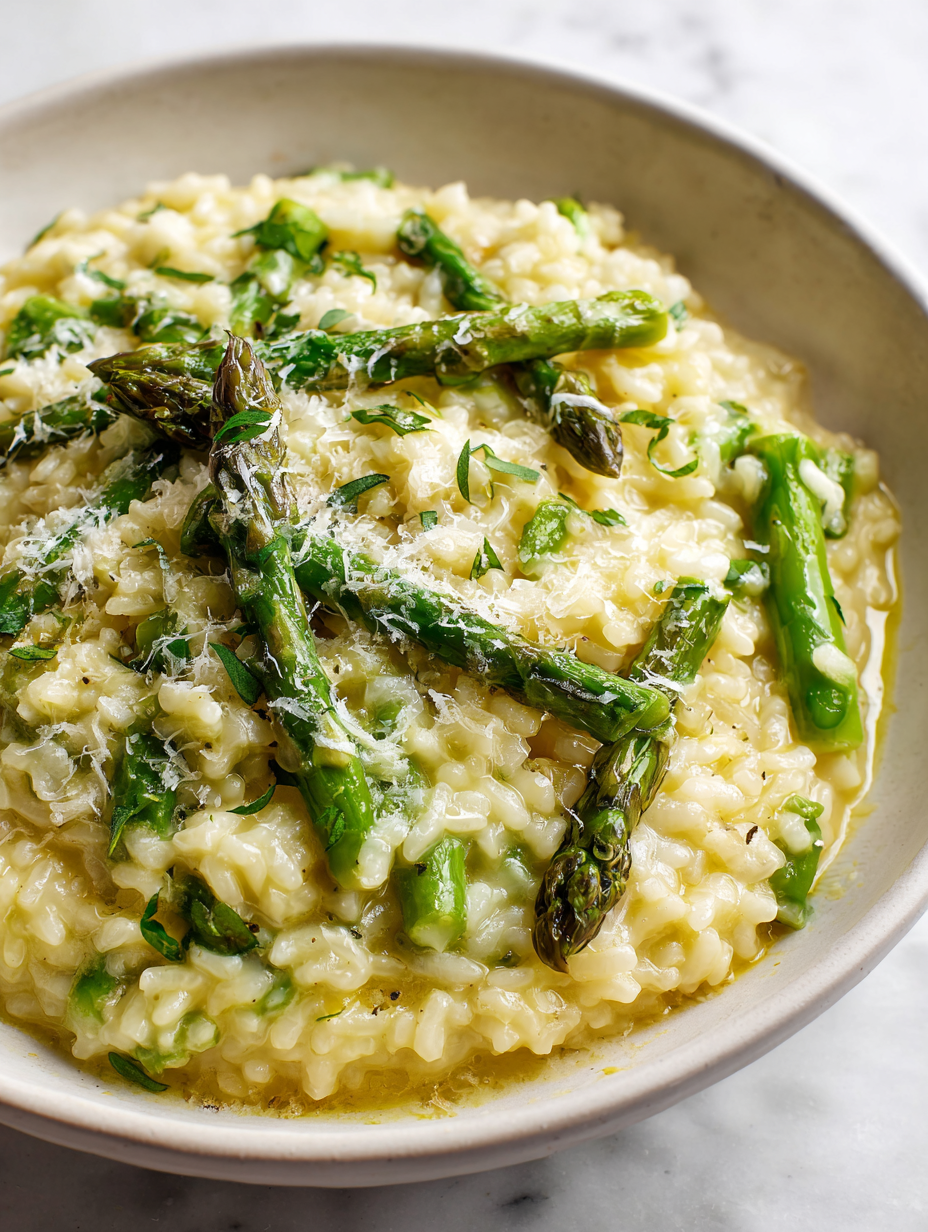
Creamy Asparagus Risotto
Ingredients
Equipment
Method
- Begin by heating your vegetable broth in a pot until it just reaches a gentle simmer, then keep it warm on low heat.
- Trim the woody ends off the asparagus, then peel the lower stalks if they’re thick, revealing the tender green inside. Chop the asparagus into 2 cm pieces.
- In a wide pan, heat the olive oil over medium-low heat. Add the asparagus and cook gently, stirring constantly, until it turns bright green and releases a fragrant aroma—about 3–4 minutes. The asparagus should be tender but not browned.
- Add the Arborio rice to the pan with the asparagus and toast it gently, stirring for about 1–2 minutes until the edges look translucent and smell nutty.
- If using, pour in the white wine and stir until it mostly evaporates, about 1 minute, allowing the rice to absorb the flavors.
- Begin adding the warm broth in small increments—about ½ cup at a time—stirring constantly. Wait until the liquid is mostly absorbed before adding the next splash. Continue this process, stirring often, until the rice is just tender and creamy, about 18–20 minutes.
- Once the rice reaches the desired creaminess and al dente texture, turn off the heat. Stir in the butter and grated Parmesan cheese until melted and glossy. Add lemon zest if using, and season with salt and pepper to taste.
- Rest the risotto for a minute or two, then give it a gentle stir. The mixture should be silky and creamy with a slight sheen.
- Spoon the risotto into warmed bowls, garnished with extra Parmesan or a drizzle of olive oil if desired. Serve immediately while hot and fragrant.
Pro tips for creamy risotto
- Gentle heat: Sweat the asparagus over medium-low heat to unlock sweetness without browning.
- Stir continuously: Keep the rice moving to release starch and achieve that creamy texture.
- Add broth gradually: Pour in warm broth in small amounts, stirring constantly for even absorption.
- Taste as you go: Check for seasoning and doneness mid-way, adjusting salt and broth if needed.
- Finish with butter and cheese: Off heat, stir in fat for shine and richness that won’t break the sauce.
- Lemon zest last: Brighten the dish with zest right before serving for a fresh, citrusy aroma.
- Rest briefly: Let the risotto sit for a minute after cooking; it helps meld flavors and improves creaminess.
Common mistakes and how to fix them
- FORGOT to stir constantly → Stirring helps release rice starch, keep the risotto creamy.
- DUMPED all broth at once → Add broth gradually, stirring to control creaminess and prevent mush.
- OVER-TORCHED the asparagus → Sweat gently over medium-low heat, avoid browning for vibrant flavor.
- SKIPPED tasting before serving → Taste and adjust salt, cheese, and acidity for balanced flavor.
Quick fixes and pantry swaps
- When sauce looks grainy, splash in a bit more hot broth and stir vigorously.
- If risotto sticks or burns, immediately remove from heat and stir in a spoon of butter.
- Splash some lemon juice if the Parmesan feels overwhelming or flat.
- Patch overcooked asparagus by quickly sautéing with a touch of oil for added crispness.
- Shield the risotto from drying out by covering with a clean towel during short breaks.
Prep, store, and reheat tips
- Prep the asparagus by trimming and peeling lower stalks the day before; store in an airtight container in the fridge for up to 24 hours. The fresh snap makes a noticeable difference.
- Cook the broth ahead of time and keep it warm on the stove or in a thermos. It’ll stay flavorful and ready for quick addition, keeping the risotto from cooling down.
- Assembled ingredients like grated Parmesan and chopped herbs can be prepped and kept in small containers. This speeds up assembly and maintains freshness.
- Refrigerate leftovers in an airtight container for up to 2 days. The rice may firm up slightly, so stir in a splash of warm broth or water when reheating to restore creaminess.
- To reheat, gently warm the risotto in a pan over low heat, stirring constantly. Add a splash of broth or water to loosen the texture and bring back its velvety finish. Expect the flavors to mellow slightly, but the bright asparagus should still shine through.
Top questions about creamy asparagus risotto
1. Can I use frozen asparagus?
Yes, using fresh asparagus makes a big difference in flavor and texture—freshness really shows in that snap and vibrant green color.
2. Can I make this ahead of time?
Absolutely, just thaw and drain well before cooking. The flavor may be slightly less bright, but it still works fine.
3. How long does it keep in the fridge?
Risotto is best enjoyed fresh, but you can refrigerate leftovers in an airtight container for up to 2 days. Reheat gently, adding a splash of broth if needed.
4. Can I reheat this risotto?
Definitely. Just add a bit more broth or water when reheating to loosen the rice and restore that creamy texture.
5. Can I substitute Parmesan?
Yes, you can swap Parmesan for Pecorino for a sharper, saltier flavor, or nutritional yeast for a vegan-friendly option with umami bite.
6. Can I use different rice?
If you don’t have Arborio rice, Carnaroli or Vialone Nano are good substitutes—they’re also starchy and melt into creaminess.
7. Can I make it dairy-free?
You can omit butter for a lighter dish, but it really adds to the glossiness and richness—try adding a splash of olive oil instead.
8. What broth should I use?
Using a good-quality vegetable broth is key—look for one with a deep, savory flavor, or make your own if possible.
9. What if my risotto is too thick?
If the risotto gets too thick or sticks, splash in hot broth and stir vigorously until it loosens up and feels silky.
10. Can I add lemon?
Yes, adding a squeeze of lemon or lemon zest right before serving brightens the dish with a fresh, citrusy aroma that balances the richness.
This dish isn’t just about the ingredients; it’s about the gentle process, the patience it teaches in the kitchen. Each spoonful carries a bit of that mindful effort, highlighting the bright, fresh flavor of asparagus and the creamy richness of Parmesan.
In a season when greens are at their peak, this risotto feels like a quiet nod to the fleeting beauty of spring. It’s simple, satisfying, and a reminder to slow down for a moment of honest, homemade comfort.

Hello, I’m Oliver James, the person behind Melting Into Flavors. Cooking is my greatest passion, and it’s been the driving force in my life for as long as I can remember.
It’s not just about food for me; it’s about creating experiences, connecting with others, and sharing the love I have for what’s on the plate. Through this blog and my café, I’m able to share my journey with all of you and hopefully inspire some of your own culinary adventures along the way.