
This lemon butter asparagus pasta is my go-to when I need something quick, bright, and comforting all at once. The trick is balancing the zing of fresh lemon with the richness of butter, which makes the simple ingredients feel indulgent without overdoing it. It’s the kind of dish that feels fancy enough for guests but easy enough to throw together after a long day.
I love how the lemon cuts through the buttery sauce, giving each bite a refreshing burst that lifts the earthy sweetness of asparagus. It’s a recipe I keep close because it hits that sweet spot between satisfying and revitalizing, especially in spring when asparagus is in season and the air smells like fresh starts.
Focusing on the balance of bright lemon and rich butter to elevate simple asparagus pasta into a dish that feels both indulgent and revitalizing, perfect for those days when you want comfort but need a spark of freshness.
The story behind this recipe
- This dish was born out of a lazy Sunday craving for something bright and comforting. I wanted that perfect balance of fresh lemon and rich butter, but with a twist—adding asparagus because it’s just starting to peek out in spring markets. The simplicity of it all makes it feel like a little secret I keep in my back pocket.
- It’s the kind of recipe I make when I want to feel like I’ve whipped up something special without too much fuss. The first time I threw it together, I was surprised how the lemon’s zing woke up the butter, turning what could be a basic pasta into a dish that feels both indulgent and invigorating. That moment of tasting it—bright, creamy, just a hint of charred asparagus—made me realize how simple ingredients can sing together with a little balance and care.
- story_type
- paragraph
Ingredient breakdown
- Lemon: I love how a splash of fresh lemon juice brightens the whole dish, making it feel lively and fresh—don’t skip that zest at the end to keep the brightness sharp.
- Butter: It’s the base of my sauce, velvety and rich, but I sometimes swap in olive oil if I want a lighter touch—just keep the heat gentle so it doesn’t brown too quickly.
- Asparagus: I prefer thin spears—they cook faster and stay tender-crisp, with a slightly smoky aroma if you char them briefly on high heat before chopping.
- Pasta: I use spaghetti or linguine for that perfect twirl, but penne works too—just make sure to salt the water generously and cook until al dente, that slight chew makes all the difference.
- Garlic: I mash mine into a paste so it cooks evenly and releases that fragrant, almost nutty aroma that fills the kitchen—don’t let it burn, or it turns bitter.
- Parmesan: Freshly grated on top adds a salty, umami punch—skip it if dairy-free, but try nutritional yeast for a cheesy vibe with a nutty note.
- Olive Oil: A drizzle over the finished dish adds a silky sheen and subtle fruitiness—use a good quality oil for that extra layer of flavor.
Spotlight on key ingredients
Lemon:
- I love how a splash of fresh lemon juice brightens the whole dish, making it feel lively and fresh—don’t skip that zest at the end to keep the brightness sharp.
- Butter: It’s the base of my sauce, velvety and rich, but I sometimes swap in olive oil if I want a lighter touch—just keep the heat gentle so it doesn’t brown too quickly.
Asparagus:
- I prefer thin spears—they cook faster and stay tender-crisp, with a slightly smoky aroma if you char them briefly on high heat before chopping.
- Pasta: I use spaghetti or linguine for that perfect twirl, but penne works too—just make sure to salt the water generously and cook until al dente, that slight chew makes all the difference.
Notes for ingredient swaps
- Dairy-Free: Swap butter for olive oil or coconut oil. It won’t be as rich, but still brightens the dish with a different kind of smoothness.
- Vegan: Use plant-based butter or margarine plus a splash of lemon-infused olive oil. Keeps that creamy, zesty vibe without dairy.
- Gluten-Free: Substitute gluten-free pasta—look for one made from rice or corn. It cooks a bit differently but still holds onto flavors well.
- Lemon Variations: If fresh lemon isn’t available, try bottled lemon juice—just add more at the end to taste, but zest really makes a difference.
- Asparagus: Thin green beans or snap peas can stand in, offering a similar crunch and freshness—just watch cooking times so they don’t overcook.
- Herb Add-ins: Toss in a handful of fresh basil or parsley for extra brightness. Or sprinkle with a touch of dill for a different aromatic punch.
- Pasta: Whole wheat or chickpea pasta can be good options if you want more fiber or protein, but they’ll add a nuttier flavor and denser texture.
Equipment & Tools
- Large pot: To cook the pasta evenly in salted water.
- Skillet: To sear asparagus and make the buttery lemon sauce.
- Tongs or slotted spoon: To toss and serve the pasta without breaking it.
- Microplane or zester: To zest lemon finely, adding bright citrus aroma.
Step-by-step guide to lemon butter asparagus pasta
- Gather your equipment: a large pot for pasta, a skillet for the sauce, and tongs or a slotted spoon for tossing. Fill the pot with water, salt generously, and bring to a rolling boil (around 100°C / 212°F).
- Trim the woody ends off the asparagus, then chop into 2-inch pieces. Set aside. Mince 2 cloves of garlic finely and zest one lemon, then cut it in half for juice.
- Cook the pasta: Add spaghetti or linguine to boiling water. Stir occasionally. Cook until just al dente—about 8 minutes. Taste for a slight bite, then drain, reserving ½ cup of pasta water.
- While pasta cooks, heat a tablespoon of olive oil in the skillet over medium-high heat (about 180°C / 356°F). Add asparagus. Sear, tossing occasionally, until slightly charred and tender, about 3-4 minutes. Remove and set aside.
- In the same skillet, lower heat to medium. Add 2 tablespoons of butter. Once melted, add minced garlic. Cook gently until fragrant, about 30 seconds, stirring constantly to prevent burning.
- Add lemon zest and half the lemon juice to the butter-garlic mixture. Stir, then toss in cooked pasta and asparagus. Mix well, adding reserved pasta water a splash at a time to loosen the sauce and coat everything evenly. Cook for another 1-2 minutes, allowing flavors to meld.
- Taste and adjust seasoning: if needed, add more lemon juice, salt, or pepper. The sauce should be bright, creamy, and just lightly cling to the pasta.
- Finish with a generous grating of Parmesan and a drizzle of olive oil. Toss again and check for flavor balance—bright, buttery, and slightly smoky from the asparagus.
- Transfer to plates. Garnish with extra lemon zest and Parmesan if desired. Serve immediately for best texture and flavor.
Serve immediately straight from the skillet onto warm plates. Garnish with extra lemon zest and Parmesan for added brightness and umami. No resting needed—best enjoyed fresh for optimal texture and flavor.
How to Know It’s Done
- Pasta is al dente with a slight bite when tasted.
- Asparagus is tender yet crisp, with slight charred bits for smoky flavor.
- Sauce is bright, creamy, and coats the pasta without being greasy.
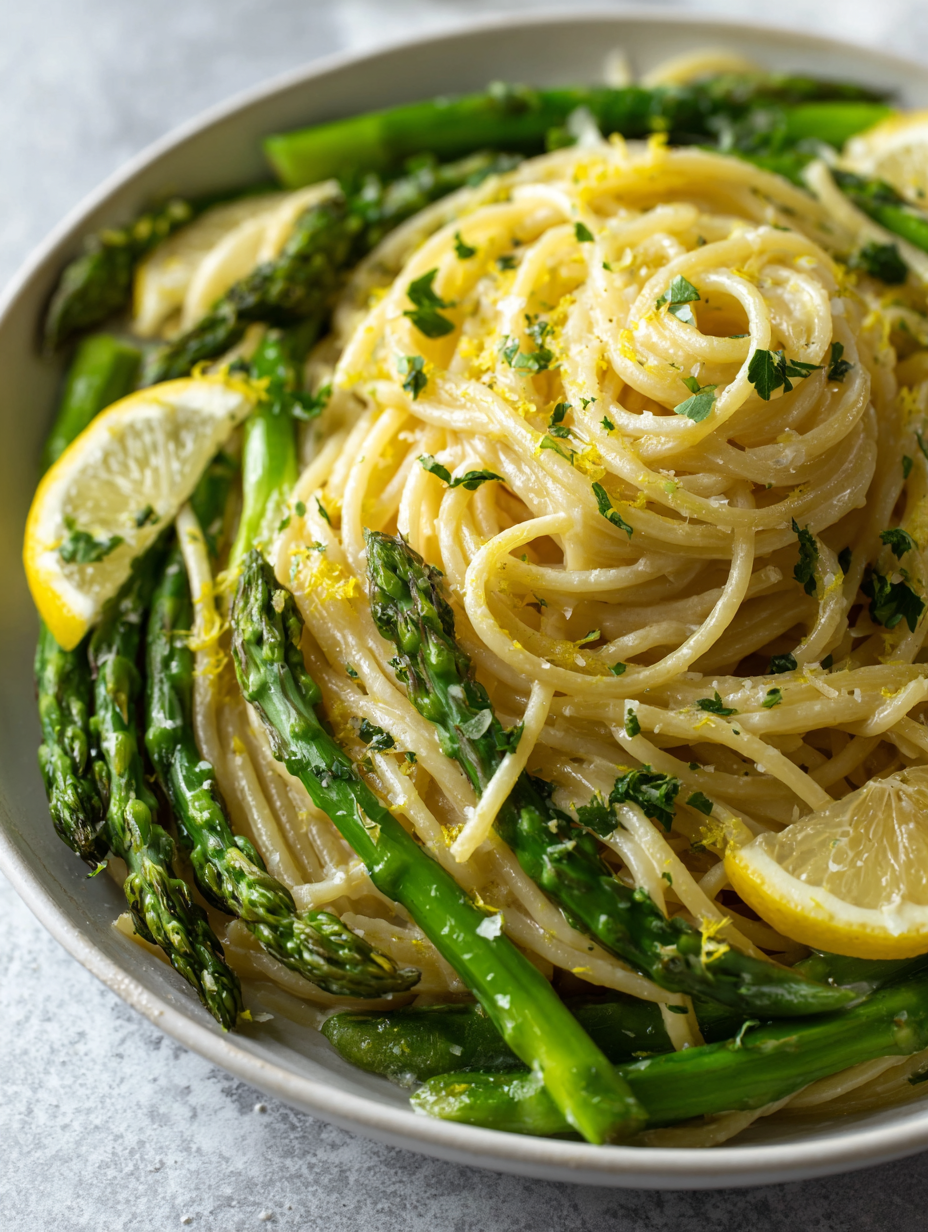
Lemon Butter Asparagus Pasta
Ingredients
Equipment
Method
- Fill your large pot with water, add a generous pinch of salt, and bring to a rolling boil. While waiting, trim the woody ends off the asparagus and chop into 2-inch pieces. Mince the garlic into a paste and zest the lemon, then cut it in half for juice.
- Add the pasta to the boiling water and cook until just al dente, about 8 minutes. Stir occasionally and taste to check the bite. Once done, reserve ½ cup of pasta water, then drain the pasta and set aside.
- While the pasta cooks, heat a tablespoon of olive oil in a large skillet over medium-high heat. Add the asparagus and sear, tossing occasionally, until lightly charred and tender, about 3-4 minutes. Remove and set aside.
- Lower the heat to medium in the same skillet. Add the butter and let it melt gently, then stir in the minced garlic. Cook until fragrant, about 30 seconds, stirring constantly to avoid burning.
- Add the lemon zest and half of the lemon juice to the skillet, stirring to combine. Then, add the cooked pasta and asparagus back to the skillet, tossing everything together gently.
- Pour in a splash of the reserved pasta water and continue tossing until the sauce is silky and coats the pasta evenly, about 1-2 minutes. Taste and adjust seasoning with salt, pepper, or more lemon juice if desired.
- Finish by sprinkling freshly grated Parmesan over the pasta and drizzling with a tablespoon of olive oil. Toss once more to combine and bring everything to flavor harmony.
- Serve immediately while hot, garnished with additional lemon zest or Parmesan if desired. Enjoy the bright, buttery, and smoky flavors with each twirl of pasta.
Pro tips for lemon butter asparagus pasta
- Bolded Mini-Head: Use a wide skillet → Ensures even searing and prevents overcrowding, which can cause steaming instead of browning.
- Bolded Mini-Head: Add lemon zest at the end → Keeps the citrus aroma bright and fresh, not muted by heat.
- Bolded Mini-Head: Reserve pasta water → Its starchy richness helps thicken and emulsify the sauce, making it cling perfectly.
- Bolded Mini-Head: Sear asparagus on high heat → Develops a smoky char and enhances sweetness, but watch carefully to avoid burning.
- Bolded Mini-Head: Taste and adjust seasoning → Lemon and salt levels can vary; adjust for a balanced, zingy flavor.
- Bolded Mini-Head: Finish with Parmesan off heat → Keeps the cheese from becoming stringy and preserves its fresh, salty flavor.
- Bolded Mini-Head: Serve immediately → The sauce thickens as it cools, so enjoy while it’s vibrant and silky.
Common mistakes and how to fix them
- FORGOT to taste pasta before draining—overcooked pasta ruins the dish.
- DUMPED the lemon juice all at once—add gradually, tasting for balance.
- OVER-TORCHED the garlic—cook on low, smell for nutty aroma, not burnt smell.
- SKIPPED reserving pasta water—use it to loosen the sauce for better cling.
Quick fixes and pantry swaps
- When sauce shimmers and smells lemon-bright, it’s ready to toss with pasta.
- Splash reserved pasta water if sauce feels thick or sticky—starches loosen it up.
- Patch over-seasoned sauce with a squeeze more lemon or a pinch of salt.
- Shield overcooked asparagus by quickly reheating in lemon butter to revive crispness.
- If the pasta sticks, toss with a drizzle of olive oil and a pinch of salt—quick rescue.
Prep, store, and reheat tips
- You can prep the lemon zest, garlic, and asparagus cuts ahead of time. Keep refrigerated in airtight containers for up to 24 hours. The bright citrus aroma stays fresh, and the asparagus remains crisp if stored properly.
- Cook the pasta until just al dente, then drain and toss with a little olive oil to prevent sticking. Store in an airtight container for up to 1 day. Reheat briefly in boiling water or microwave, adding a splash of water or lemon juice to revive the sauce’s brightness.
- The lemon butter sauce can be made a few hours in advance. Keep it covered in the fridge. Reheat gently over low heat, stirring constantly until warm and silky, with the lemon aroma still vibrant.
- Reheated pasta may lose a bit of its initial silkiness. To restore creaminess, stir in a teaspoon of fresh lemon juice and a splash of hot pasta water or olive oil just before serving. The flavors will perk up again with that citrus zing.
Top questions about lemon butter asparagus pasta
1. Why is fresh lemon juice important?
Fresh lemon juice adds a bright, zesty tang that really wakes up the dish, so don’t skip it. The zest at the end boosts that citrus aroma and sharpness.
2. Can I use thick asparagus?
Use thin, tender asparagus for quicker cooking and a more delicate bite. Thick spears can become woody and overpower the sauce’s brightness.
3. Why reserve pasta water?
Reserve some pasta water before draining. Its starchy, slightly salty liquid helps loosen the sauce and helps it cling beautifully to every strand.
4. How do I know when pasta is al dente?
Cook the pasta just until al dente—still has a slight bite—that way it keeps its texture when coated with the sauce and doesn’t become mushy.
5. How do I prevent garlic from burning?
Don’t overheat the garlic or butter after adding the lemon juice. Keep the heat gentle to prevent burning or bitterness, and cook just until fragrant.
6. Why use a wide skillet?
Use a wide skillet for searing asparagus and tossing the pasta. It ensures even cooking and makes tossing everything together easier without spilling.
7. Can I make this dairy-free?
For a dairy-free version, swap butter with good-quality olive oil. It won’t be as creamy but will keep that fresh, fruity note and silky texture.
8. What if the sauce gets too thick?
If the sauce becomes too thick or greasy, stir in a splash of reserved pasta water or lemon juice to loosen and brighten it.
9. Can I prepare this in advance?
Serve immediately after tossing everything together. The sauce thickens quickly as it cools, and the asparagus loses some of its crispness.
10. How long can I store leftovers?
Yes, you can prep the lemon zest, garlic, and asparagus ahead. Store in airtight containers in the fridge for up to a day. Reheat gently to preserve flavor and texture.
This dish isn’t just about bright flavors; it’s about the little moments of making something that feels both simple and special. The smell of lemon and buttery asparagus coming together makes the kitchen feel alive in a way that’s hard to replicate.
Whenever I make this pasta, I remember that good food doesn’t have to be complicated. It’s a reminder that fresh ingredients and a little care turn everyday cooking into a small celebration. It’s one of those recipes I keep returning to when I need comfort with a twist of brightness.

Hello, I’m Oliver James, the person behind Melting Into Flavors. Cooking is my greatest passion, and it’s been the driving force in my life for as long as I can remember.
It’s not just about food for me; it’s about creating experiences, connecting with others, and sharing the love I have for what’s on the plate. Through this blog and my café, I’m able to share my journey with all of you and hopefully inspire some of your own culinary adventures along the way.