Lobster tails can feel fancy, but honestly, broiling them with garlic butter is simpler than you think. The secret is high heat—getting that perfect caramelized crust without overcooking the tender meat. It’s a technique I keep coming back to, especially when I want something impressive but straightforward.
This recipe is about focusing on the process, not fuss. The garlic butter gets roasted right onto the lobster, infusing it with flavor and creating a rich, slightly smoky edge. It’s a dish that feels indulgent but relies on a handful of ingredients and a quick broil, making it perfect for a special night or a spontaneous seafood craving.
Focusing on the overlooked technique of broiling lobster tails for a perfectly caramelized finish, this recipe emphasizes the importance of high heat and timing to achieve tender meat with a smoky, slightly charred crust, all while maintaining a simple, buttery garlic flavor.
The story behind this recipe
- I remember the first time I tried broiling lobster tails, it was in a cramped apartment kitchen, trying to impress a date with something fancy. The smell of garlic and butter filled the air, and I realized how simple ingredients could turn into something special with just high heat and patience. That moment made me see lobster not as a rare luxury, but as a doable dish that feels indulgent without fuss.
- This recipe came together after countless attempts to perfect that caramelized top without losing the tender, sweet lobster meat underneath. It’s a mix of trial, error, and a lot of butter-splattered counters—each mistake teaching me how to get that golden crust every time. Now, it’s my go-to for those nights I want something impressive but straightforward, with that smoky, buttery punch.
- heading
- story_type
Key ingredients and tips
- Unsalted butter: I love how it melts into a silky pool, but feel free to swap in salted butter if you want a more pronounced saltiness—just reduce the added salt slightly. The richness is key here.
- Fresh garlic: The aroma when garlic hits hot butter is irreplaceable; use good-quality, firm cloves. For a milder garlic flavor, roast it a bit before mincing, it turns sweet and mellow.
- Lobster tails: I prefer the bright red, firm meat that feels springy—look for shells without cracks. If yours are frozen, thaw thoroughly in the fridge overnight; fresh is best for that delicate sweetness.
- Olive oil: Just a touch to help the garlic butter spread evenly; a mild, fruity oil works better than extra-virgin if you want a cleaner taste. Skip if you want a richer butter-only flavor.
- Lemon: Brightens everything and cuts through the richness; zest before juicing to maximize flavor. If lemons are in short supply, a splash of white wine adds a similar zesty lift.
- Paprika: Adds a smoky hue and mild warmth; smoked paprika emphasizes the smoky edge. If you prefer less heat, use sweet paprika—it still gives color and subtle flavor.
- Parsley: Freshness on top after broiling lifts the dish; use flat-leaf parsley for a cleaner, greener punch. Dried parsley isn’t quite the same—save it for other dishes.
Spotlight on key ingredients
Garlic:
- I love how it turns sweet and fragrant when cooked in butter; its aroma is intoxicating, especially when it sizzles in hot oil, filling the kitchen with that sharp, spicy scent.
- Lobster tails: The flesh feels springy and firm, and the way it turns from translucent to opaque is a visual cue I rely on. The shells turn a bright, glossy red, signaling it’s ready, but that delicate sweetness inside is what I chase.
Butter:
- Lobster tails: Their shells are sturdy but can crack if handled rough; I look for bright red shells without cracks, and the meat should feel firm and bouncy—like a little burst of ocean in your hand.
- When melted, it’s silky and lush, and when it hits hot lobster, it bubbles and browns slightly on the edges, releasing a nutty aroma that’s pure comfort. Freshness in butter makes a noticeable difference—no skimping here.
Notes for ingredient swaps
- Butter-Free: Olive oil can replace butter for a lighter, less rich sauce, but you’ll miss that silky texture and deep flavor.
- Garlic: Roasted garlic offers a mellow, sweet note; raw garlic keeps it punchy, sharp—use less if you prefer milder.
- Lobster: King crab legs or large shrimp can be a seafood stand-in—less sweet, but still delicious with garlic butter.
- Lemon: Lime or grapefruit zest can add a different citrus brightness, though the flavor shifts slightly.
- Paprika: Smoked paprika enhances smoky notes; sweet paprika offers color without heat, for a milder profile.
- Parsley: Cilantro or chives give a fresh finish—each adds a unique herbal note, but different in aroma and taste.
- Butter Type: Clarified butter (ghee) adds nuttiness and less moisture, with a slightly different mouthfeel.
Equipment & Tools
- Paring knife: To cut and butterfly the lobster tails precisely.
- Baking sheet with rim: To hold the lobster tails and catch drips under the broiler.
- Basting brush: To apply garlic butter evenly over the lobster meat.
- Tongs: To handle hot lobster tails safely.
- Small saucepan: To melt and infuse the garlic butter.
Step-by-step guide to broiling lobster tails
- Preheat your oven’s broiler to high, aiming for around 260°C (500°F).
- Gather your equipment: a sharp paring knife, a baking sheet with a rim, basting brush, and tongs. These keep the process smooth and precise.
- Prepare the lobster tails: Using the paring knife, cut down the top shell, exposing the meat but keeping the shell intact. Gently lift the meat, keeping it attached at the tail end, and lay it over the shell like a butterfly. Pat dry with paper towels to remove excess moisture—this helps with browning.
- Make garlic butter: Melt 4 tablespoons of unsalted butter in a small saucepan over medium heat (around 60°C/140°F). Add 3 minced garlic cloves, cook until fragrant (~1 min), then remove from heat. Stir in a pinch of smoked paprika and a squeeze of lemon juice for brightness.
- Brush the lobster meat generously with the garlic butter using a basting brush. Be thorough—cover all exposed flesh for maximum flavor and caramelization.
- Arrange the lobster tails on the baking sheet, shell-side down. Broil about 8-10 minutes, depending on size. Watch for the meat to turn opaque and start to caramelize on top. The shell should turn a bright red, and the butter will bubble and foam.
- Halfway through, baste again with the garlic butter, especially if you notice the meat drying out or losing sheen. Keep an eye on the color—aim for a golden, slightly charred top without overcooking.
- Check for doneness: the meat should be firm and opaque, with a slight bounce when pressed. The shell should be bright red, and the butter should be bubbling with a nutty aroma.
- Remove from oven, let rest for 2 minutes to allow juices to redistribute, then sprinkle with chopped parsley. Serve immediately with lemon wedges for extra zing.
Let the lobster rest for 2 minutes after coming out of the oven, then sprinkle with parsley and serve immediately with lemon wedges. This keeps the juices from escaping and keeps the meat tender and flavorful.
How to Know It’s Done
- Lobster meat is opaque and firm, not translucent or raw-looking.
- Shell turns bright red and slightly charred at edges.
- Garlic butter is bubbling and fragrant, coating the meat evenly.
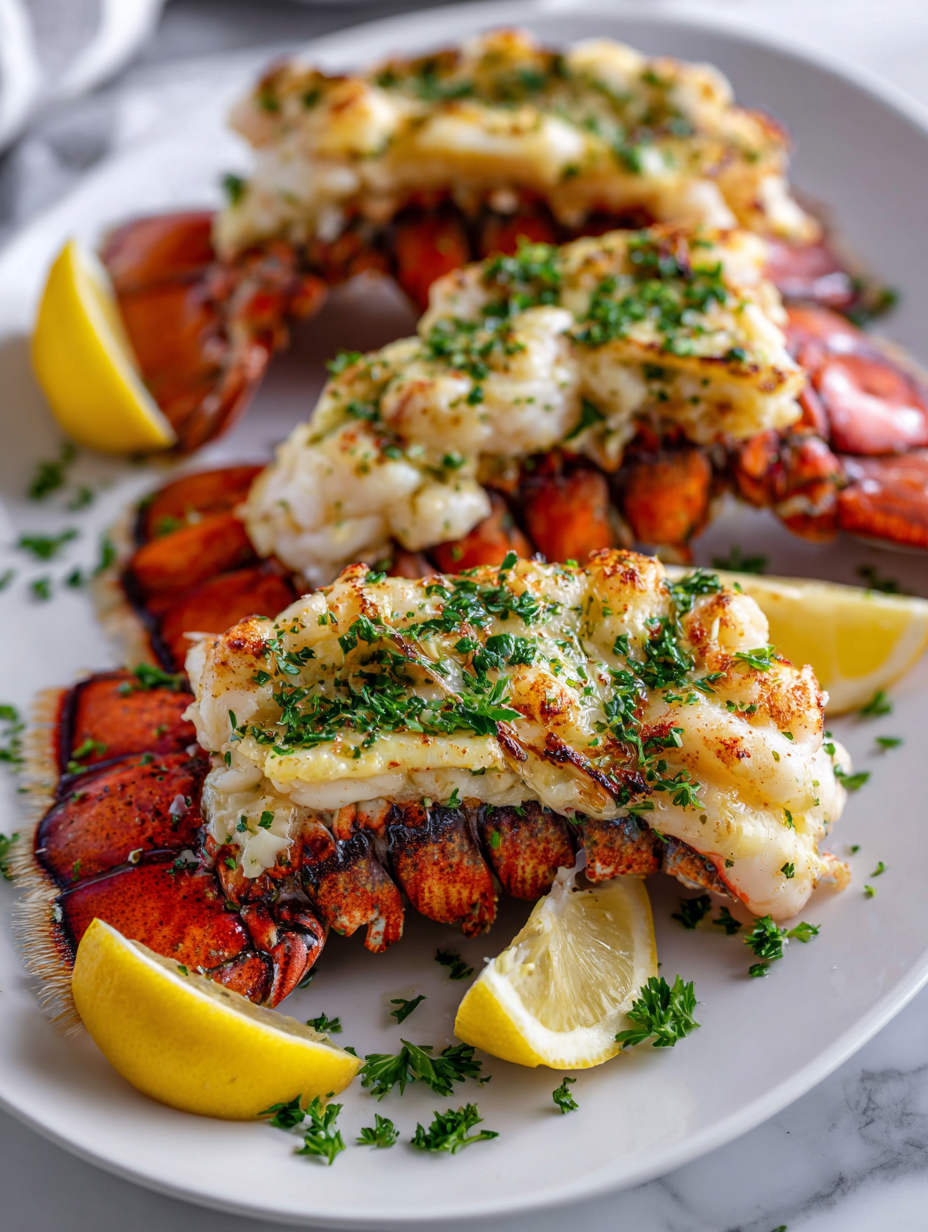
Garlic Butter Broiled Lobster Tails
Ingredients
Equipment
Method
- Preheat your oven's broiler to high, aiming for about 260°C (500°F).
- Using a paring knife, carefully cut down the top of each lobster shell, from the open end to the tail, without slicing through the meat.
- Gently lift the lobster meat from the shell, keeping it attached at the tail end, and lay it over the shell like a butterfly. Pat dry to remove excess moisture—this helps with browning.
- Melt the butter in a small saucepan over medium heat, then stir in the minced garlic and cook until fragrant, about 1 minute. Add smoked paprika, lemon zest, salt, and pepper, then remove from heat.
- Brush the garlic butter generously over the exposed lobster meat using a basting brush, ensuring all surfaces are coated for flavor and caramelization.
- Place the prepared lobster tails on a rimmed baking sheet, shell-side down, and broil about 8-10 minutes. Keep an eye out for the meat turning opaque and the shells bright red with slight charring.
- Halfway through, baste again with the garlic butter to keep the meat moist and enhance the golden color.
- Once the lobster meat is opaque and firm, and the shells are bright red with some caramelized edges, remove from the oven.
- Transfer to a serving platter, sprinkle with chopped parsley, and squeeze fresh lemon juice over the top for brightness.
- Serve immediately with lemon wedges on the side for an elegant, flavorful seafood feast.
Pro tips for perfect lobster
- Boldly brush on garlic butter: Apply a generous, even coat for maximum flavor and caramelization.
- Use high heat: Broil at around 260°C (500°F) to quickly achieve that smoky, crispy crust without overcooking.
- Check for doneness early: The lobster should be opaque and firm, with a slight bounce when pressed—don’t rely solely on time.
- Baste midway: Reapply garlic butter halfway through to keep the meat moist and enhance that golden, buttery finish.
- Watch the edges: When the shell turns bright red and starts to char slightly, it’s usually ready—keep a close eye!
- Rest briefly after broiling: Let the lobster sit for 2 minutes to allow juices to redistribute before serving.
- Finish with fresh herbs: Chopped parsley adds a bright, herbal contrast that lifts the rich garlic butter.
Common mistakes and how to fix them
- FORGOT to preheat broiler → Always start broiler before preparing lobster.
- DUMPED too much butter → Use just enough to coat, excess causes flare-ups and mess.
- OVER-TORCHED lobster → Keep a close eye; 8-10 mins is usually enough, remove early if dark edges appear.
- FAILED to check doneness → Probe or gently press; meat should be opaque and firm, not rubbery.
Quick kitchen fixes
- If sauce is too thin → Splash in a tiny splash of cream to thicken and mellow the garlic flavor.
- When lobster is undercooked → Patch with a few extra minutes under the broiler, watching for color and firmness.
- Splash with lemon juice → Brighten the dish instantly and add a fresh zing to cut through richness.
- When garlic burns → Dump the pan, start anew with fresh garlic butter for that fragrant, non-bitter hit.
- Shield lobster tails from direct heat → Use foil or a baking sheet rim to prevent over-charring during broil.
Prep, store, and reheat tips
- Prepare the garlic butter in advance: melt and infuse with garlic, lemon, and paprika. Store in the fridge for up to 2 days, where it will develop a richer aroma.
- Butterfly the lobster tails ahead of time: cut and lift the meat, then keep them covered in the fridge for up to 12 hours. Keep shells in a sealed container to prevent odors.
- Thaw frozen lobster tails overnight in the fridge. The flesh will become firmer, and the thawing process will bring out a subtle sweetness—be gentle when handling.
- Reheat garlic butter gently: warm in a small saucepan over low heat, just until it shimmers and releases fragrant garlic. Avoid boiling to prevent burning or separation.
- Reheating cooked lobster: briefly warm in a covered skillet or microwave in short bursts. The meat should be just heated through, with a hint of garlic aroma and a tender texture. Avoid overcooking to keep it juicy.
Top questions about Garlic Butter Lobster Tail
1. How do I butterfly the lobster tail?
Use a sharp paring knife to cut down the top shell without slicing through the meat. Gently lift the meat and lay it over the shell for even cooking.
2. What’s the best broiling temperature and time?
Broil at high heat, around 260°C (500°F), for about 8-10 minutes until the meat is opaque and slightly charred on top.
3. How do I know when the lobster is cooked?
Look for bright red shells and firm, bouncy meat. The lobster should feel firm and springy when pressed.
4. Should I baste the lobster during broiling?
Apply a generous coat of garlic butter halfway through cooking to keep the meat moist and enhance flavor.
5. What if the garlic butter burns?
If the butter starts to burn, reduce the oven temperature slightly or remove the lobster early and finish with residual heat.
6. How important is fresh garlic?
Use fresh garlic for the most vibrant aroma and flavor. Mince or crush it finely to release maximum oils and scent.
7. How long should I rest the lobster before serving?
Let the lobster rest for 2 minutes after broiling. This helps juices redistribute, keeping the meat juicy and tender.
8. How can I make the lemon flavor pop?
Add lemon zest before juicing to intensify brightness. Use good-quality lemons for a fresh, zesty aroma.
9. Can I prepare the garlic butter ahead?
Store the prepared garlic butter in the fridge for up to 2 days. Reheat gently over low heat for best flavor.
10. What if I overcook the lobster?
If lobster meat is undercooked, give it a few more minutes under the broiler, watching for a golden top and opaque flesh.
This dish is about that perfect moment when the lobster’s shell turns a vibrant red and the garlic butter bubbles with a nutty aroma. It’s simple but feels special, especially when paired with a glass of chilled white wine.
Cooking this lobster tail reminds me that good flavor doesn’t need fuss—just high heat, quality ingredients, and a bit of attention. It’s a reminder that even the fanciest seafood can be approachable and satisfying, right in your own kitchen.

Hello, I’m Oliver James, the person behind Melting Into Flavors. Cooking is my greatest passion, and it’s been the driving force in my life for as long as I can remember.
It’s not just about food for me; it’s about creating experiences, connecting with others, and sharing the love I have for what’s on the plate. Through this blog and my café, I’m able to share my journey with all of you and hopefully inspire some of your own culinary adventures along the way.